Class Blog
The students were divided into groups before the trip. Some groups chose to do blogs and some groups chose videos. Each group was assigned a theme.
A poppy's seed (Greece in hindsite)
Jaquie L.
From a dream that could never be, to a tentative concept, to a dream come true; this journey has been one I will never forget. Athens welcomed me with open arms, warm meals, and a vision of the past melted with the future. More than any other place, it became my home away from home for the time we spent here.
Meteora was awe and weight, sharing with me the true power of faith and belief. I saw the wonder of artists, the power of devotion, and the majesty of the living world. There I truly understood how participation in another's faith can create understanding.
Rhodes was the land of discovery for me. Beautiful, powerful, full of ancient history, and modern art. It felt full of joy and wonder, and it showed me how a place that had suffered occupation for so long can come out stronger. Even more, the different cultures melted together into a beautiful tapestry of community.
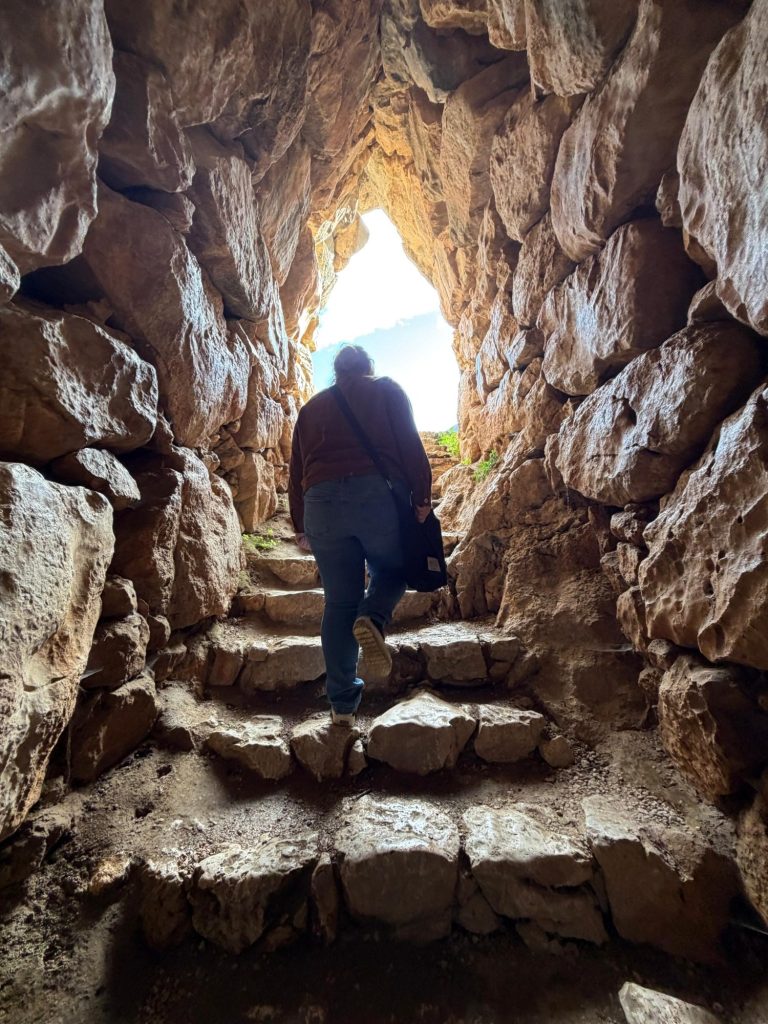
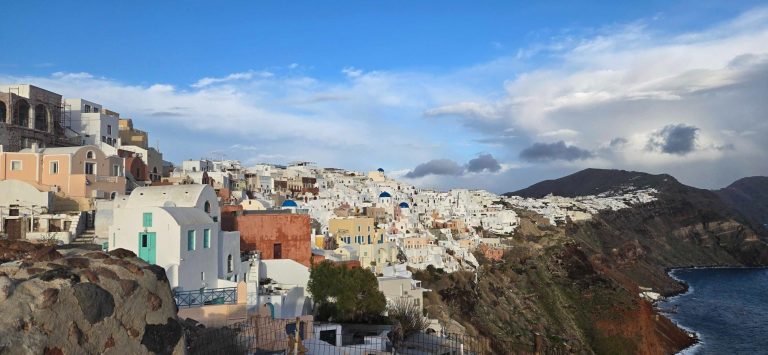
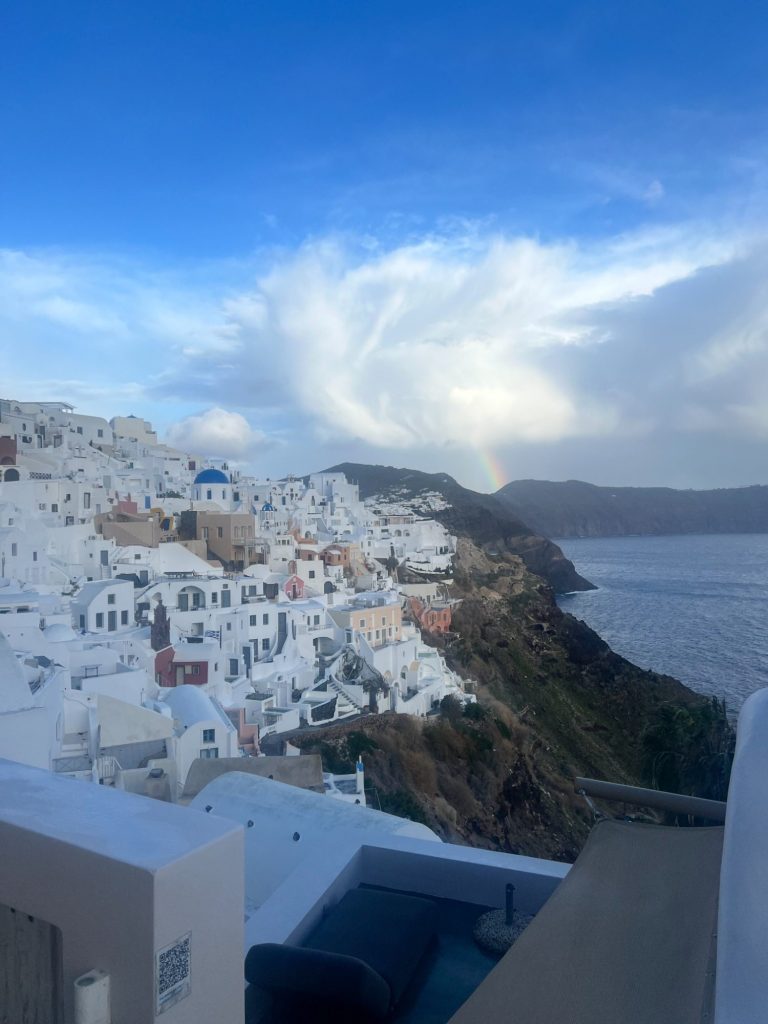
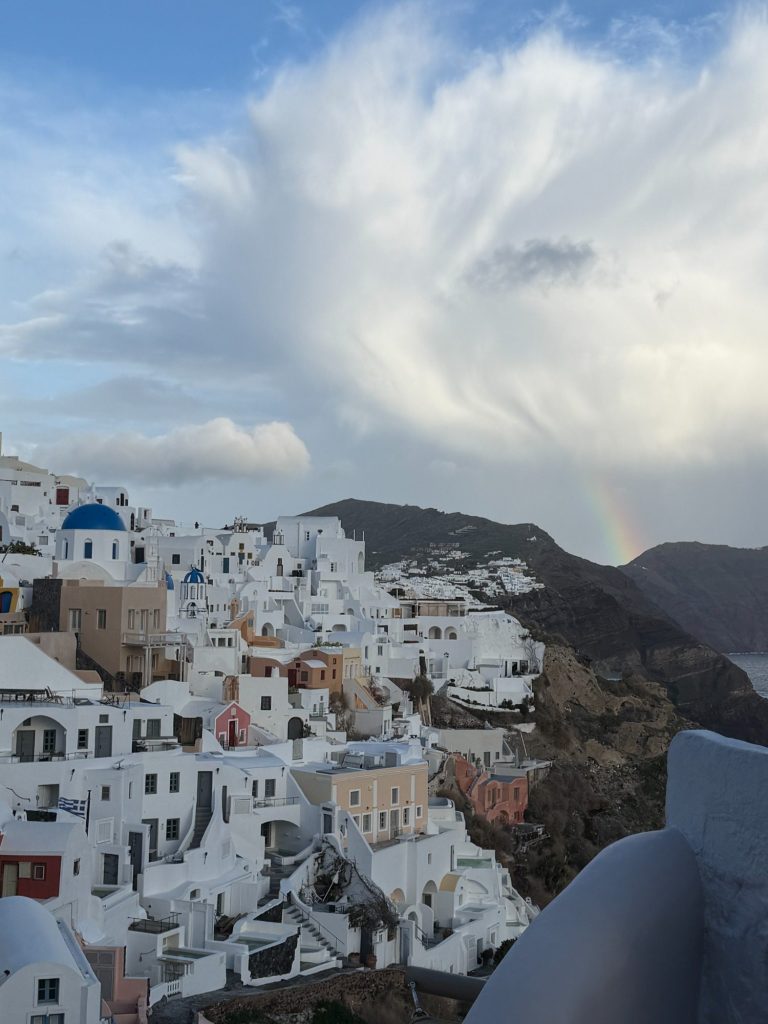
Santorini was stunning beyond my imagination. We faced wind, rain, and thunder mixed with sun and warmth. I had no idea a place so picturesque could exist in reality, but I will never forget the breathtaking beauty. It was the first place that drew a tear from my eye, but not for the beauty of the scenery. It was the dream of standing within an ancient city - an active archaeological site - with my own two feet. I practically had to drag myself from it.
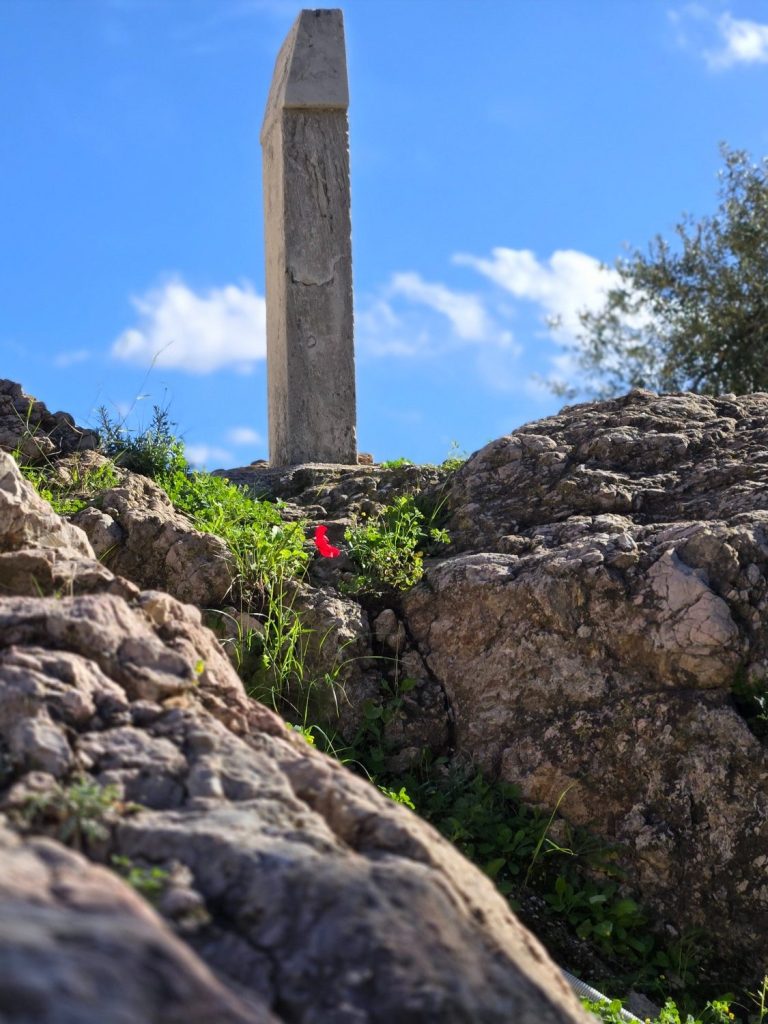
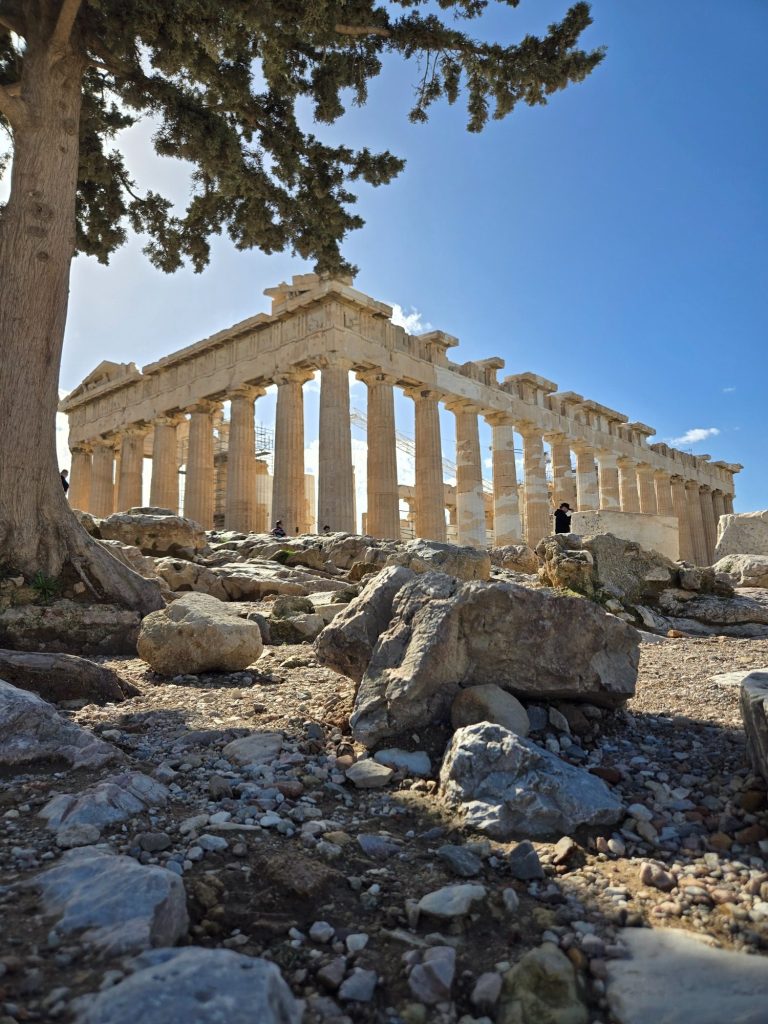
It was the same with the Parthenon. Truly, it was the finale of all finales, and I took as much time as I possibly could. Spending time with my classmates, my camera, and my soul as I soaked in the dream of standing beside the Acropolis of Athens at long last. I cried many times there, but it was the moment I caught sight of that ruby red poppy that I broke down. Native to Peru and to Greece, and growing strong within the ruins of a wonder of the ancient world.
All this time, we've been learning about how ancient cultures mixed together. We saw the evidence of how far they traveled, how much they loved to learn from one another and embrace each new culture, making it part of their own, even within their faiths. But here I finally saw the symbol I have always associated with my own heritage, and it was growing strong and brilliant within the sun of another land. Not only that, it belongs here as much as in Peru. On this last day in Athens, all I can be is grateful that I have seen the way we can embrace one another, and I cannot wait to carry it into my own life when I return home.
Amazing experience
Clay C.
Greece was an amazing experience. I got to meet new people, go to new places, and try new things. The food and the people had to be my favorite part though.
Going around the neighborhood the first night after a long flight was a bit taxing. We were missing our luggage but we made it work. The survival pizza was great!
The classes we had were long, but I learned many things. The most interesting ones were about curses and magic. Learning all the ways people could curse you really put things into perspective. They could write them down or say them.
The site visits were also fantastic. I would say going to Rhodes was my favorite part. The water was beautiful and the food was amazing! The hotel was also great.
Finally, the people. Greek people are very friendly, and will not hesitate to help you out. And my classmates are amazing as well. They each brought a unique element to the class and their presence would've been sorely missed.
Overall, Greece was so much fun, but I do feel ready to head back. I hope the next group as has much fun as I did!
Almost
Mikayla H.
We saw and learned so much in four short weeks. This is only my second J-term course but they are intense. It’s an intensity I can appreciate since there’s always an end in sight but that comes with such a bittersweetness as well. I am excited to be home, because its my home, but I’m not excited for the busy-ness, and responsibilities, and fascism that awaits our return to the U.S.
Greece has been such a solace, honestly. It gave me a reason and arguably a requirement that I just focus primarily on the present space and time, and remember that life goes on. I hope I always remember the kind characters I met on this trip, and continue to take the spirit of their actions with me. I know that at least I will have more people to say hi to when I am walking around campus in the Spring.
Greece is a very interesting example of religious cultural hybridity. This exists in most places I imagine, but in comparison to the U.S. at least, what is different about Greece is the depth of history. They have a claim on some of the oldest known religious traditions in the world and it’s remarkable what has stayed intact over the course of the last several thousand years. It’s beautiful that aspects of Greek mythology were found in the Christian cemetery we visited and it’s so cool that there are temple ruins just, throughout the city of Athens and the broader country. I think the novelty of something like that is something that will never wear off as a white American. (I have a vague awareness that there is evidence of ancient religions from North America, but I have no knowledge of them and the role they played in ancient indigenous societies.)
However, I do have knowledge now of the role religion played in the Ancient Mediterranean! Having an example of a different way the world could work, and how a part of it did work thousands of years ago, is very valuable in working towards imagining better systems than what we have currently.
Our professor's final “homework” for the class was to think about how we can take what we have learned in this class and apply it to ways to make our world more inclusive and diverse. He reiterated a couple times, throughout the course, that the changes from ancient to modern religion have made religious pluralism and diversity almost impossible. I think and hope that the word “almost” is doing a lot of work there, but we have to do the rest of it and I think that with some of the things I learned on this study away to Greece, I am that much more equipped to do some of that work.
Final goodbye
Kate F
Every time I leave an extended overseas trip, I leave with the sense that I have made another home away from home. Greece has become one of those places for me. A memory to look back on with fondness for years to come.
Not only because of the delicious foods and all of the stray cats, but also because of the connections that I was able to make with locals and my PLU community. I am so grateful I was able to take this opportunity to do something incredible to start off 2026. I am so ready to take the things I’ve learned, seen, and experienced with me back to the US. In the hopes that I can apply this knowledge in my every day life.
Greece in hindsight
Alby J.
One of the first things I did to hype myself up for this trip was create a playlist on Spotify lovingly titled ‘Greece <3.’ While here, those fifty songs have been a companion through all the long walks and drives, a chorus of ABBA, Lorde, and Hozier keeping me company. If you’ve been following along with the blog posts, you’ll see the recommendations from the playlist trailing after all my posts. It’s been a way to keep me entertained while writing these blogs, and I always have fun finding the best three or four songs that encapsulate the vibes of the prompt.
As we prepare to go back home, I am filled with mixed emotions. On the one hand, I am eager to be in the same time zone as my friends and family, and only a few miles away instead of 6000. I miss the routine of classes at PLU and the reassurance that, in emergencies, I could drive home. On the other hand, this study away has been an absolutely gorgeous, informational, and cat-filled adventure that I know I will miss. I doubt my beloved playlist will hit the same when I am not walking under orange trees with the acropolis just a glance over my shoulder away.
From losing our luggage, getting head-colds, studying, swimming, exploring, and eating at so many delicious cafe’s, each day has been busy from wake up to bed time. Some of my favorite memories are laughing with my roommates until I can hardly breathe, getting nearly blown off rocks at the Temple of Poseidon, and watching the waves crash on the beach at Rhodes from my hotel balcony. I am filled with gratitude that I got to go on this trip and have these experiences with such a wonderful group of people.
Greece is a hospitable place with a culture of honor, and I want to go home with the same attitude. I know so much more about religion and myth now, but also more about how stories influence our lives today and why myths resonate so strongly thousands of years later. As I look back on this month, I feel both exhausted and exhilarated by all that we have done, and I hope you all have had a good time reading these blog posts.
Thanks for the adventure!
(Song recommendations: Free by Florence + The Machine, Helen of Troy by Lorde, Experience by Ludovico Einaudi, and Chiquitita by ABBA)
How Greece changed me
Ani D.
Looking back, Greece feels less like a place I visited and more like a place that quietly rearranged how I see time, history, and myself. While I was there, everything felt immediate, the missed luggage, the steady rhythm of lectures and readings, the weather that shifted between rain and light with little warning. At the time, I was focused on logistics and schedules, on getting through each day. In hindsight, those small disruptions seem almost necessary, slowing me down just enough to make space for the city to sink in.
What stays with me most now is the layering of history. Greece doesn’t separate the past from the present; it stacks them on top of each other. Ancient ruins sit beside busy streets, and daily life unfolds around places that have held meaning for thousands of years. I didn’t always have the time or energy to explore everything while I was there fully, but even glimpses were enough
to leave an impression. The city taught me that history isn’t static or distant; it breathes alongside us.
In hindsight, I also realize how much I valued simply being there. Walking through the city, listening to lectures, and reading about the very landscapes around me created a connection I didn’t immediately recognize. Greece became a lesson not just in history, but about paying attention, even when things don’t go as planned and seem small.
Now, when I think of Greece, I don’t just remember what I saw. I remember how it felt to live briefly within such a deep sense of continuity, and how that experience continues to shape the way I think about place, time, and my own curiosity long after leaving.
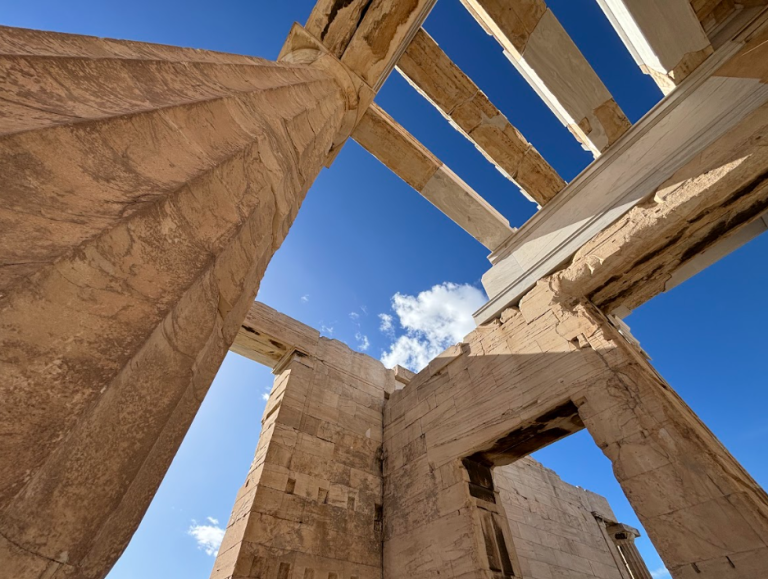
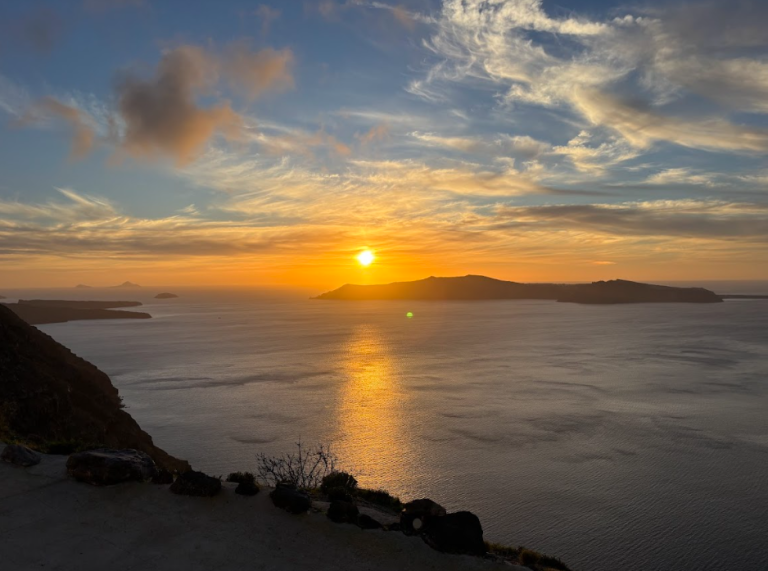
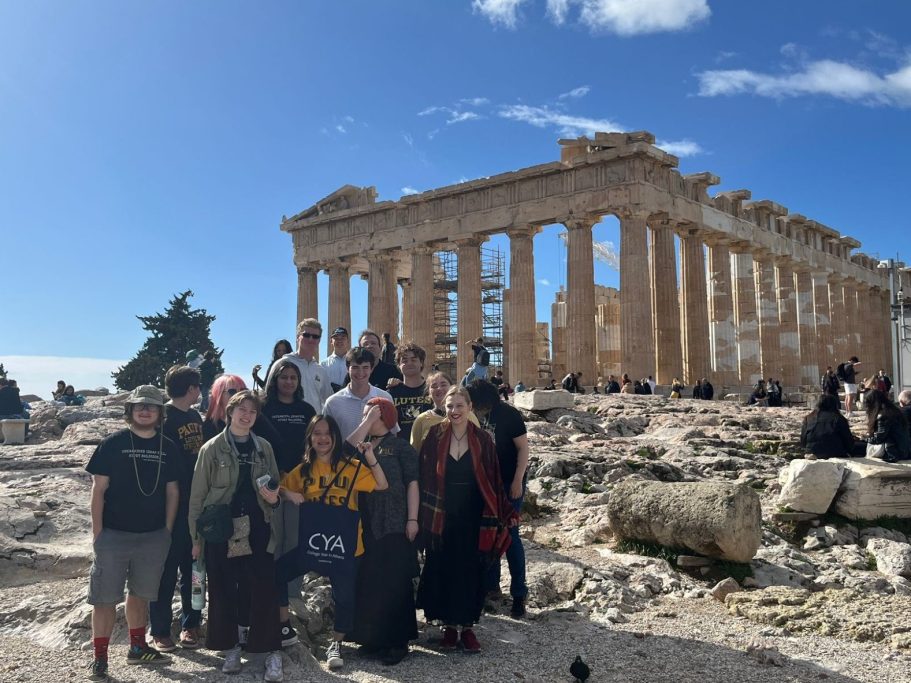
Memories looming large
Mia R.
For me, Greece in hindsight is definitely a sight that will forever loom large.
For my whole life I have always known that I have wanted to travel to Greece. Getting to come here, studying Bronze religion and myth has been living out every dream I’ve harbored since I was taught to dream. Being over here, not every moment has gone super smooth, I’ll be honest. From fighting Turkish Airlines for our luggage to aching legs from long days of walking to all of my numerous (and varying degrees of deadly) falls, being in Greece while being my fantasy was no fantasy. Rather, being in Greece made me feel very human.
Our class, centered on looking at religious plurality in the Bronze age and looking at the state of the world, has been filled with interesting discussions about where that shift was made and how do we deal with it now. Last night, we had an over an hour long discussion over issues of division, conflict (and how conflict adverse we’ve become) and how we can learn to approach difficult topics like religion, conflict and issues of inclusion/acceptance in a country that feels increasingly hostile, where young people aren’t at all encouraged to be curious and open and talk about controversial topics. For me personally, along with all the fun exhilarating memories I have here, it is this memory, these ideas discussed that I suspect and hope will stay with me the longest.
As someone who loves being around other people and values community, I truly feel so grateful and impressed by the community we’ve been able to build in such a short time on this trip. Starting out at the airport I maybe knew half of my fellow classmates' names. Now, I have at least one fond funny anecdote involving everyone here! Greece has been an incredible trip and that is in no small part thanks to the incredible people I’m surrounded by. Dr. Finitsis, with his infinite wisdom and care for the trip and his students, our fearless assistant Angenette who provides key structure and so much of the behind the scenes work, being the reasons these blog posts see the light of day, and all my lovely peers both the ones I knew previously and met on this trip. I might not get to take Greece home with me, but I get to take these memories, these stories and these friendships!
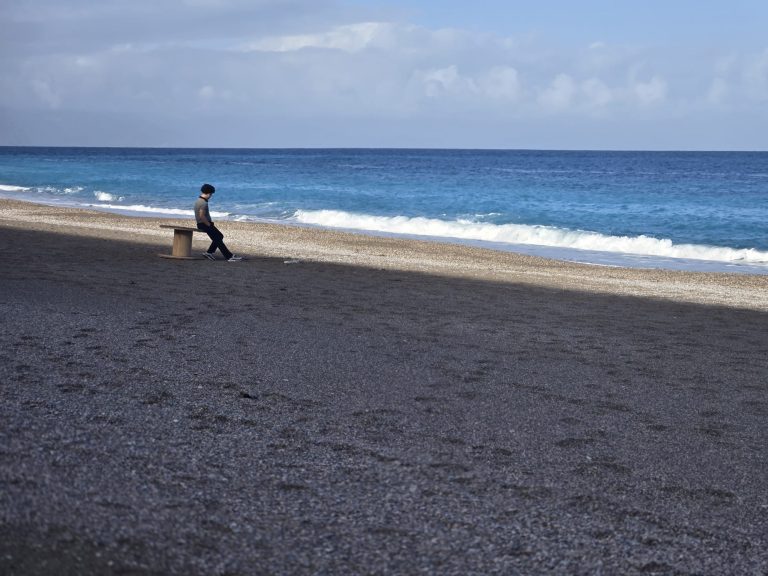
Looking back
Jalen E.
One of the strangest feelings I’ve had on this trip is how familiar Greece feels. It’s a new place, thousands of miles from home, yet parts of it remind me of my hometown Seattle in so many ways I would have never expected. The hills, the water, the way the city and nature blur together, it all feels oddly recognizable. I came here expecting everything to feel foreign, but instead I kept feeling like I’d seen versions of this before.
What surprises me the most is how welcomed I’ve felt here. There’s an openness in the way people interact that makes settling simple. Simple conversations, shared spaces, unspoken kindness has all created a sense of belonging that felt natural, not forced. In some ways, it feels easier to exist here than it does back home, which is something I’m still trying to wrap my head
around and – honestly, don’t want to accept. Because how can I willingly go back after an experience like that?
The days are full of movement and learning, but also moments where I feel grounded. Walking through ancient sites, sitting by the water, making new friends, or just wandering the city, I couldn’t help but feel connected, not just to the history we were studying, but to the place itself. Greece never felt like somewhere I was just passing through. Instead, It feels like somewhere that I’m meant to be, even if it has to be temporary.
There’s never been a more bittersweet feeling for me than this wonderful environment. It’s time to go home, and I know I’ll miss this sense of ease and familiarity. It’s funny because I never imagined that I’d even end up going to Greece, not until two months prior to arrival to be exact. Going from 0 expectations to one of the most memorable experiences in my life, Greece has taught me far more about myself than what I was already aware of. Most importantly, Greece reminded me that belonging isn’t always tied to where you’re from. Sometimes it shows up where you least expect it, and stays with you long after you leave. That is something I’m certain of. Thank you for the memories. Thank you for this opportunity. Thank you for the connections I’ve gained whether they are gone by tomorrow or last til the end of my time on earth. Most importantly, ευχαριστώ Ελλάδα.
Changing perspectives
Kate F.
It is an absolute privilege to study abroad, one I have been able to enjoy twice now. In both Greece and Japan, an enduring truth remains. Your perspective on life changes because you were able to live in another culture's shoes for a bit.
It becomes your responsibility to use this change or perspective once you return to your normal life. During these difficult times that we are living though in the US, this study away experience has been a call to refocus on acceptance, kindness, and curiosity towards the unknown instead of hate.
The priviledge of studying away
Pedro C.
Only two days left in our trip, and I can hardly believe it. For all the stress of studying and trying to navigate our strange surroundings and mishaps involving luggage and plumbing, we’ve still had an absolutely wonderful experience. The end is now nigh, even if it feels like it’s been only a few hours and a century since we arrived at once somehow. But I’m determined to cram in as many things as I can manage into our short span of time we have left. To savor every present experience and appreciate the past ones while not dwelling on the future!
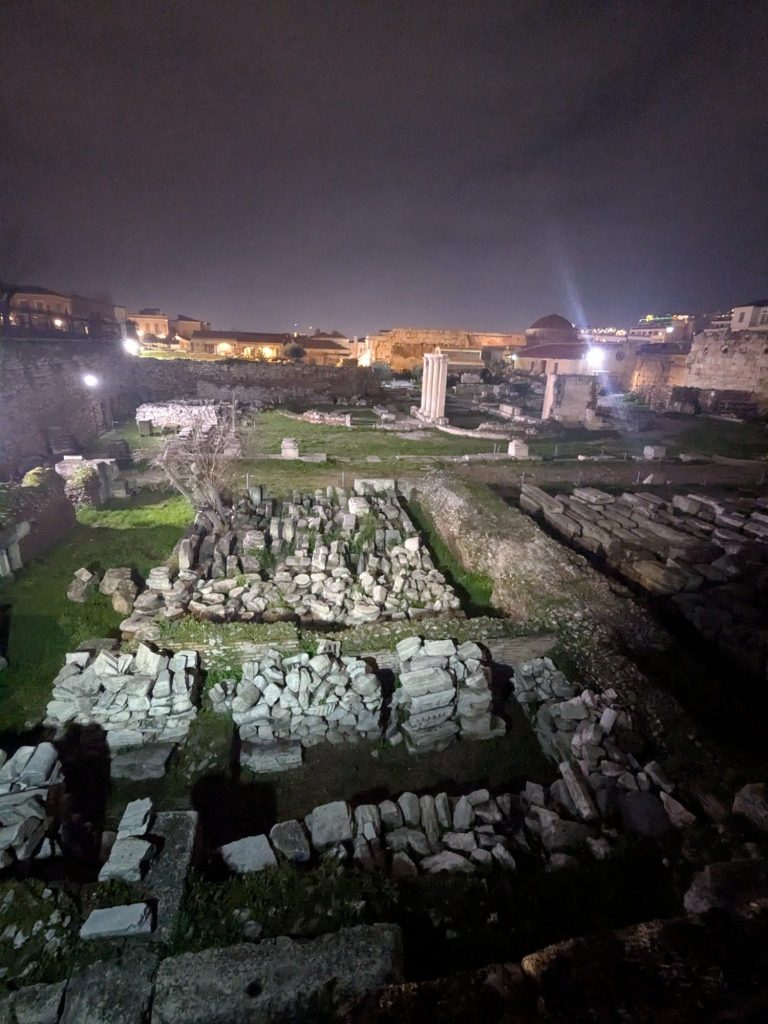
Just yesterday, I managed to visit the Library of Hadrian, while today I went to the Museum of Ancient Technology. The latter was at the recommendation of Professor Finitsis (allegedly, through a secondhand source) while the former was out of sheer curiosity. Plenty of speedy walking was involved through less-than-ideal weather conditions. This begs the question though; in an age of the internet, why bother to visit those places when so much can be learned about them online already? Plenty of people might be wondering that… and they’re all FOOLS!
If there’s one thing COVID taught us, its that there’s a unique quality to in-person experiences that’s just impossible to replicate. Thinking of a word that describes the rush that comes from being surrounded by a crowd teeming with excitement is hard. There’s not a word in English yet that can encapsulate the infectious joy of children at a museum demonstration flashy enough to feel like a magic show. Describing the electric feel that comes from walking by an unfathomably old structure is impossible…
The smaller things are significant too. Walking through a park and hearing foreign birdsong. Soaking in the atmosphere of a tiny random souvlaki place. Surviving the mortifying ordeal of having one’s awful Greek corrected. Greece isn’t just a place with a lot of ancient artifacts, it’s a living country. As students/tourists, we couldn’t participate in it in anything resembling a full capacity. But getting to visit and see so many small and large experiences has been an honor.
Grateful for the perspective
Clay C.
The opportunity to study away is something that I am grateful for. The cost was high and the preparation was extensive, but it was worth it. I’ve both broadened my perspective in many aspects, and have the chance to take what I have learned back home with me to improve my life for the better.
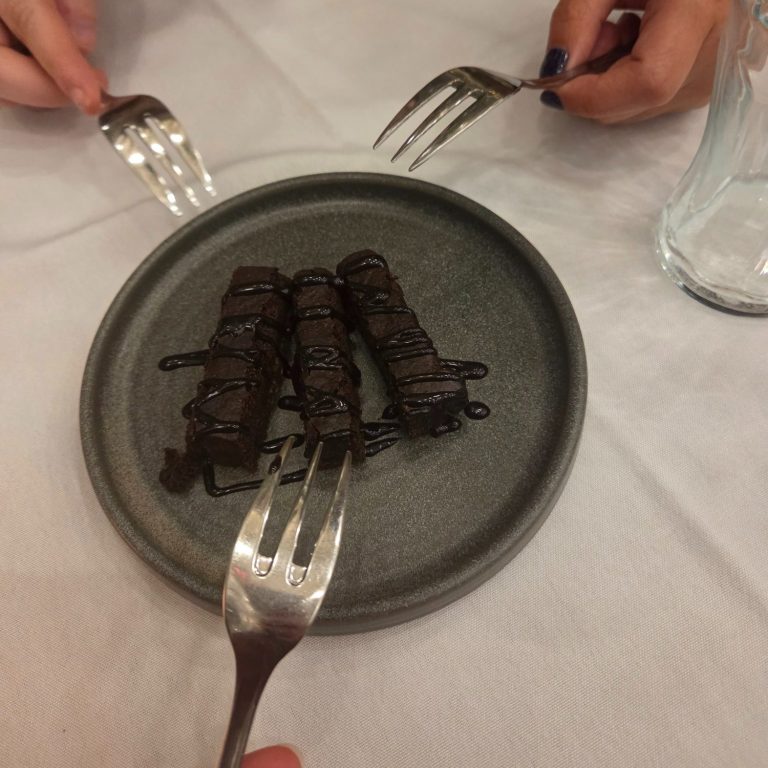
Being in Greece has allowed me to become immersed in the culture. I’ve tried much of the food here, and I’ve tried things I have never had before or might not have liked. We can get so stuck in our way of living, and being in another country forces you to step outside of your comfort zone. But I’ve gained a new perspective; trying new foods, even if I may not like it, will expand my palette and may lead to a new food I love!
Getting to study religion in a foreign country has been wonderful. It was the subject I was least excited for in my gen eds, but the experience of living authentically and visiting new places has reignited my passion for personal learning. Getting to visit the ruins of Mycenae or going to the Old City in Rhodes and seeing how religions could coexist is something many people will never get to do, yet I was able to. I was able to walk through these places and get a real life view of the places that you cannot get from a textbook.
But, I feel the major privilege of studying away is being able to expand my world view away from home. I get the privilege of interacting with new people, getting used to communicating with people who are not familiar with my language, and seeing new places. One of my professors aptly said that most college students do not mature until they have studied away, and once they have, they come back with a new perspective on life. I feel like I have gained that perspective, as I have learned to adapt to an unfamiliar situation and come out with a new sense of independence and decision making skills.
Overall, studying away is a privilege that I was able to afford. I have learned both the course material and the real life application that the class brings. I’ve learned to enjoy studying religion and how to navigate a new territory.
Engaging
with
intention
Sam B.
Studying away here in Greece has been more than just traveling and seeing a new place. It’s an opportunity that comes with resources and support that not everyone has. Being able to study in another country and see the places we have discussed in class is something I have been very aware of since arriving in Greece. What felt overwhelming and exciting are all reminders of how privileged this experience truly is.
Living and studying here for the month has highlighted the difference in experiencing the place short-term and living in it every day. We, as students, are heading to classes and visiting the many sites while those around us are working, commuting, and living their daily lives. Our challenges with adjusting to the new and different culture are temporary, while for those who live here, this is just their simple everyday life and routine.
Being aware of this has changed my approach to learning while here. Having the chance to stand in historical spaces rather than only reading and seeing images added a whole new depth to what we study. But it also comes with the responsibility of being conscious of observing and respecting the spaces we are in. Especially with knowing these experiences are not equally accessible to everyone.
Recognizing the privilege of studying away has made me very appreciative of the opportunities I’ve had and more intentional with how I engage with them. Every class, every site visit, and every interaction feels even more meaningful when looking from this point of view. As our time continues and comes to an end, I hope to carry this awareness and use it to make the most of the experiences that I am very fortunate to have.
It's been an honor
Mikayla H.
One of the unexpected reminders of this course has been that of my privilege as a member of the working class, and not to mention a woman, to even have literacy. One of the key differences between religion today and what we categorize as religion in the ancient Mediterranean world is that almost none of it was written down. It was mostly embodied by rituals and practices that were passed along through words and actions. It was usually regulated to some extent by the royals and other people in palaces, who could read and write, but worship and prayer in its many different forms belonged to everyone. The opportunity to study away does not belong to everyone.
It has been a privilege to learn about ancient religion and seeing it evidenced in physical things at all the museums we have visited. It’s one thing to see images in a slideshow during a classroom lecture at PLU, and another to learn what something is, and then see so many examples of the existence of that.
As far as the travel aspect goes, having the itinerary pre-planned out, and not having to do the mental labor of figuring out what I’m going to fill my time with, has been really great, actually. This was something I was wondering about prior to the trip, would I have very much down time or free time? I would say there was some, but not a lot, but it worked out especially well in Kalambaka, Rhodes, and Santorini, where most things were closed during tourist off-season anyways.
Any opportunity to educate oneself outside of the U.S. is something I will always be an advocate for. PLU’s study away programs are a part of why I decided to enroll. But the Greece program, specifically, is so cool. I’m writing this from a room in a 4-star hotel, where I can see out of the corner of my eye columns from the Temple of Olympian Zeus. I have seen and learned so much this month. As I’m reflecting I’m kind of bewildered at how many different locations the itinerary included, but I’ll save further reflection on that for the next post.
This trip has had its challenges, academically and otherwise, but they have come hand in hand with a lot of luxury and a lot of blessings.
It has been a privilege to get kind of tired of Greek food, to have my suitcase broken by an airline, to have continental breakfast more days than not, to spend a cumulative (I’m guestimating) couple of days on a tour bus, to have my legs be sore from the amount of walking and steps, and I’m thankful.
The priviledge to experience history
Jaquie L.
When I first heard of PLU’s Study Away programs, they seemed like something I could never actually do. So what if I’d always dreamed of studying abroad, seeing the world, and learning about ancient history? I have people to care for at home, a job to do, and no funds to achieve it. Studying abroad seemed like something only certain people could achieve, and I never expected to be one of them. I owe this journey to those who helped me. To the generous people who made my scholarship possible, my loving family who pitched in to help me cover funding, and the staff at the Wang Center who helped me navigate the daunting process. There were so many hurdles, so many stipulations, and so many steps that if I’d missed I never would have had this incredible opportunity. It’s not something I take lightly.
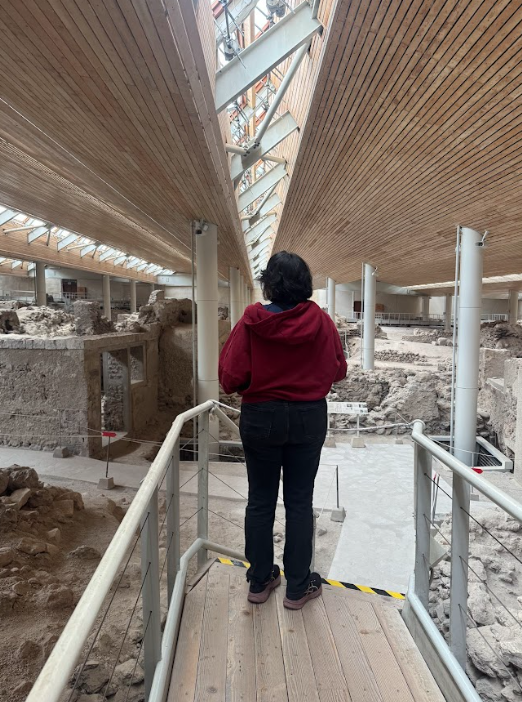
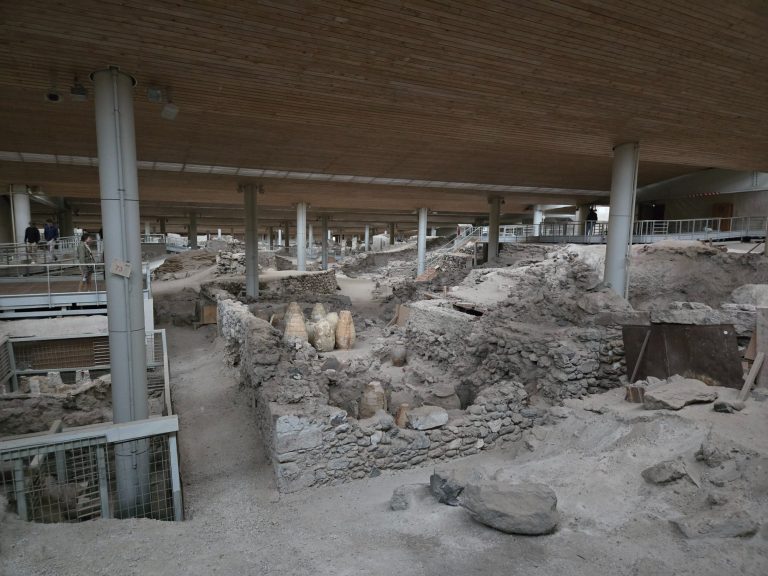
There have been many times where I was on a site visit and was overcome with gratitude for the chance to be there. History is a complex web of memory and chance. The present we have now is born atop the precarious chaos of the past, and it’s only because of this specific chaos that just days ago I could stand in the ancient city of Akrotiri. A city twice destroyed - first by earthquake, then by lava - finally unearthed to reveal just how advanced ancient cities were. Functioning sewer systems, airflow within houses, and even homes that were three stories tall. It’s no wonder they were able to evacuate before the volcano erupted. Standing in an archaeological excavation was beyond my wildest dreams, and to be so privileged to be born in a time where I can do so is more than I could ever find words to describe.
I know there are so many who were like me only years ago, dreaming of doing the exact same thing I am now. I can only pray that they have the same generous, supportive network around them when their chance comes, and they are able to step out into the world on their own adventure. I never thought I would have this chance, and standing where I am now - learning so many new things in a land I’ve always dreamed of seeing - I cannot be anything but grateful.
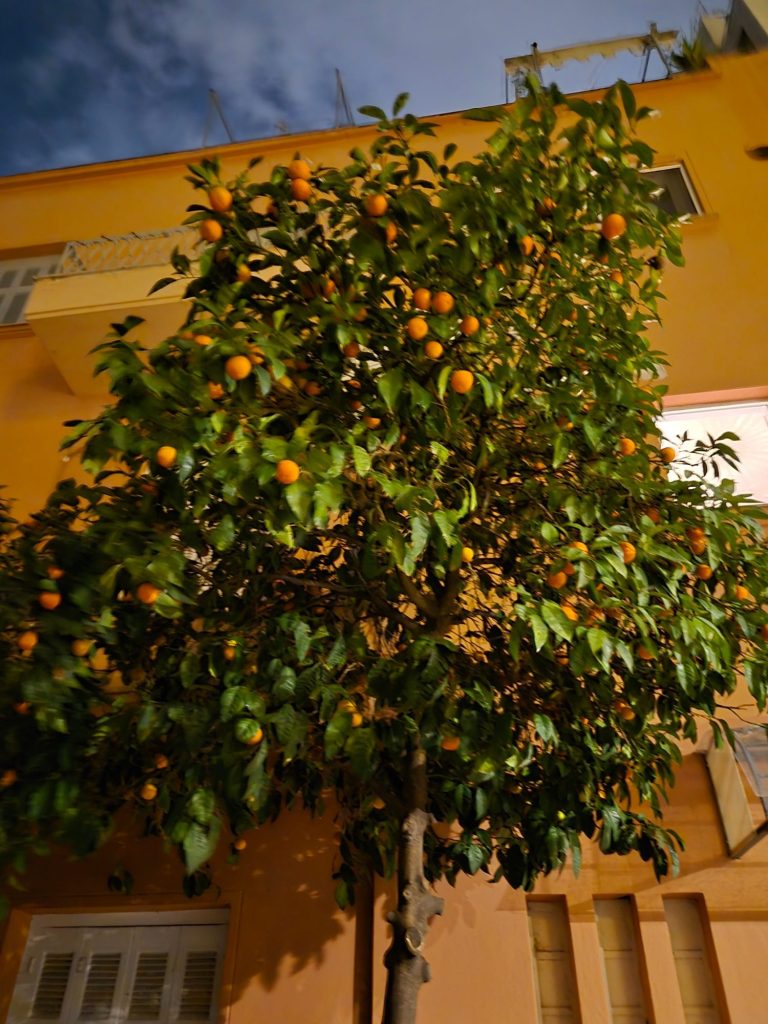
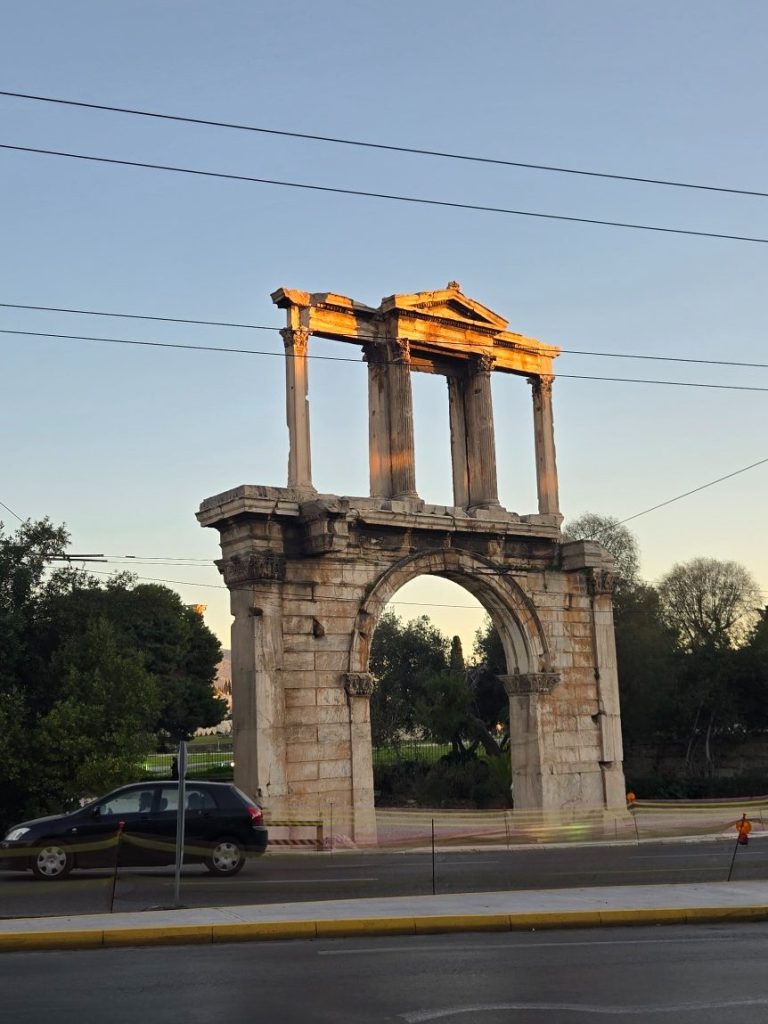
I will take every moment of these last five days to savor each breath of this journey. Every step I’ve taken in the past, every shift in career, every moment of hunger, of financial hardship, of heartbreak…it has all led me here, to this moment. Sitting in my hotel room, looking at the angled wall, listening to the cars, and people, and cats outside in the streets of Athens. I’m so fortunate to be sitting here with my laptop warming the pillow I’m using as a desk, sore from walking up endless hills, and trying not to let the tears of joy sneak their way out of my eyes. I can’t wait to get up and walk to class tomorrow through bustling streets, past Hadrian’s Arch, and the orange trees full of beautiful, bitter, winter citrus. I’ll make the most of these next few days, and to you who made this possible, thank you.
All good things must come to an end
Samael B.
Unfortunately as people say, all good things must end. For our class right now, we’re feeling it as we look at the final few days we have left here in Greece before going home. Our four weeks here have been such a whirlwind experience. We’ve had the opportunity to experience culture, history, the land itself: it’s been fun, thrilling, highly informative, and while of course at a few times stressful or difficult, there’s no regret in coming here.
No matter how we’d experienced this visit I’m sure it would have left an impression on all of us, even if the visit had been personal travel or much less time. But there’s something about having come here as a class to experience and learn together that’s really had a huge impact on the experience we’ve had. Something that many religion courses have reiterated is that religious events or experiences are often heightened/experienced as they are specifically as a result of experiencing them with others. There’s a certain aspect of that experience and that belonging that cannot be replicated exactly, it’s become an even more unique and impactful experience just by the fact that others were there feeling and seeing and interacting with you. In ancient Mystery cults, we know that the initiation processes and various ceremonies they engaged in made use of this. But as members of our class have pointed out, in a way the experience of studying abroad here has reflected that same sort of process and phenomenon.
We’ve been separated from our normal lives and community, we’ve come to a place where we are experiencing intense situations or emotions with people we typically don’t know and don’t have a previous sort of standing with, and soon we will return to our old lives and families with knowledge and experiences that now connect us both broadly to anyone who’s shared some of those experiences or knows some of that information, but very uniquely connected to the rest of this class who have gone through this together. It wouldn’t be exactly the same with any other professor, any other batch of students, or any other activities. This uniqueness, intensity, the specificity of attending this class is exactly what makes it such a privilege to study away.
Invisible realities
Jalen E.
When I think about the “invisible world,” I don’t automatically picture something mystical or far away. I think about everything that clearly exists but can’t be seen, time passing, emotions, the pull of the universe, even the idea that the dead or the gods might still be present in some way. Just because something isn’t visible, doesn’t mean it isn’t real.
Religion spends a lot of time dealing with this kind of reality. The world of the gods, the afterlife, and metaphysics are all ways people have tried to explain what’s happening beyond what our eyes can confirm. Ancient religions didn’t separate these invisible forces from everyday life. The gods influenced the weather, death was more than just an ending, and the universe was full of meaning rather than empty space.
What surprised me during this course is how similar this feels to how we talk about the universe today. Modern science tells us most of the universe is made up of things we can’t actually see, only measure or theorize. Even now, we’re still trying to understand what’s out there and what our place is within it.
Religion doesn’t give clear answers so much as it gives language. Myths, rituals, and stories help people make sense of the unknown and live with uncertainty. Instead of proving what’s invisible, religion asks us to pay attention to it.
As we wrap up this class and head back to our normal routines, I’m realizing that the invisible world isn’t separate from us. It’s layered into our daily lives, shaping how we think, feel, and understand the world, even when we can’t see it happening. There is far more than what meets the eye, and that’s the beauty of it all.
Dear Greece -
Mia R.
Kalispera!
Hands down, without a doubt one of the coolest experiences for me about traveling through Greece, is how very steeped in story everything is. When we visit sites, we are seeing more than lush landscapes and impressive architecture. We are going through the backdrop of impressive feats, walking along the stomping ground of countless gods, heroes and monsters. Greece is already such a special and unique location for everyone who visits, for the rich varied culture, friendly people that live here and of course the delicious food. Poli nostimo! But to me, traveling to Greece, there’s a whole invisible world I get to experience—a world that I’d been falling in love with ever since I found it in the pages of my first grade mythology books.
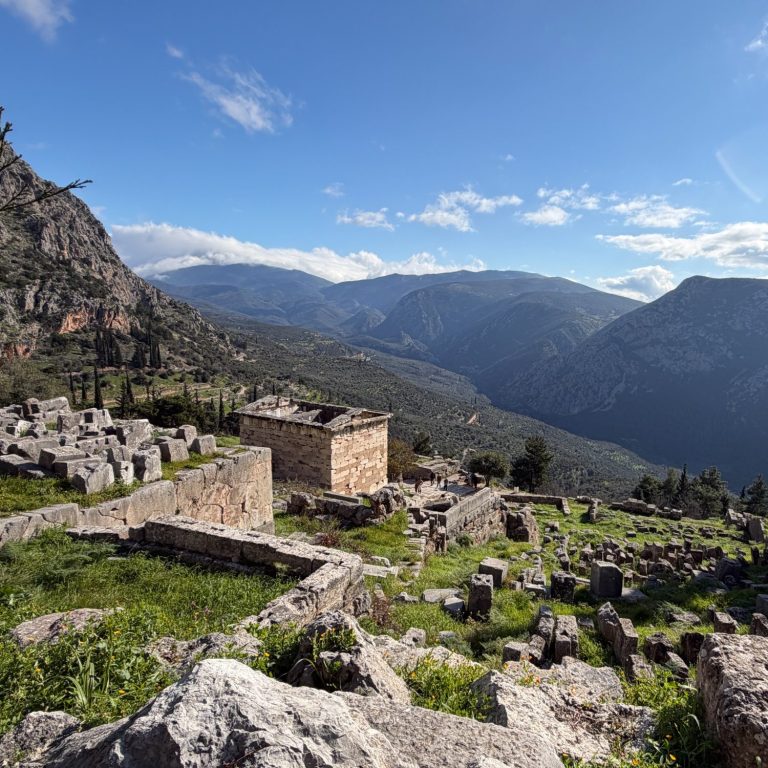
I have a confession to make. I am sooooooooo not a geography person. Not even close. If you asked me to point out something on a map, I couldn’t do it for you. Yet I’d found as these names came up in class, I actually knew them! I might not have known where they were or what they looked like, but I knew them. Rhodes: the special island dedicated to Helios, the way many of the gods liked having cities dedicated to them. The temple of Poseidon: where King Aegeus threw himself into the sea, due to his grief for Theseus. Delphi: where pretty much every major prophecy in every major myth seems to get delivered, setting countless heroes on crazy paths to avoid their own fates.
Being on this trip, visiting these places, suddenly they’re no longer the setting of some of my favorite stories anymore. They’re real. What they represent, the myths they’re associated with, are real in the minds and hearts of myself and so many people before me, and all the ancient Greeks. Going to see these sites, while learning about that invisible yet colorful tapestry crafted by mythology, I don’t have the words to express just how crazy cool it is. I hope to travel to many places in the course of my life, but I know that memories of Greece will always stay with me wherever I go. This trip has been incredible and I’ve barely scratched the tip of the iceberg of everything there is to explore. I could go back ten more times, and still have enough.
Dear Greece, with your warm people, gorgeous sites, architecture wonders and endless intrigue, thank you. You’ve inspired me for a long long time and I know you will keep on doing so.
ευχαριστώ πολύ
Mia Ruhoff
Metaphysics
Alby J.
I am not a science-minded person, but the more I learn about religion and writing, the more I realize how miniscule the differences are between the humanities and STEM. In this class, for instance, we frame religion as an exploration of metaphysics. In creative writing, there are certain formulas you can follow to get the desired reaction. A lot of my friends are chemistry or pre-med majors, and I know their classes require creativity and innovation, even when just following instructions. After graduation, most of their jobs will consist entirely of thinking on their feet and creative problem solving. Separating humanities and STEM as two entirely different categories is a false dichotomy if I’ve ever seen one.
Both science and the humanities are trying to make visible the invisible world. Theology explores metaphysics with precise answers while philosophy keeps spiraling off and off into the sunset. We write it all down to freeze the questions, tie down the stories, but we can never truly know. Not in lab reports or Bibles or anthologies, that’s why we have to keep exploring.
Religion provides a vocabulary to help us make sense of space-time, and reveals core values of our past and present. Myths become the wells of human experience that we still draw water from to hydrate in the modern day. Even in this age of logic and reason, our science is created by a want to understand, to know, to help. Religion does the same thing, just through different avenues. Storytelling is how we make sense of what we cannot understand, and every subject comes back to it in some way.
As we prepare to fly back to the U.S and begin our next semester at PLU, I hope to carry with me the knowledge that we are all looking for the next answer and adventure. I look forward to all the conversations I’ll have with my STEM major friends as we compare class schedules and state how thankful we are to not be in the others’ shoes. All of us are trying to grasp the intangible.
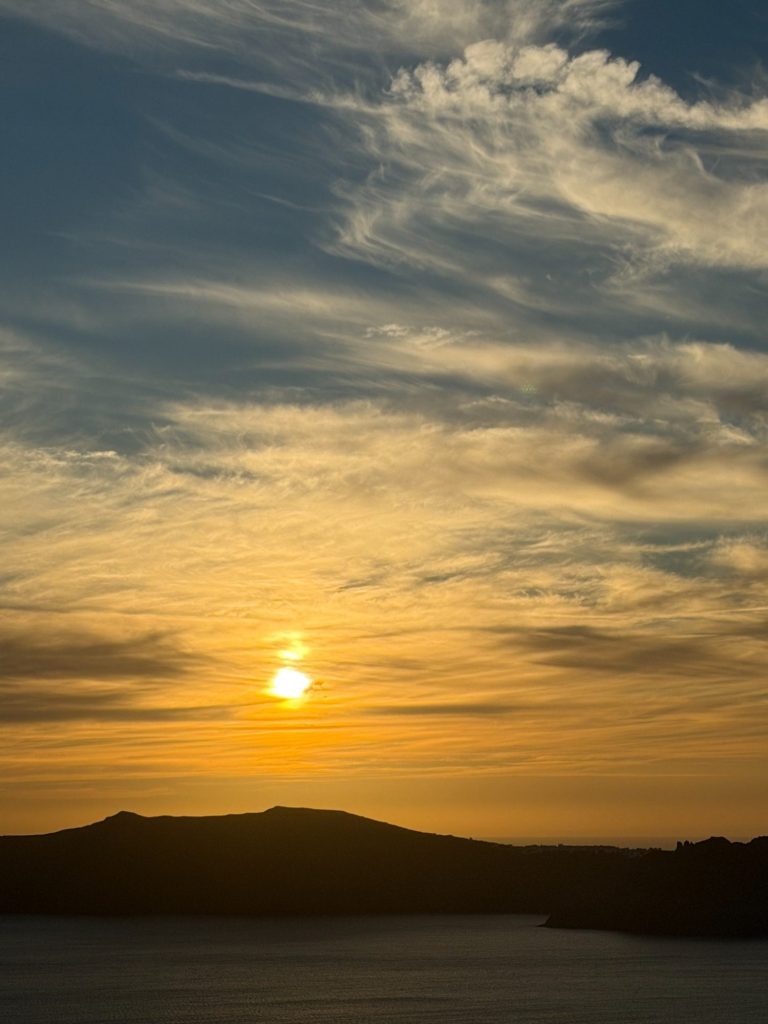
Invisible World
Ani D.
In Greek religion, the world extended far beyond what could be seen. The invisible realm, home to gods, spirits, and the dead, was believed to shape human life actively. Events such as illness, fortune, and natural change were understood as signs of interaction between humans and unseen powers, reinforcing the need for ritual and respect.
Gods were ever-present, not distant. Major deities and local spirits inhabited specific places, from mountaintops to household hearths, making the landscape itself sacred. The invisible world also shaped beliefs about death, as souls were thought to continue on, requiring proper funerary rites to maintain harmony between the living and the dead. The soul did not vanish at death but crossed into another realm, an unseen space that mirrored the structure and values of the living world. Funerary rites and offerings were essential because they acknowledged this transition and honored the continued existence of the dead. Remembering ancestors and respecting the dead maintained bonds between the living and the invisible, ensuring social and cosmic order.
Through sacrifices, prayers, and sacred spaces, the Greeks sought connection with the unseen. Acknowledging the invisible world helped maintain balance, order, and meaning in everyday life.
Communication and reciprocity
Sam B.
Communication is not limited to just sharing a language. There’s communication in everyday interactions in the small exchanges that show how it relies just as much on effort, tone, and intent as it does on a shared language. Even brief moments can create a connection between people if they’re both willing to engage.
Many of these moments happen in ordinary situations, like ordering food or talking with people we meet throughout the day. A common exchange begins with responding and talking to the locals in the small amount of Greek we know, and this effort is met with kindness and patience. Commonly leading to them asking where we are from and having a nice conversation from there. Even though our language skills are limited, attempting to communicate seems to be very appreciated and leads to friendly interactions with others.
This pattern highlights reciprocity, too. When effort is given, effort is returned. Simple attempts to speak Greek are met with smiles and conversation. These interactions show that communication is a shared process, built on mutual respect rather than on a full understanding of a shared language.
Through these everyday exchanges, I have learned that when both sides are willing to add, communication works the best. And that reciprocity turns small moments into meaningful interactions and helps to bridge the gap in language and cultural differences. These experiences have made the daily interactions feel warmer and welcoming, showing how they can bring about understanding and connection.
Community & reciprocity
Clay C.
Community is one of the four domains of religion: it’s a construction of identity through religious discourse and practices. Simply put, religion shaped how people interacted. And something that I learned when I was younger applies here: The Golden Rule— treat others how you want to be treated. Whether in the past or in today’s society, how you treat others will determine how they treat you.
An example that stands out is the building of royal sanctuaries. These were created so that monarchs had a place where they could keep control of religion and assure their succession (they needed a reason for their sons being the kings for generations). In order for these sanctuaries to be built, it required many resources and money. Specifically, resources and money from the monarch’s subjects. As expected, they were outraged, until the king explained that they would be rewarded for their efforts: wealth, cream, prosperity, and cloth. Once the sanctuary was built, it brought wealth, but it took great lengths to create.
Walking around Greece, you can see how people form a community based around religion. An example of this is the grave sites that were located in Rhodes. Greek orthodox, muslims, jews, and christians were laid next to each other in the cemeteries, according to each religion. They recognized that by treating each other with kindness instead of hostility would lead to great relationships forming. As such, we saw a prime example of religious pluralism.
Overall, community and reciprocity are things we can both observe in the past and in more recent history. From the lens of religion, when people form a community and treat others amicably, they will be treated well in return. In truth, it’s something that people could benefit from learning today, as being accepting of other religions is much better than being hostile.
Creating a sense of community
Mikayla H.
At first, I was a little apprehensive about traveling with a large group. Managing different personalities and being beholden to an existing itinerary was not something I was used to when traveling. However, on this particular trip, I have learned of the benefits of group travel and I think they mostly outweigh the drawbacks. One of the reasons for that has been the way communication and reciprocity show up within the group.
There have definitely been moments where communication has been lacking. Messages sometimes go unanswered, plans feel vague, or assumptions are made instead of clarified. Still, as far as I am aware, the group dynamics have worked themselves out. A lot of that comes down to reciprocity. In many contexts, reciprocity is basically synonymous with sharing: sharing resources, time, effort, and support. These small, mutual exchanges can go a long way.
Throughout the trip, there have been several moments where simple acts of sharing promoted goodwill among the class. My classmate Jalen shared his Aquaphor with me and generously offered it to others who had recently gotten tattoos. It was a small gesture, but, this may be something of a reach but, it helped people feel taken care of and connected. This morning, I shared tape with Joscelyn and Samael whose suitcases, like mine, were damaged during travel. Before our last quiz, Kate made flashcards, and we studied together to prepare. People have shared ibuprofen, advice, and time, often without being asked.
Individually, these moments may seem minor, but collectively they contribute to a sense of trust and reassurance. Obviously, I can only speak for myself, but knowing that I can offer help and that there are others I can ask for it from has made the experience feel much less stressful.
Reciprocity like this helps keep things relatively peaceful. When people feel supported and acknowledged, there’s less room for frustration to build. I can be a little oblivious to these dynamics at times, but overall, the atmosphere has felt pretty chill. The shared willingness to help one another has made communication easier and the trip more enjoyable, reinforcing the idea that reciprocity isn’t just about fairness, it's about fostering a sense of community.
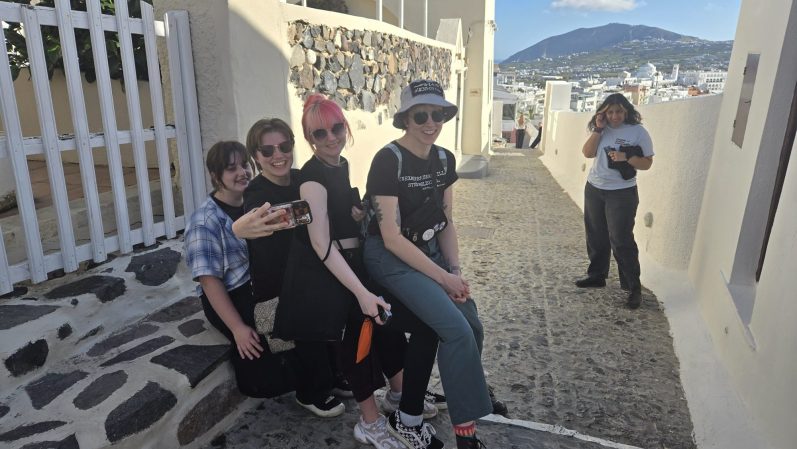
Efharisto
Pedro C.
So here’s something interesting we’ve learned about writing: back in ye olden days, when it was incredibly rare and a difficult skill to acquire, obviously this meant that people had to be selective about what they chose to write down. As a result, when putting a chisel to a clay tablet scribes were not kidding around about what they wanted to be remembered. If the information was unimportant or common knowledge, it wouldn’t be written. What was the point? No, knowledge that could be spoken to the person in front of you remained just that: spoken. Writing was for speaking to people across impossible distances and through time.
As we’re traveling across Greece and I pick up little bits of the Greek language here and there, it’s somewhat impossible not to think about the shift in the prevalence of writing. It’s everywhere now! We mostly use the spoken word in our daily encounters, but trying to unlock the written word has been… tantalizing.
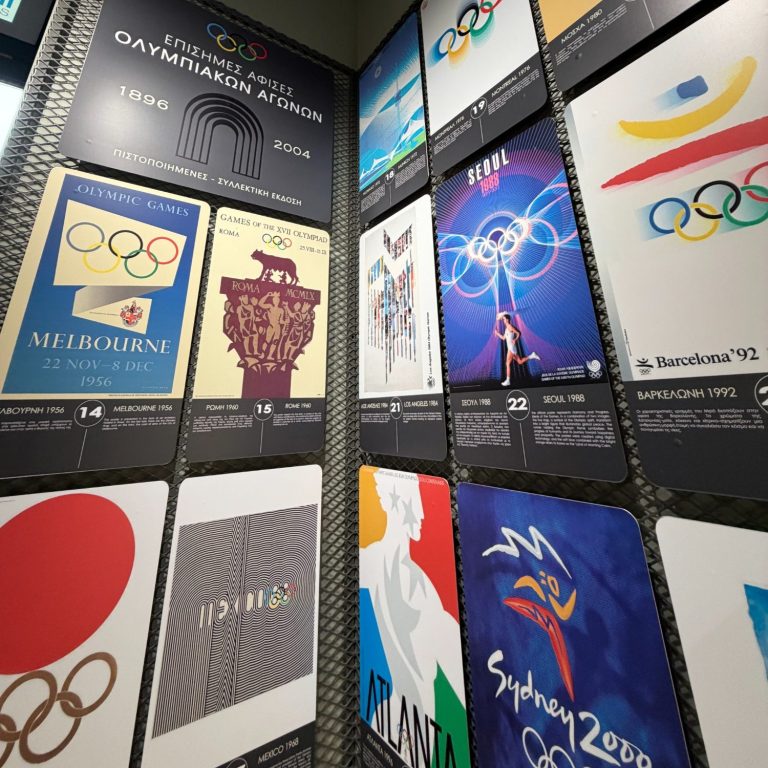
It started with the phrases we were given to memorize in class. Some of them, like efharisto (thank you) and nero (water) appear everywhere in Greece. Recognizing the letters and pairing them to the sounds was helped by the Fearless Assistant’s dedication to learning the Greek language, which occasionally involved lending me her phone for Duolingo lessons. The real breakthrough came with the Olympic Stadium, though. There were monuments with the names of various cities that had hosted the Olympics inscribed in both Greek and English. Matching one to the other, realizing the different sounds that each letter made, felt like a lightbulb going off in my brain.
Since then, it’s been a constant quest to try and decode as many random Greek words as possible. Whether it be writing on the holy icons in the monasteries of Meteora, food items on restaurant menus, or random signs by the roadside, I’ve been trying to sound out the letters. Figuring out their meaning from context clues is the next step, and recognizing them in conversation? It’s a new kind of satisfaction. My favorite part has to be the “translation” of names. Not only are they the easiest to recognize in any given text, but there’s always a few letters or vowels that get chopped off. Some countries have entirely different names from one another, like France being Gallia. It raises so many questions that it just gets my curiosity in a frenzy!
These are baby steps that in no way make me capable of carrying on any kind of a conversation in Greek. But as a guest in this country, it feels like the least I can do, considering all the work so many people have been putting in to accommodate me and the rest of this class. When so many Greeks speak English, learning as much of the native language as possible just feels like that bare minimum thing to do. The prevalence of writing, a form of communication created to cross impossible boundaries, feels not only helpful but like a good sign. To cross not only countries but the language barrier, that’s been a pretty interesting pursuit on this trip.
Sacred spaces
Mikayla H.
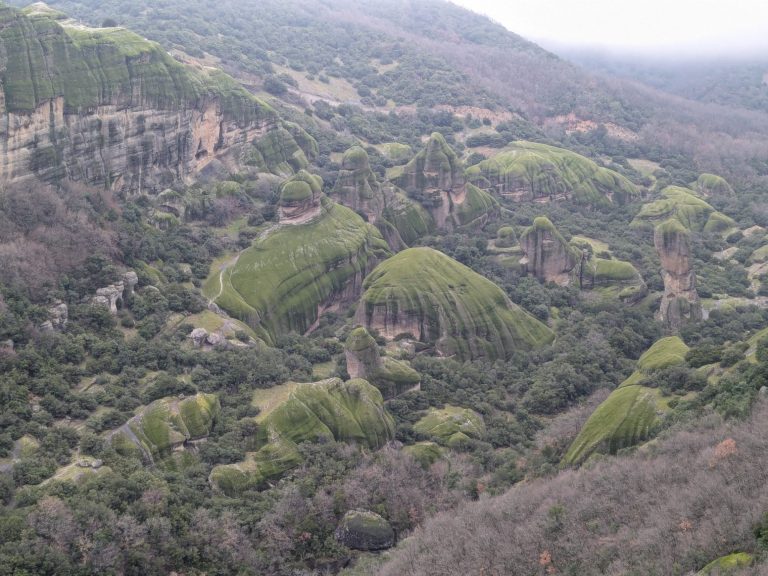
I’ve never seen a place like Meteora. The geography of that area is astounding and something I will never forget. Try to imagine the vastness of space between the massive stone columns completely filled with water millions of years ago to form them.
I wonder if the hermits and monks who were among the first to decide to settle there a couple thousand years ago imagined that at all. The most obvious narrative as to why they made the decision to build monasteries on top of these jutting masses of rock is that these ancient skyscrapers bring them closer to god. I can see that. I think I can believe that.
Similarly to the Spring Fresco, I was emotionally affected by our visits to the Meteora monasteries, but perhaps on a grander, more religious scale. My response to the frescos at the archaeological museum was more connective, more loving and familiar. But my response at the monasteries was one of awe. It was humbling and wanting for something more cathartic.
My generically protestant upbringing that I have mostly distanced myself from as an adult was really bubbling back up and I found myself praying. This isn’t a regular practice of mine at all, but there really was something about these places. (A good example of the ontological approach to the construction of sacred spaces, I think.) Most people carry some amount of grief with them, I felt able to leave a little bit of mine there. My prayers looked like leaving a euro coin at one of the offering spaces, lighting at least one candle at each location we visited, writing down names for a prayer request, and in the last church we visited I sat and just thought about how long the rock below me had been supporting physically the human-constructed sacred space on top of it, and how meaningful that is. As I sat there thinking about this, which did still feel like a form of prayer, in its own way, a thoughtful appreciation for the physical support of the mass of stone beneath me and that monastery, it affirmed something for me.
Part of my personal belief system is that the Earth is a living thing and that these geological structures, before they were subject to any human eyes at all, were already sacred spaces. That’s of course, me, a human, ascribing a label to it but as we’ve learned in class personal theology is not a question of reason, so it doesn’t need to make perfect sense.
Meteora monasteries
Alby J.
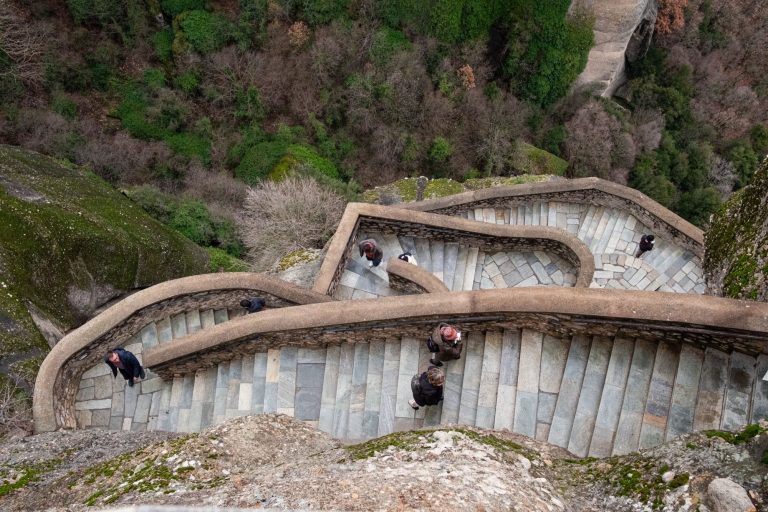
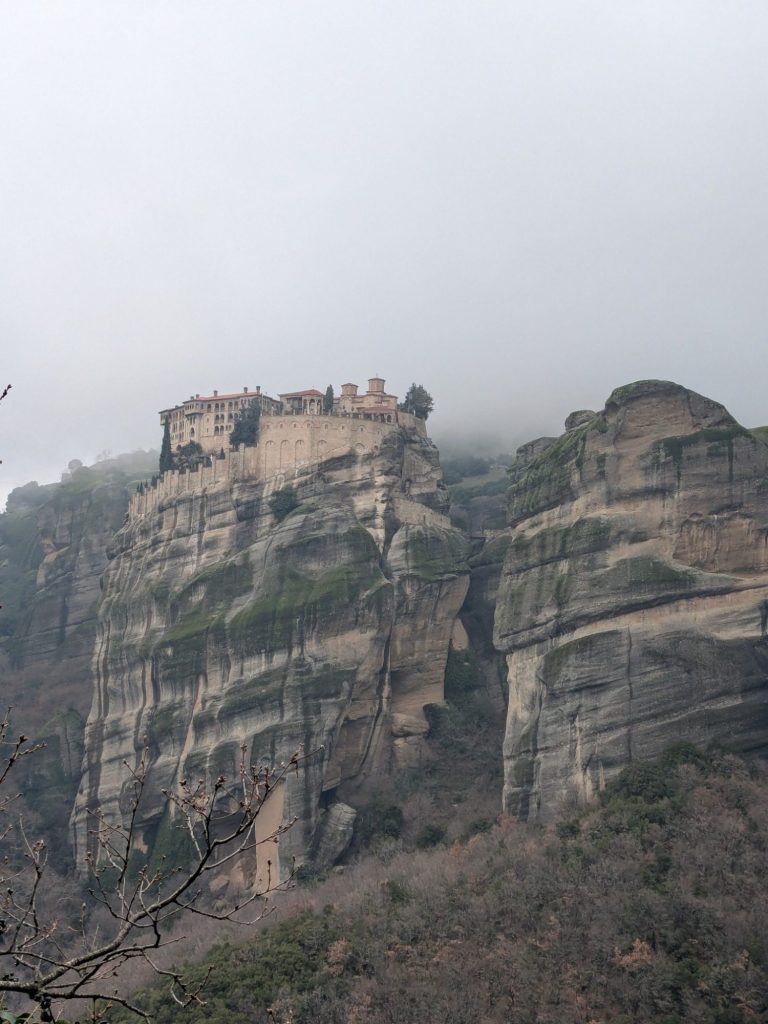
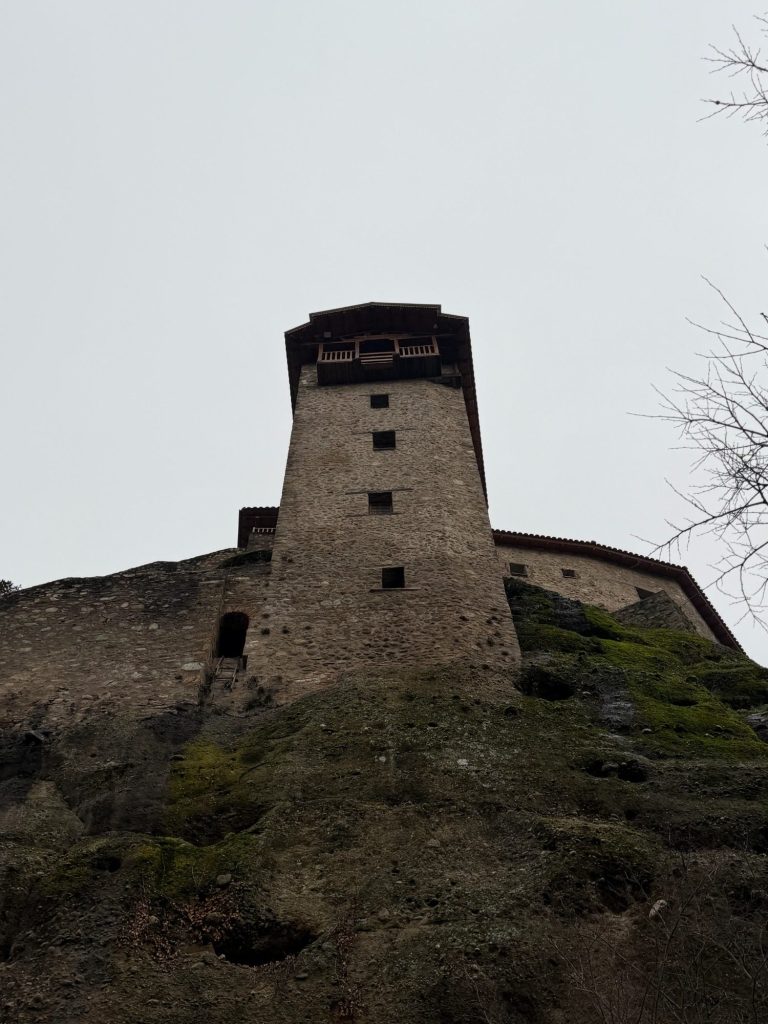
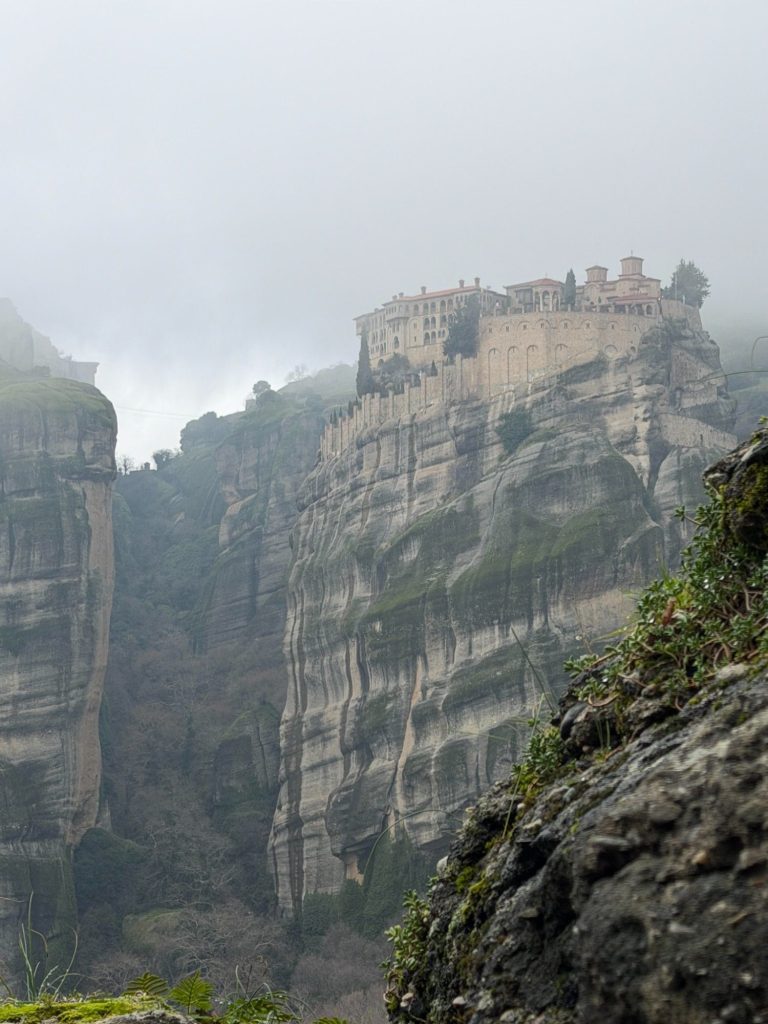
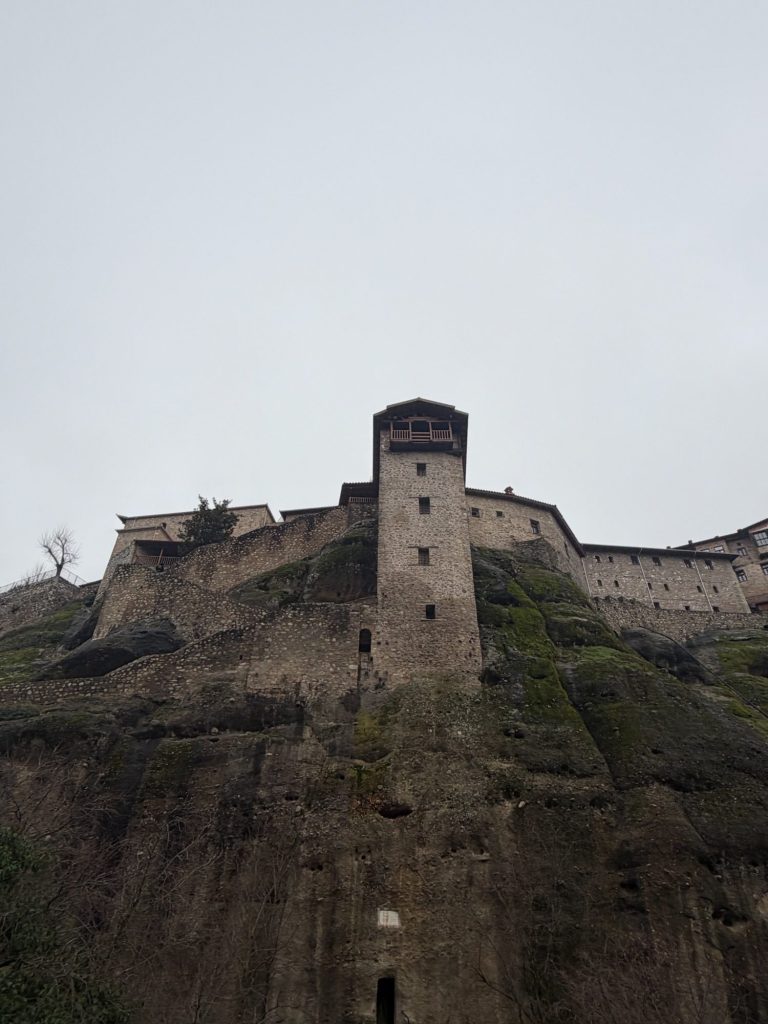
Last weekend, we had the opportunity to visit the Meteora Monasteries. These monasteries, built between the 14th and 16th centuries rest atop huge stone formations and seem like something ripped out of a story book. Or, more fitting for this class, taken from a myth. The original monks used ropes and pulleys to enter the monasteries, which doubled as a security measure when the threat of destruction was upon them, and you can still see some of the original rope mechanisms when you tour through the monasteries. Inside the sanctuaries, every wall is layered with art.
We learned in class that sacred spaces have levels of holiness, often marked with height, and sure enough, the farther you walked into the sanctuary, the higher up you would go. I find human nature charming. It’s just like us to choose remote, high up cliffs and decide we need to drag thousands of bricks up the sides so we can live there, too.
As we explored the sanctuaries and the monasteries at large, I wondered what made the place holy. A chicken or the egg situation. Did the ancient monks see the tall stones rising out of the mists and know the fog-filled air was something special, or did the decades of hard work and art instill the place with its magic?
I’ll never know the answer, and that’s alright, but the monasteries were breathtaking either way and an experience I’ll never forget. Being able to see a space so clearly sacred, and still in use, helped me understand our more literal definitions of the words. It was interesting to hear about my classmates’ experiences with the monasteries, as well. Everyone I talked to was moved by just the pure majesty of being high up as the clouds rolled in. It was like swimming out over the ocean and seeing the sand bar drop away.
As we go into our last week in Greece, I am looking forward to seeing more sacred spaces and learning more about the experiences that tie us to our ancient predecessors, and finding sacred spaces back home, as well.
(Song recommendations: Be by Hozier, the last great american dynasty by Taylor Swift, and Ophelia by the Lumineers)
Stairway to heaven?
Pedro C.
Throughout our classes, there have been certain consistencies in different religions that Professor Finitsis has been hammering home for us, especially in the Mediterranean area. One of those consistencies is the layers of distance that are placed between sacred spaces and the rest of the world. It’s definitely something that’s been shown as well as told to us.
Christian and pre-Christian religions have it in common. I think about the sheer cliffs that the Temple of Poseidon lies atop when also thinking of the Meteora monasteries. You know what they have in common? A lot of stairs! They’re an inconvenience to get up to for the passive tourist who managed to take a bus most of the way there, let alone a hardcore ancient pilgrim who would not have had the luxury of maintaining a roof over their head if they wanted to keep making progress towards their destination. I get the impression we’re missing out on part of the classic experience by traveling on foot, even if it’s a part of the experience I’m glad enough to miss out on.
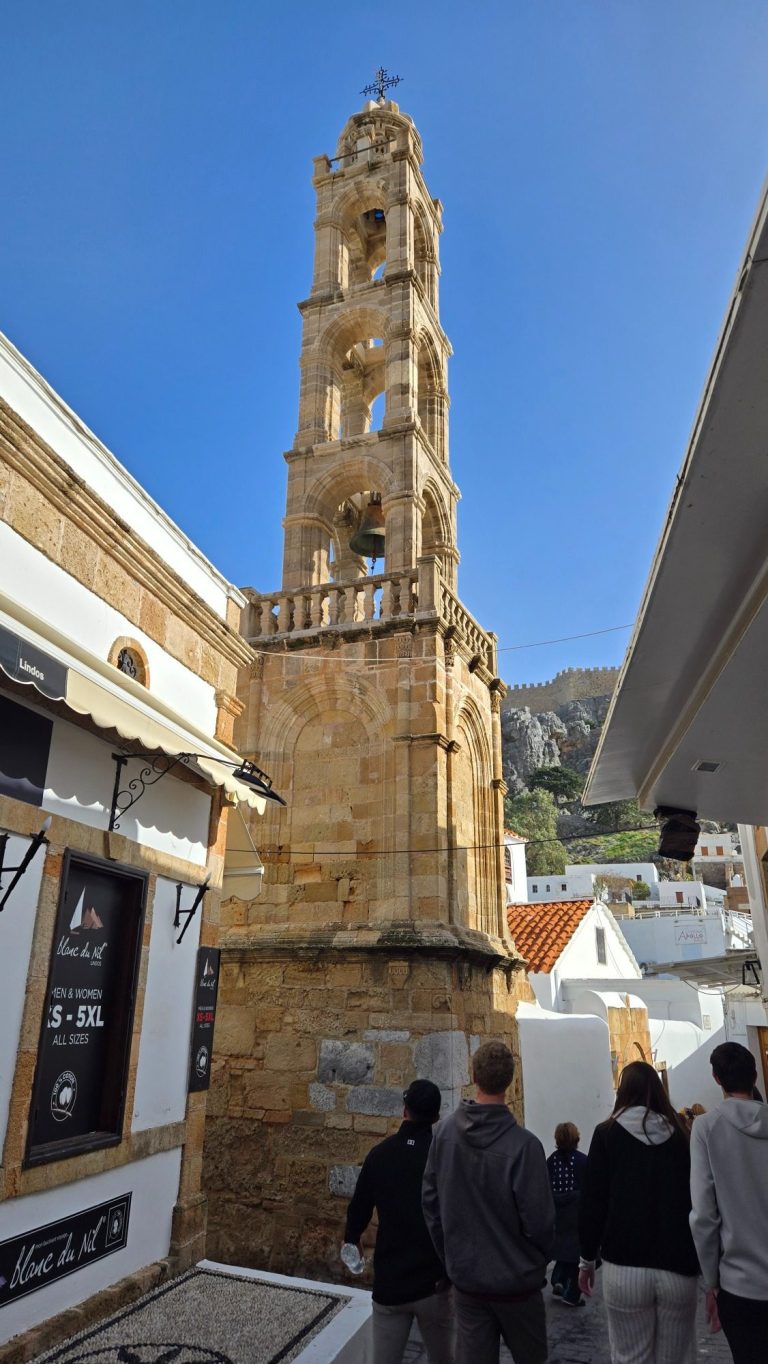
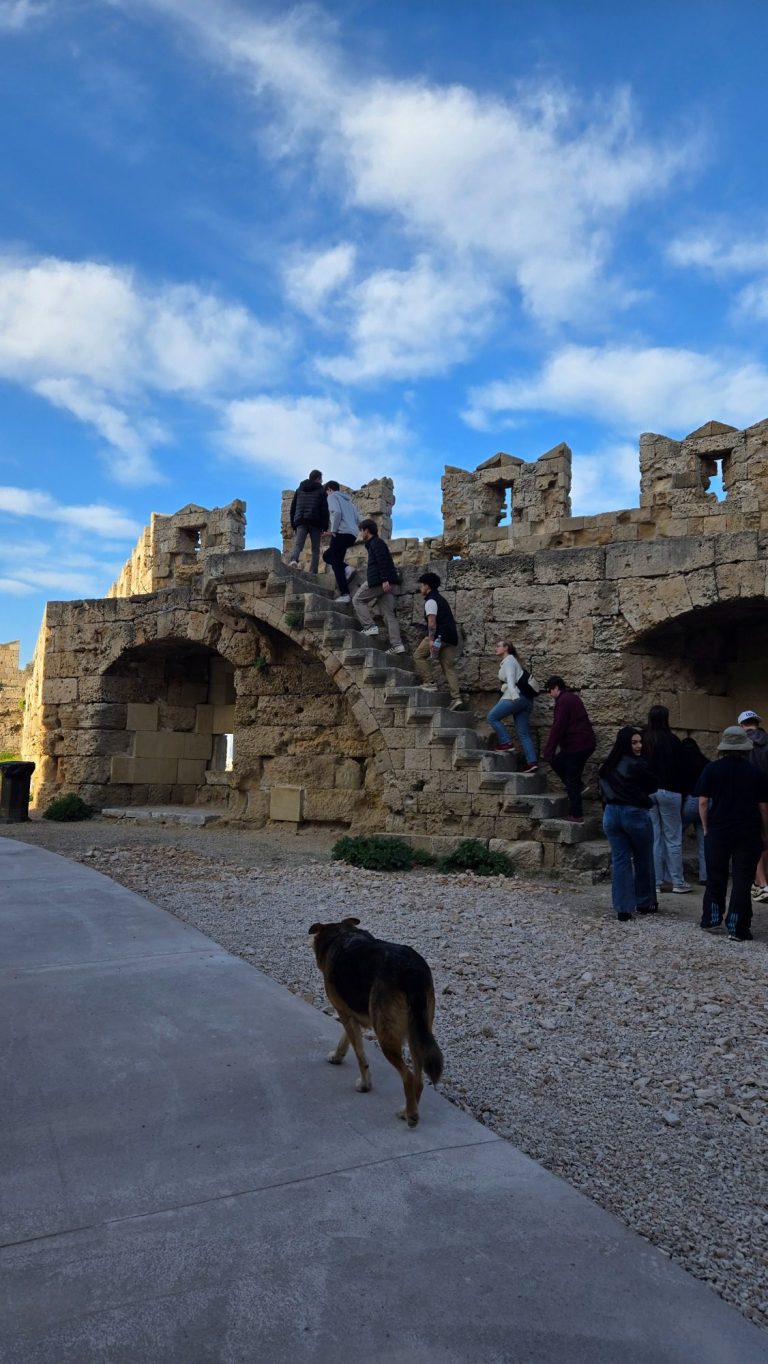
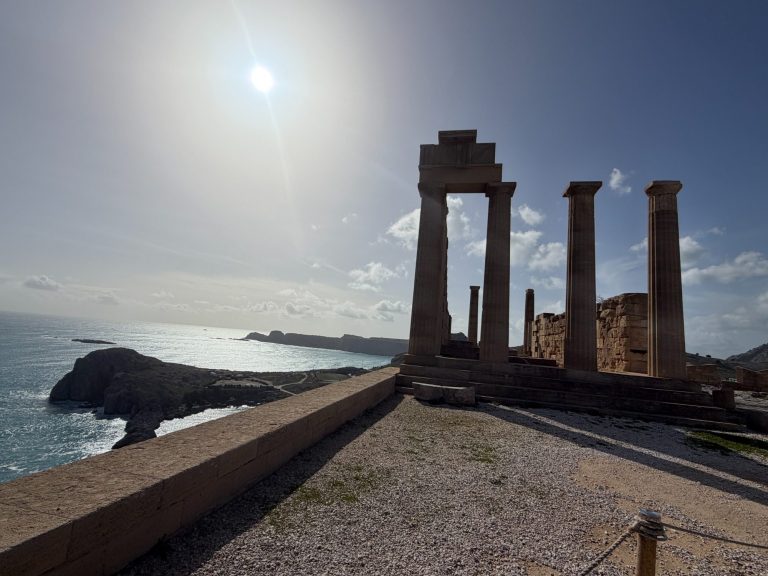
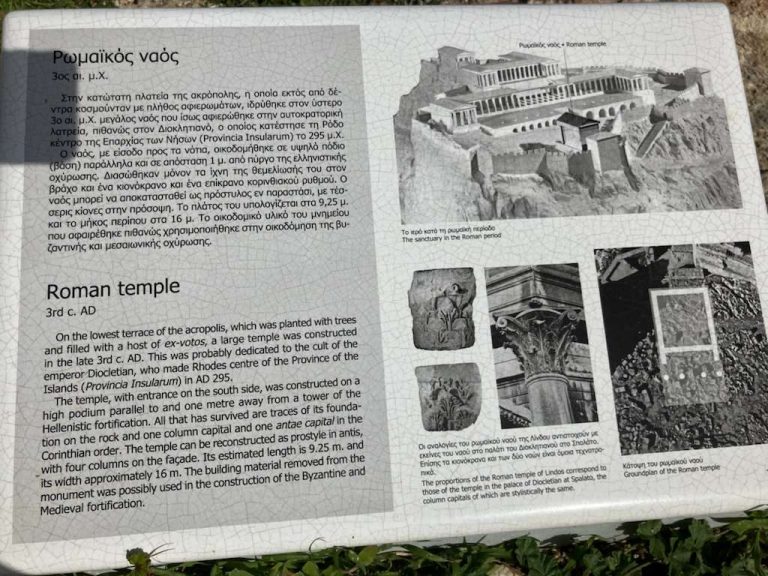
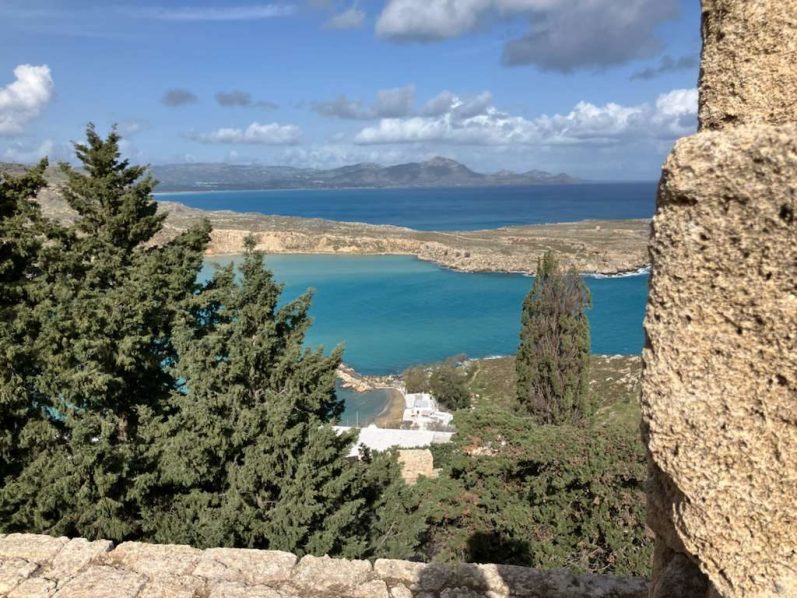
One of the most obvious demonstrations of how this mentality survived across the ages was in the Acropolis of Lindos. After a great trek up the hill, we stumbled not only upon a temple to Athena but also the ruins of a Byzantine chapel, side-by-side. Our lovely tour guide explained to us how parts of the temple managed to survive even after the Christianization of Rhodes: Athena had been worshipped as a maiden goddess, and Christianity happened to have a rather prominent Virgin Mary figure hanging around. Thus, Athena’s temple became a shrine to the “maiden of Rhodes”. No need to tear it down now!
The fact that both temple and chapel were built so close to one another says plenty about how both religions valued the layers of distance in their sacred spaces. If the building spot had a less-than-ideal history, that didn’t matter so much as the sheer sacred power that the building spot already held. Towering over both the ocean and the town, there is something about that acropolis on Lindos that feels a little closer to the gods. For all their differences, staring at those ruins up there feels almost cheerful, as a reminder that centuries apart, humans still have the ability to appreciate what a gorgeous vista can do for the soul.
Recognizing sacred space
Ani D.
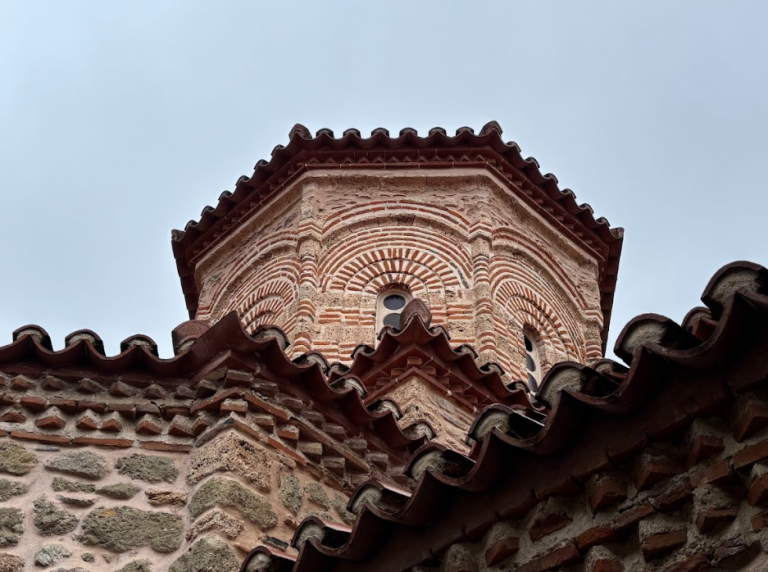
Sacred space plays a vital role in religious life because it creates a physical and emotional boundary between the ordinary and the sacred. Whether it is a temple, church, mosque, shrine, or natural site, sacred space offers a place where individuals and communities can step away from daily routines and enter a space of intention, reverence, and connection.
These spaces help believers focus their attention. In a world filled with distraction, sacred spaces encourage stillness, reflection, and mindfulness. The architecture, symbols, sounds, and rituals associated with these places are designed to orient people toward the divine, reinforcing spiritual values and beliefs through embodied experience rather than words alone.
Sacred spaces also foster community. Shared rituals performed in a meaningful place strengthen collective identity and belonging. They become sites of memory, holding weddings, funerals, prayers, and festivals, all while carrying the spiritual and emotional history of a community across generations.
Beyond buildings, many religions recognize sacred space in nature: mountains, rivers, forests, and ancestral lands. These places remind people of their relationship to the natural world and the responsibility to care for it. Treating space as sacred encourages respect, restraint, and stewardship rather than exploitation.
Ultimately, sacred space matters because it anchors belief in lived experience. It transforms faith from an abstract idea into something felt and practiced, offering people a place to reconnect with meaning, tradition, and the sacred presence they seek.
Sacred history
Jaquie L.
What makes things sacred?
Is it the intrinsic sensation of awe built into natural phenomena, the solemnity of a graveyard, or the dread of a dark alley? Perhaps, it's the impact of an army's last stand, or the shared sense of grief a nation feels when they stand before a monument to a great tragedy. Or, could it be the warm nostalgia of being in a place of fond memory, or the weight of emotion that comes from standing in a sanctuary to your faith?
In truth, it is all of these things. Some things are sacred just by their existence, some are sacred to a specific group or culture, and some are special specifically to the person experiencing them. No matter what makes something sacred, the truth remains that humans have an ingrained sense of the sacred, and a desire to seek it out.
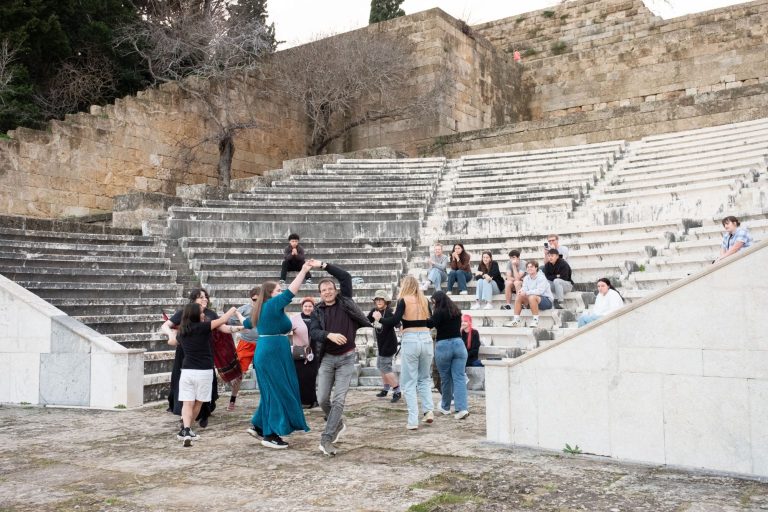
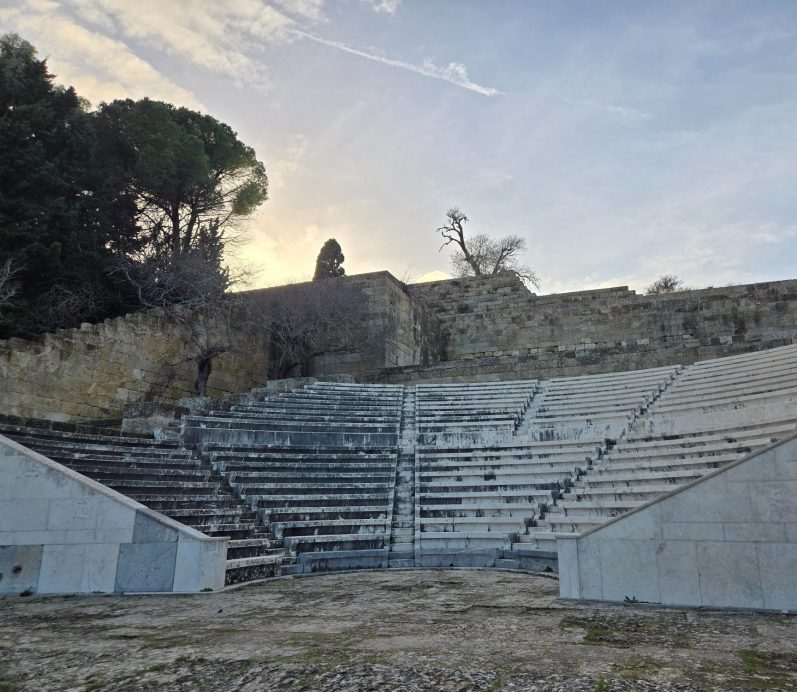
That's part of why this trip has meant so much to me. Since childhood I have found history to hold something so intrinsically sacred that I captured my whole mind. I am possessed by the desire to know what was, to experience how these histories have shaped modern culture, and to touch the same stones someone else has millennia ago. Here in Greece I have found these experiences in abundance. As a former aspiring actor, to stand within the circle of an ancient theater, looking up into the stands, and let the emotion of a character flow through me once more felt sacred to me beyond measure. It's a space made sacred to me by my history.
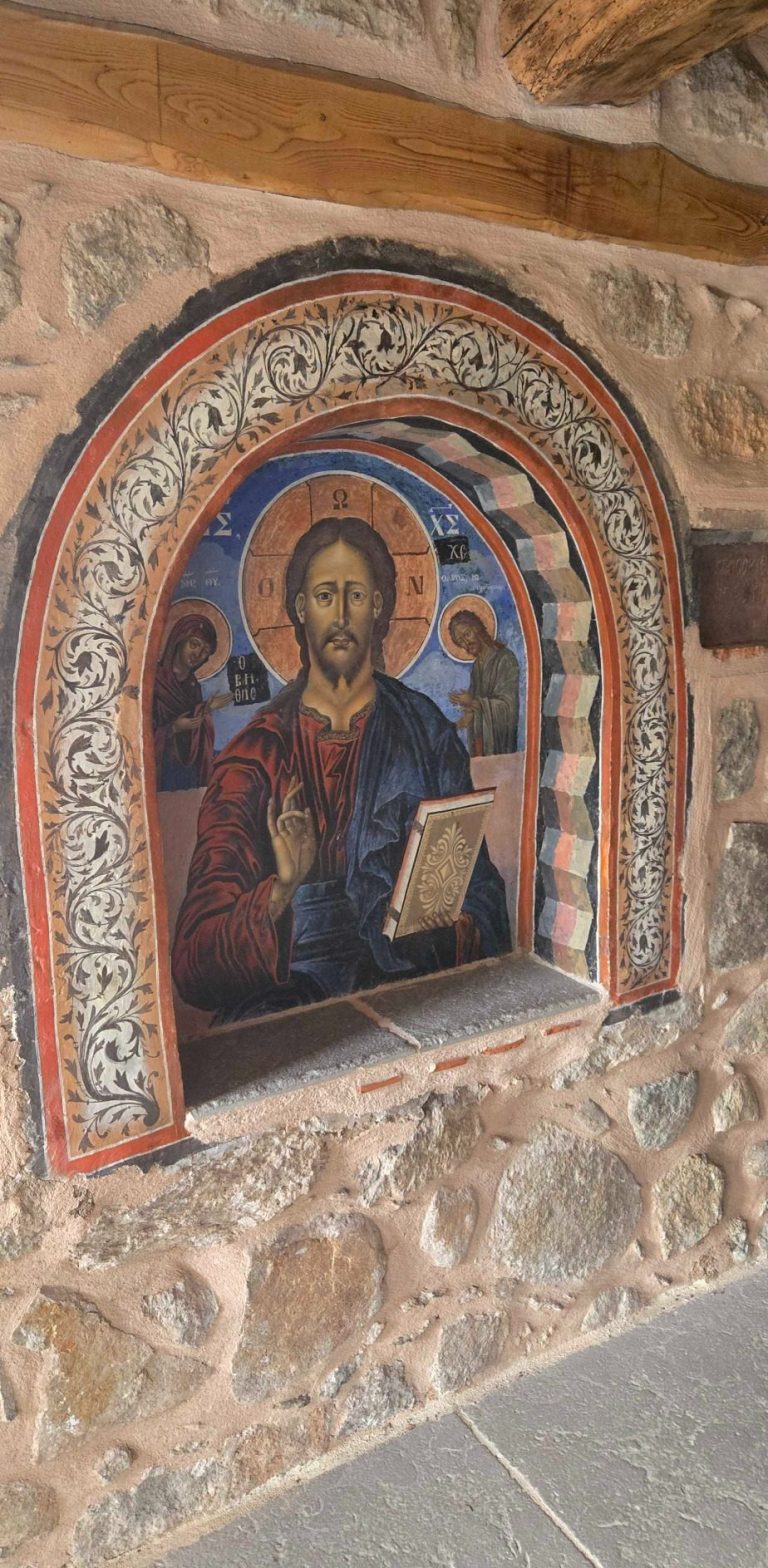
Beyond just the layout, the design of these places also influenced behavior and feeling. The quiet atmosphere and use of dim lighting encouraged slower and more meaningful reflection. The architecture itself showed how the space should be treated, reinforcing its sacred nature through the experience and atmosphere of it.
Seeing these places really puts into perspective the sacredness of these places and how the design of each is deeply connected to its design and architecture. Both create meaning through shaping the behavior and atmosphere of the sacred spaces into places of reflection and importance.
Purposeful creation of sacred space
Sam B.
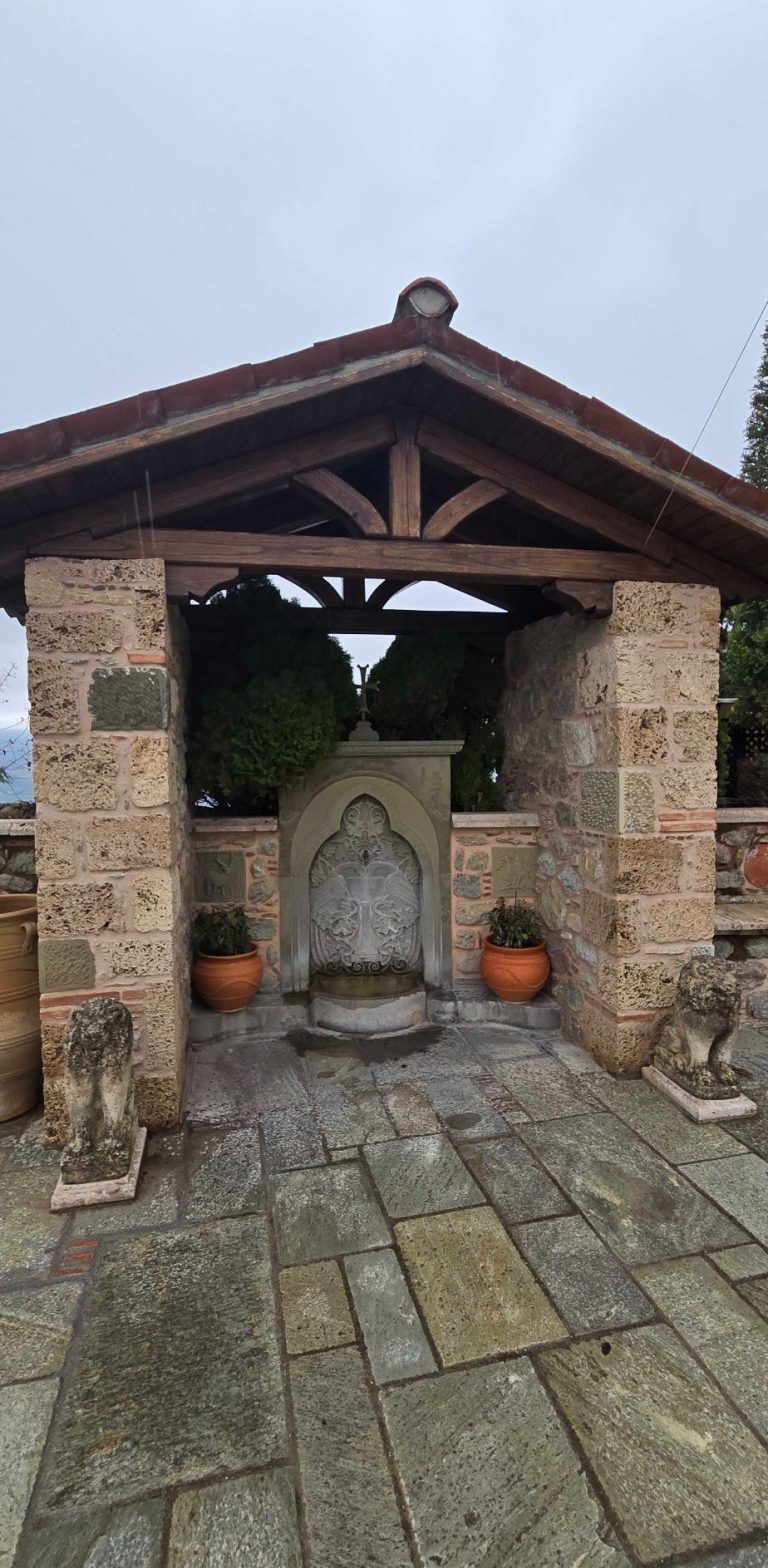
Sacred spaces aren’t created by accident. Throughout our visits to monasteries and religious sites, we've seen how physical design plays a huge role in how a space can feel sacred. Through how they’re built with architecture, layout, and structure, these sacred spaces are intentionally designed to separate the ordinary from sacred and help guide people on how they experience them.
One of the most noticeable features of sacred spaces is how they use their structure and progression of spaces. Many monasteries we visited were designed with a clear separation of levels, which required you to move inward to reach the most sacred areas. Thresholds and barriers create a physical shift between the spaces. They help to show the sacredness of the area.
Effort, patience, and committment to find sacred
Jalen E.
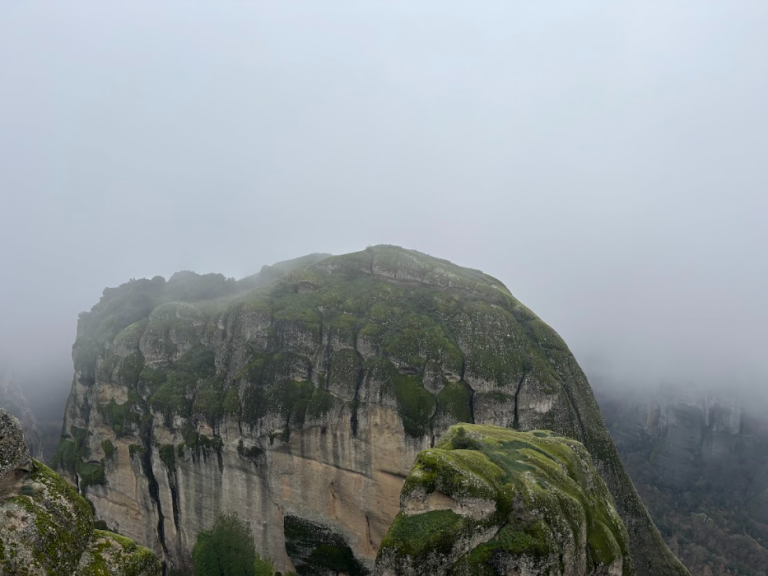
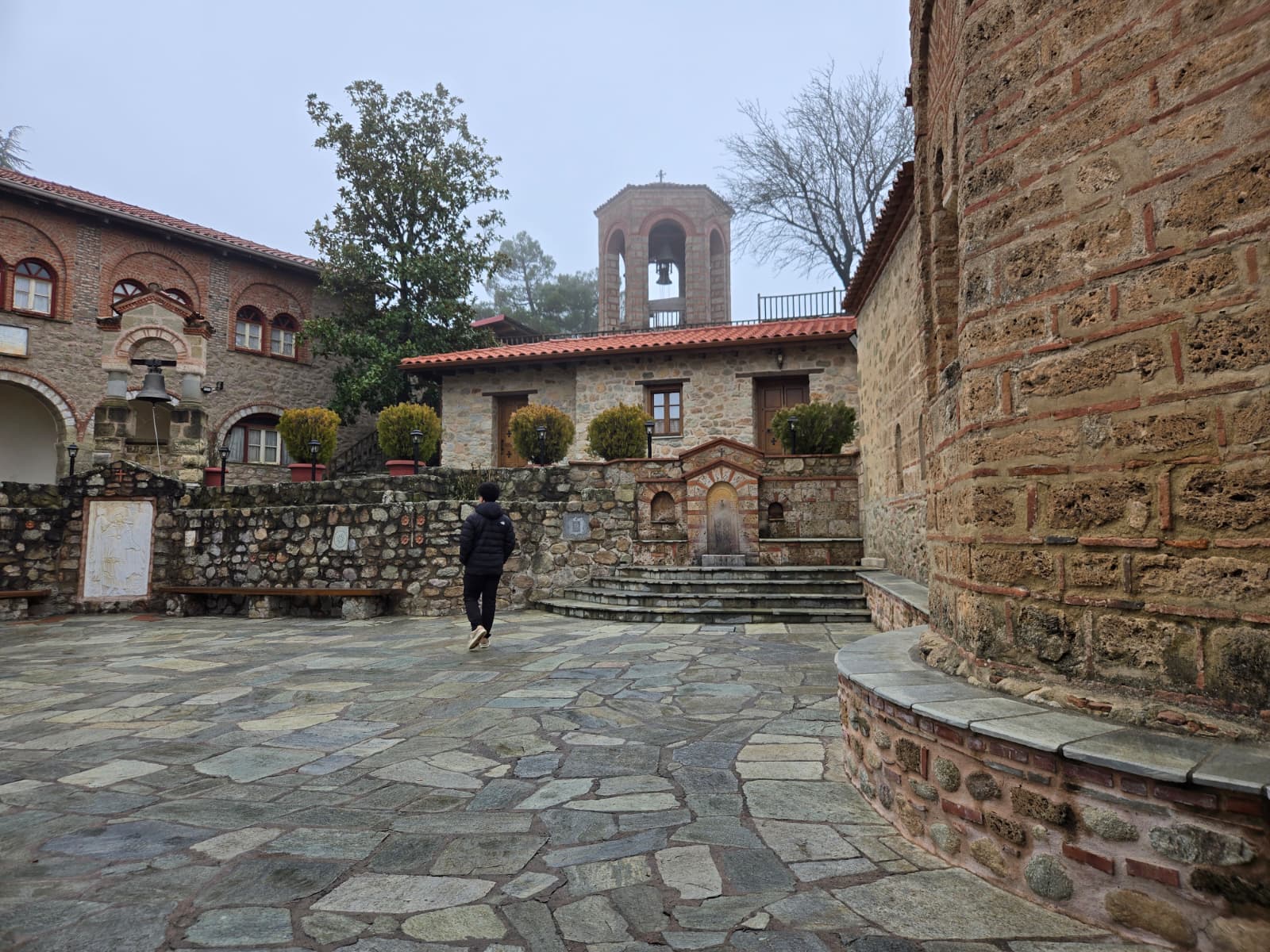
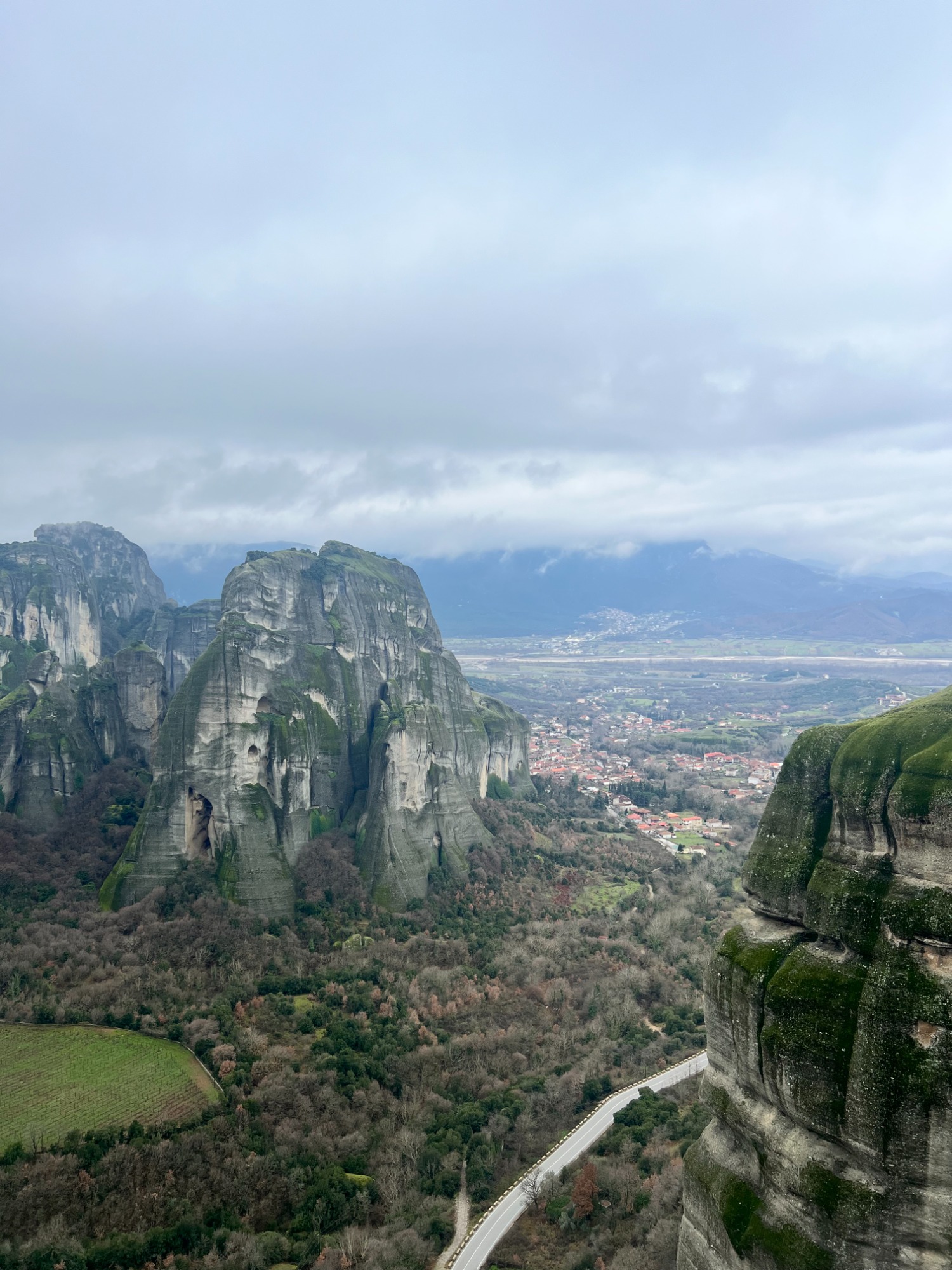
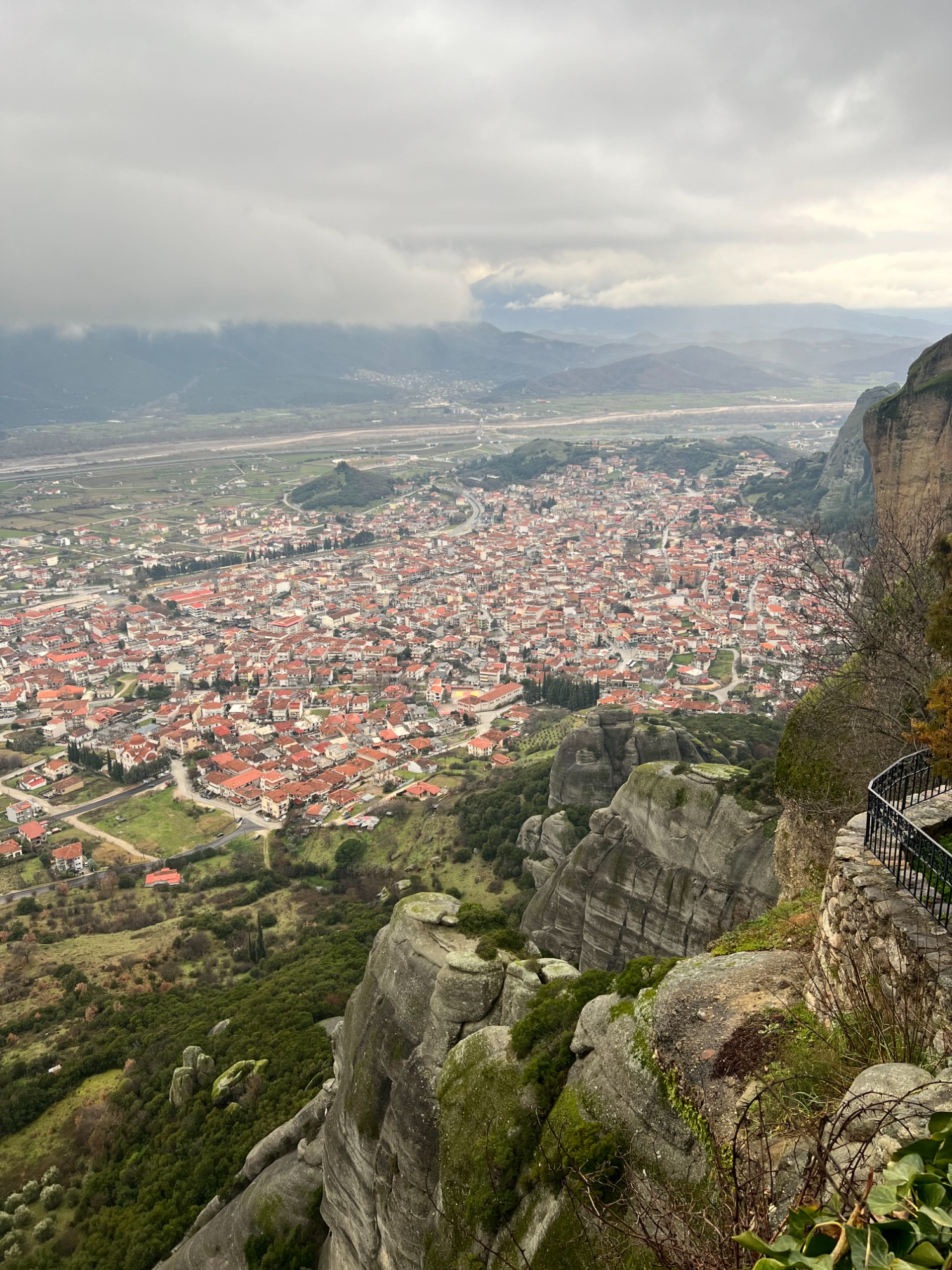
Recently, our class visited the monasteries of Meteora, and it was one of those places that immediately feels unreal. The monasteries sit on top of massive stone pillars that rise straight out of the ground, making the entire landscape feel suspended between earth and sky. It’s hard not to think that if any place were meant to be sacred, it would look exactly like this.
What stood out to me most was how intentional the space felt. These monasteries weren’t built for convenience or comfort. The original monks accessed them using rope ladders and pulley systems, not only for safety but also for isolation. Getting there required effort, patience, and commitment. That alone made the space feel different from anywhere else we’ve visited. This wasn’t a place you stumbled into by accident.
Inside the monasteries, the sense of sacredness continued. The walls were covered in religious art, and the layout subtly guided movement upward and inward. In class, we talked about how sacred spaces often create layers of holiness, with deeper or higher areas being more spiritually significant. Walking through Meteora, that concept felt very real. The physical act of climbing higher mirrored the idea of moving closer to something divine.
As I explored, I kept wondering where the holiness truly came from. Was it the landscape itself? The towering rocks? The mist, the silence, or was it created over time through prayer, labor, and devotion? I don’t think there’s a clear answer, but maybe that uncertainty is part of what makes a space sacred. It’s shaped by both nature and human belief.
Standing at the edge of the cliffs, looking out over the valley below, it was impossible not to feel small. Many of my classmates mentioned feeling the same sense of awe. The height, the clouds drifting by, and the quiet made it feel like the world below had faded away. In that moment, it was easy to understand why people across cultures and history have chosen elevated, remote places for sacred spaces.
Visiting Meteora helped me better understand what we mean when we talk about sacred space not just as a religious concept, but as an experience. As our time in Greece comes to an end, I’m excited to keep noticing where and how sacred spaces appear, both here and when we return home.
Sacred then and now
Kate F.
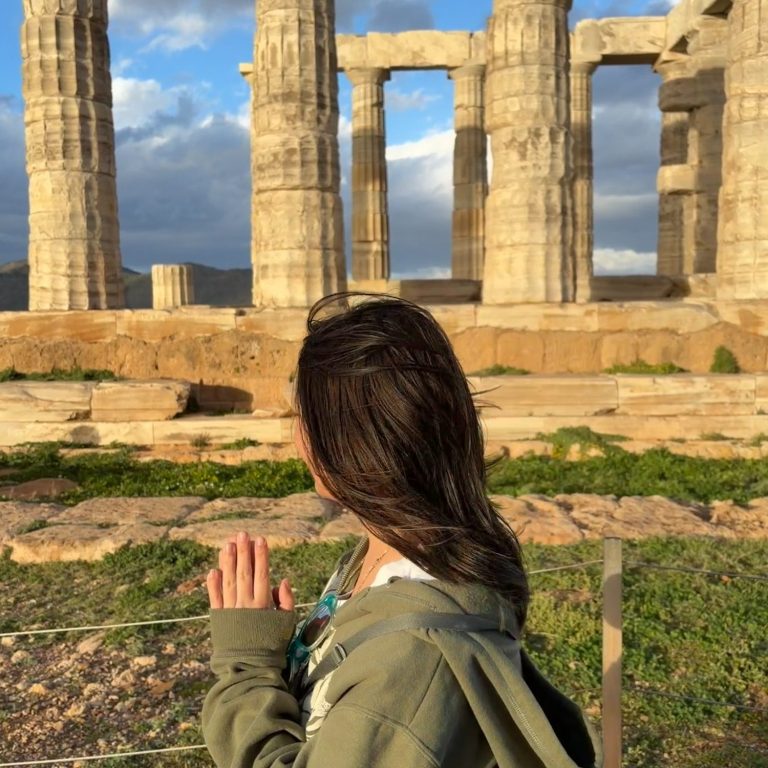
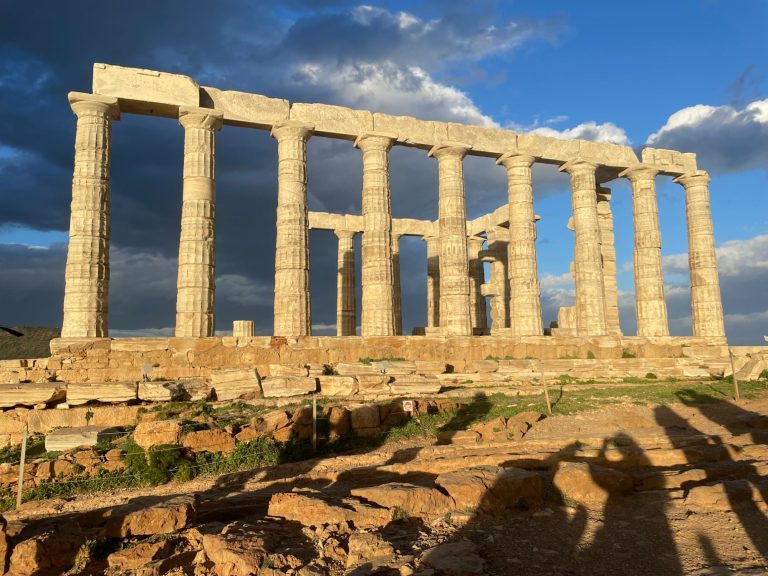
The place I keep returning to in my head again and again is the Temple of Poseidon. Although we went on the very first weekend of our study away trip, it remains my favorite place we have been. For our group project we presented on this beautiful location, so it was very meaningful to visit. We counted the flutes in the massive doric columns, found the graffiti that Lord Byron left on it, and watched the sunset with the most beautiful view of the Aegean Sea.
It was a sacred space to the people of the time, where they worshiped the God of the city, Poseidon. Today it remains sacred, as an awe inspiring location to connect with ancient Greece.
Visiting sacred space
Samael B.
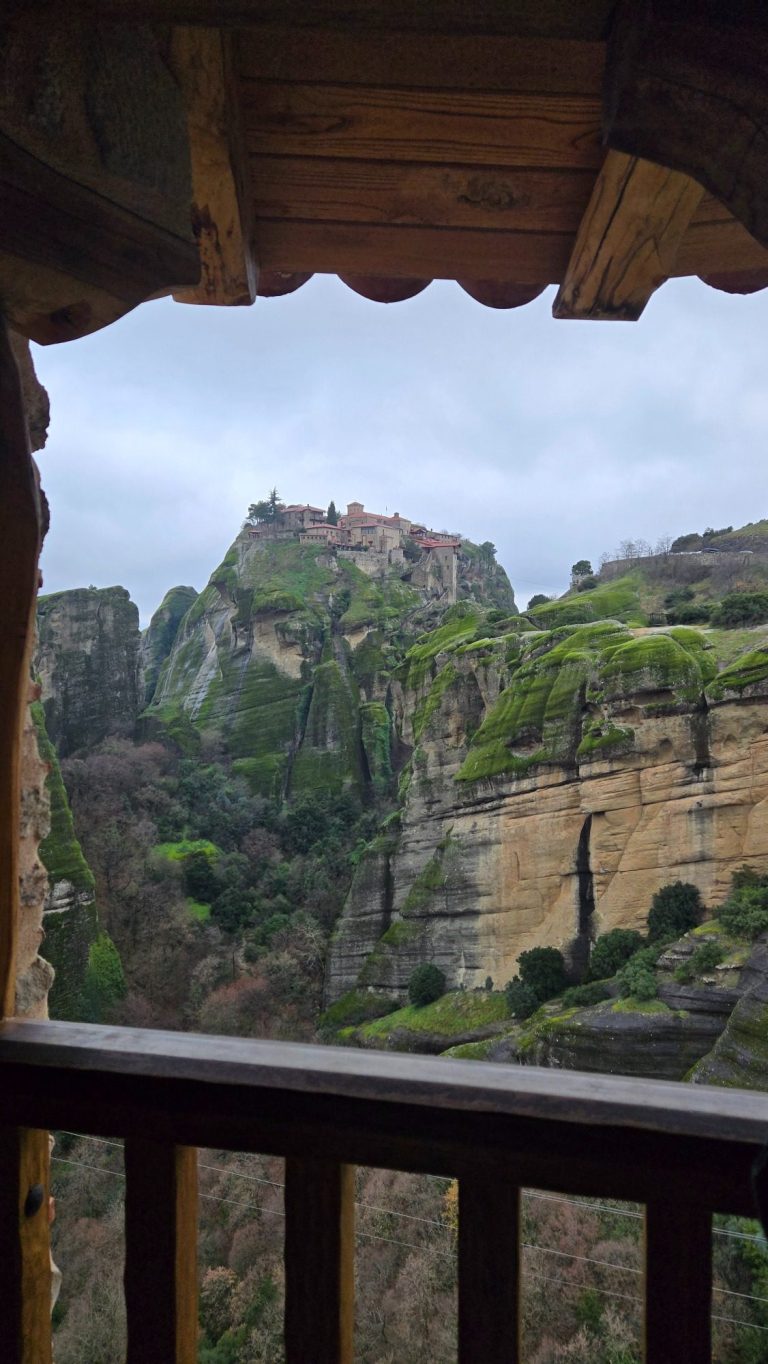
As we’ve been studying here in Greece we’ve had the opportunities to both learn about and see/visit a variety of sacred spaces. We’ve seen ancient Greek temples – like when we visited the temple of Poseidon, we’ve been to Delphi, we’ve seen some of the monasteries at Meteora, and we’ve seen so many churches and shrines everywhere we’ve gone.
Something we’ve learned about sacred space is that there are three main approaches to what makes a space sacred - the ontological, cultural, and phenomenological approaches - and that the way the space itself is divided and constructed separates it from ‘normal’ space and makes it noticeably sacred. In many places this division comes in 3 parts, but there are examples of sacred space with different layers/divisions as well. In Meteora the churches have this division of space, the place is holier the further in you are, with the holiest of spaces being curtained and blocked off from visitors.
But while the churches’ interiors created a man-made and understood division, the site itself offered and was chosen for its unique division from the surrounding space. The monasteries sit high atop unique cliffs, they’re well above and beyond the area that anyone else would inhabit. These cliffs were seen to be a good spot to worship God because they would keep the monastics separated from the rest of the world, and because with how high up they were they felt they were closer to God. Many of the holy spaces we’ve seen were chosen in similar ways, by recognizing the spot as one that felt different and separate from normal places, and erecting worship sites there. We’ve been so lucky to be able to visit these sites, and to be allowed to interact with so much of this sacred space.
Sacred paces
Mia R.
Kalispera!
I have a confession to make. When I walk, I am never the most observant walker. I am either walking too fast, usually trying not to be late, or lost in conversation with a friend mind miles away from my current moment. Some of these places in Greece though? Totally different. There is so much to see and so much to take in each of these sites we visits. And with some of them, this feeling goes far beyond what can be simply sensed…
Sacred space. One of the key concepts we look at in class, what makes a space sacred? For some it is something inherently powerful about a space itself, for others it is how a space was used. Some spaces had an interactive element contributing to that space of sacredness and how one experienced it. On our trip I’d say we’ve been lucky to experience a blend of such spaces, from breathtaking natural views to impressive sites used long ago for athletics, art and religion.
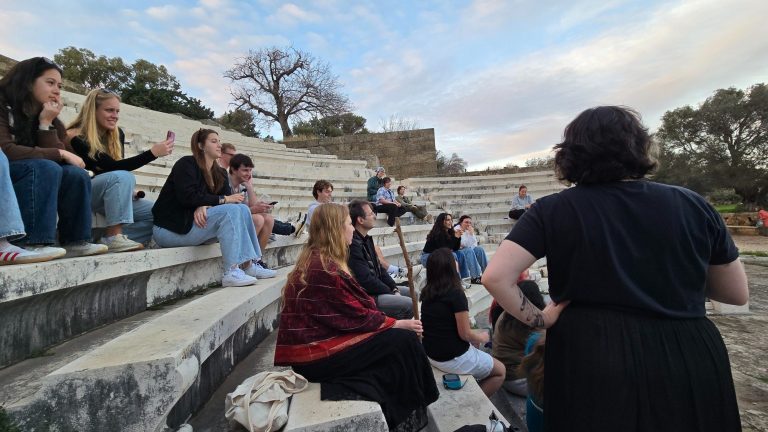
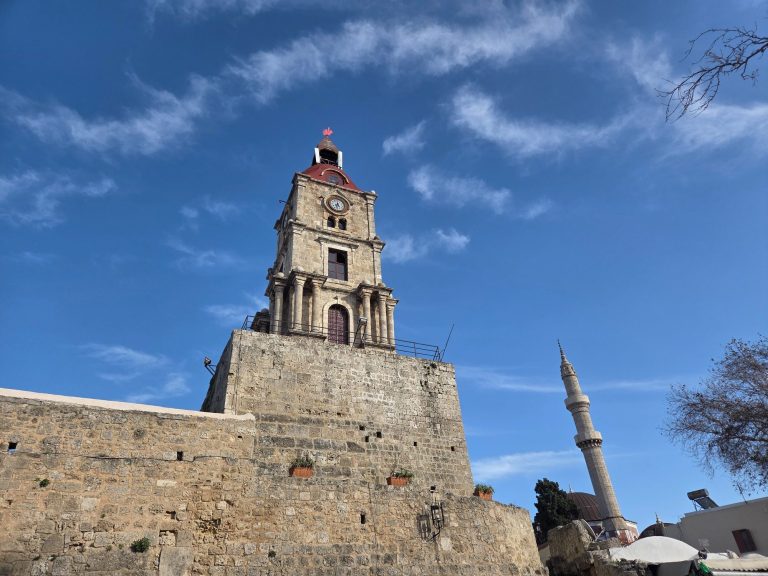
Of these, some of my favorites have been Delphi, the Old Town of Rhodes and the theater of Asclepius. They were all so impressive to me for different reasons! Delphi, nestled high in the mountains was breathtaking to visit. Not only did we see evidence of the great center of ancient prophecy and culture, the high up views lent a real sublime feeling to it. The Old Town of Rhodes or as I like to jokingly call it, Old Town Rhodes was built by the Knights of St. John. Situated next to the Grandmaester’s palace, walking through it felt like walking through an episode of BBC Merlin or some other medieval fantasy show that I love. The town had a lot of mixed influences too from different periods of time, each providing a layer of history to it. Tomorrow I’m supposed to get knighted there! Last but by no means least was the theater of Asclepius. Armed with perfect acoustics, I could imagine just how special it must have been in ancient times to see a play or speech there. And of course the space was all more beloved to me for the amount of dogs there.
Discovering sacred space
Clay C.
Sacred space is something all religions share. Whether it’s a church, a synagogue, or an ancient altar, they have existed for thousands of years. We’ve seen a few of these places while we’ve been in Greece!
Sacred spaces are enclosed areas that are distinct from other buildings and have gradations. Ancient Greeks tended to have three levels, while ancient Egyptians had nine. They were places of worship and where people would connect to the gods. They were found all over the ancient world, but in the case of early Judaism, after 6th century BCE reforms by monarchy, worship was held at one temple in Jerusalem until it was destroyed in the 2nd century BCE. This had limited sacred space for quite some time, but because the temple couldn’t be rebuilt due to religious beliefs, synagogues were created as a work around, opening up sacred space and sacred time.
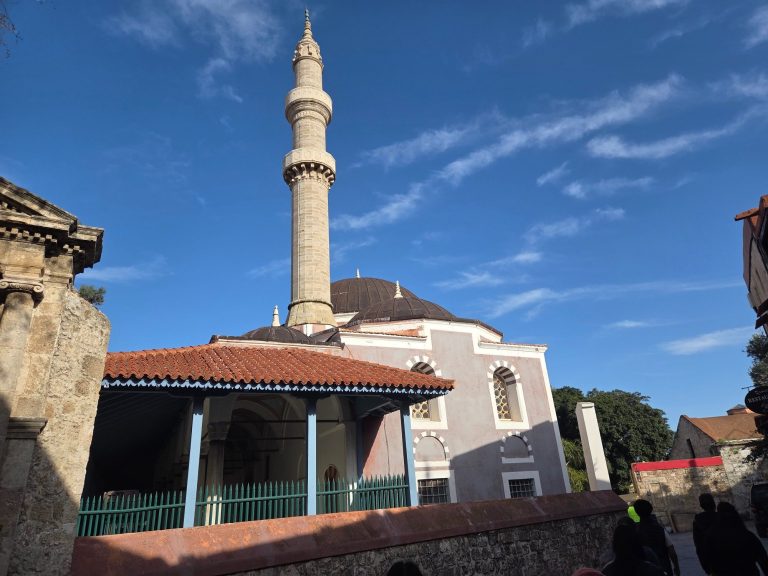
We saw an example of three sacred spaces coexisting when visiting the Old City here in Rhodes. It used to be inhabited by Christians, Jews, and Muslims. They shared a grave site, which was divided based on religion, and were accepting of the other religions. They built a church, synagogue, and mosque nearby each other, which was unusual for the time, as Abrahamic religions tended to be separate from each other. We also saw an interactive movie of the ancient island of Rhodes, which was very fun (and wet).
Overall, being able to see a sacred space (or the outside of it) is a wonderful experience. Sacred space is different for each religion, but what they have in common is a place for people to gather to worship together. Seeing an example of different religions coexisting was incredible, and I hope to see more as we continue exploring Greece!
The tapestry of Rhodes
Jaquie L.
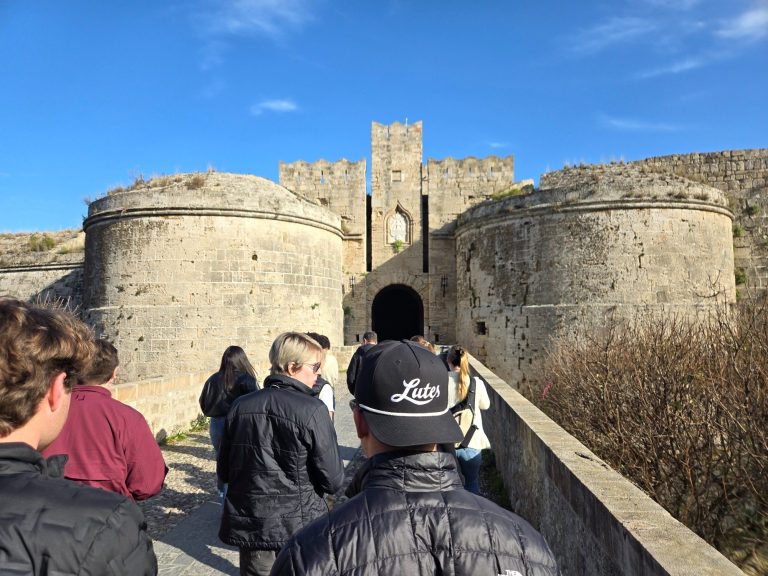
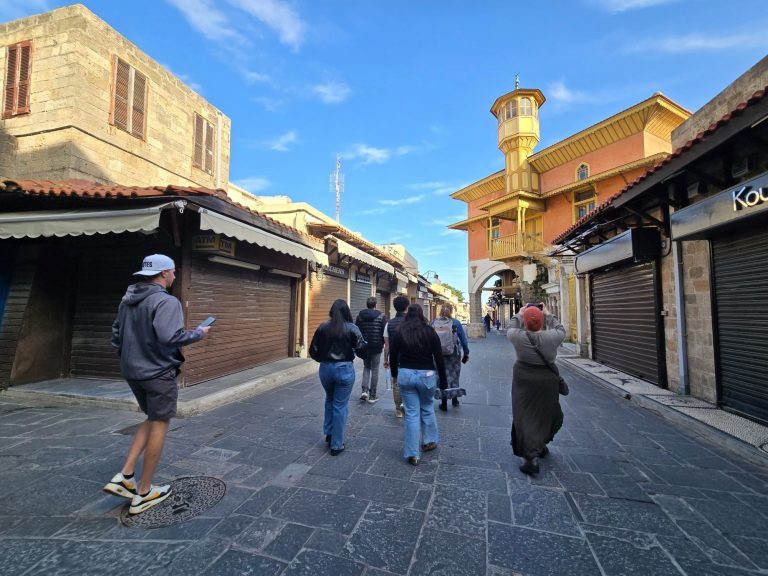
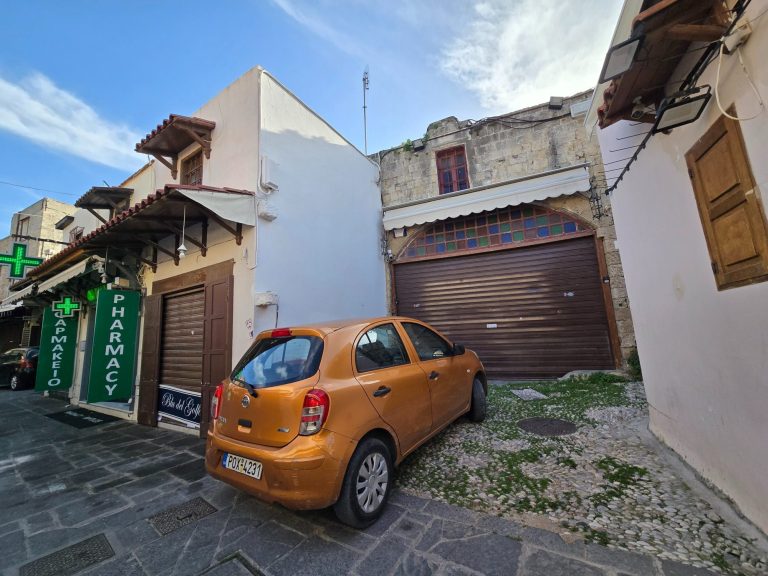
Rhodes is the canvas of many artists, bearing the history, life, culture, and faiths of so many across time and space. When we first arrived I was awed by the beauty of how every structure was so different, yet so cohesive. First we were greeted by massive hotels that rivaled my memories of some from Vegas. Every one was unique, grand, and luxurious enough to capture the attention of any would-be tourist’s eye. Scattered between the modern structures are the stone homes that are so distinctly Mediterranean, yet somehow the styles do not clash. Then there are the ruins of the ancient temple to Apollo, the site of the Colossus, and the Palace of the Grandmaster in the Old Town.
In ancient days there was an influence that other cultures and faiths shared with one another. One religion would meet another, ideas and concepts were swapped, and they’d begin to borrow concepts and ideas from one another. This hybridization and understanding allowed for coexistence, acceptance, and even formed vows of brotherhood that we still see value in today.
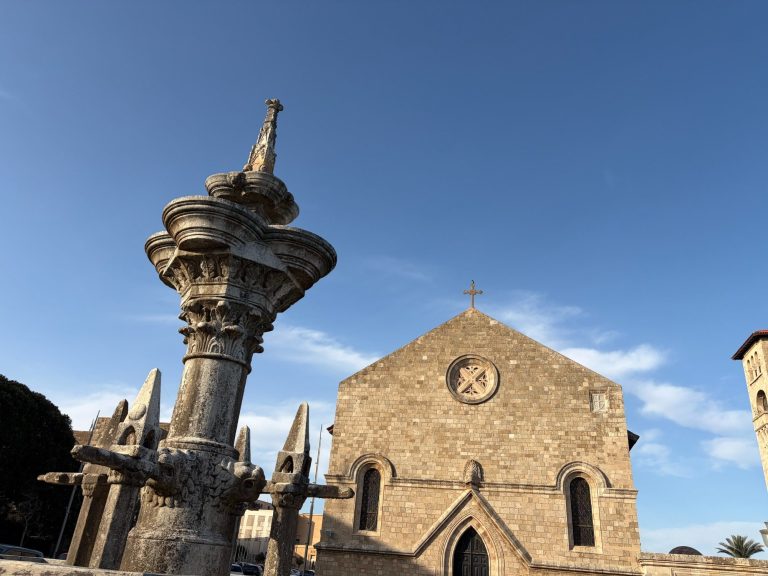
As we walked through the Old Town of Rhodes, I was struck by the example of a local cemetery shared by Christians, Muslims, and Jews. These three faiths - always so at odds - had found a place of coexistence within the walls of a city who has embraced so many cultures for thousands of years. Even upon soil that was once used to worship Greek gods, three eternally warring religions have found a moment of peace where they allow their deceased to rest within a shared, sacred space. Even after so many years of occupation and invasion, the modern citizens of Rhodes have found a way to take the influences of so many cultures, and weave it into a peaceful tapestry.
A hope for hybridity
Kate F.
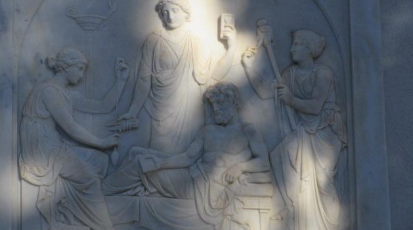
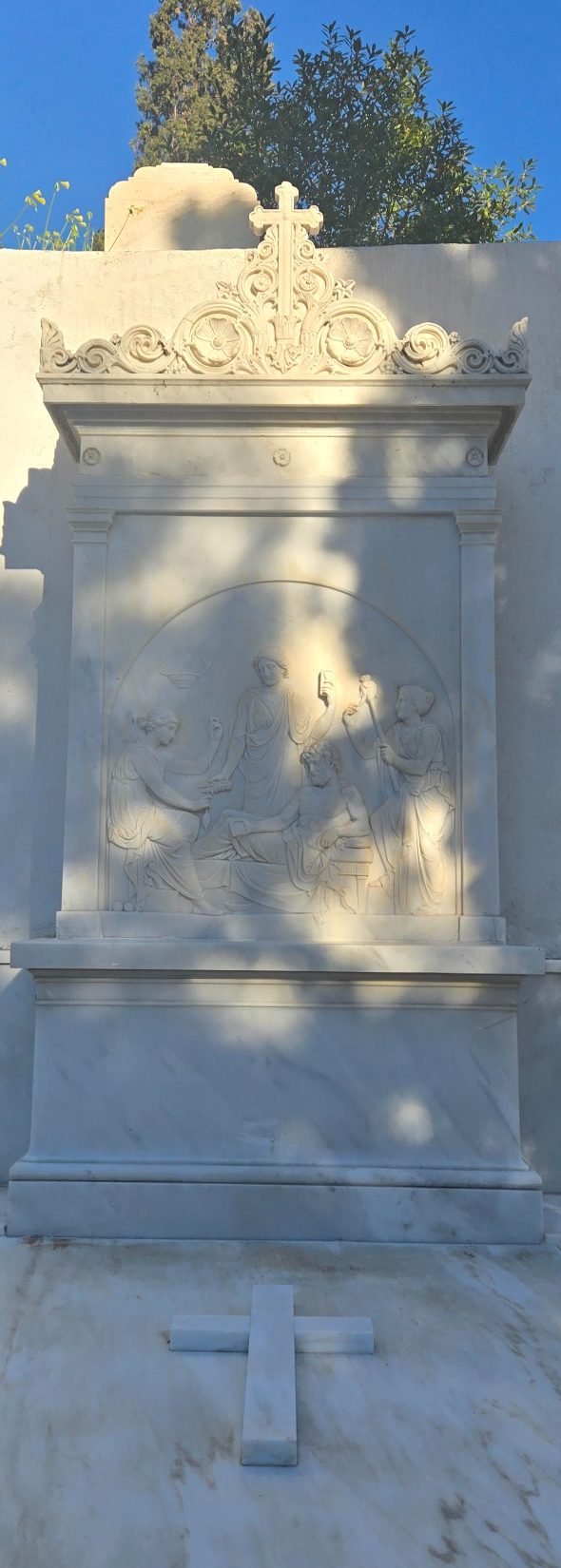
Hybridity is the concept that two religions can come together due to their similarities and coexist without issues. The best place we have seen evidence of this has been the graveyard we visited in Athens. The graveyard itself is Greek Orthodox, but is replete with images of the ancient Greek pantheon. Like the grave in the photo which shows the three Fates weaving, measuring, and cutting the string of mortal life. These two religions have been able to find a balance in Greece in a way I hope we can one day emulate in the United States.
Viewing the pantheons’ gods as aspects of some broader and unknowable force/deity, people saw little to no issue with ‘collecting’ as many as they could or at least following the worship practices of places they visited or moved to. Gods could in a sense be interchangeable, used in tandem, etc. People often note this practice among the Romans, but it was how much of the ancient Mediterranean behaved – especially the Hittites who boasted and catalogued a large and ever-growing pantheon, supplied with more gods by adopting the ones they liked of the people they conquered.
But even with the popularity of monotheistic beliefs and some form of adherence to canons, people are still attracted to hybridity on some level. For example, when visiting the first cemetery of Athens, while it was a Christian cemetery and contained plenty of expected Christian imagery, it also had many examples of older Greek imagery.
Hybridity carried through from ancient times
This included a tombstone carved with the fates of Greek mythology. While still very much a Christian grave, the fates are placed there because they remind people of/represent the universal truth of death. Just because it’s symbolic of the beliefs of another religion didn’t exclude it from its usage here. While of course there’s the element that these beliefs and symbols are part of the history of this land, it shows how the culture of hybridity in the past still remains relevant in the behaviors and beliefs of current people. People will always be interested in a sort of ‘mix and match’ approach to beliefs, we’re too diverse to all be happy with one set of narratives and images. People want to incorporate more that’s out there.
Samael B.
Traveling here in Greece, you can see the evidence of hybridity carried through the ancient times to the present. There is, of course, the ancient. In the Bronze age Mediterranean people respected, worshipped, or even completely borrowed/adapted the gods of many other cultures. Myths spread easily, and while rituals were less likely to spread there were still many shared elements.
Alterity from an immigrant POV
Ani D.
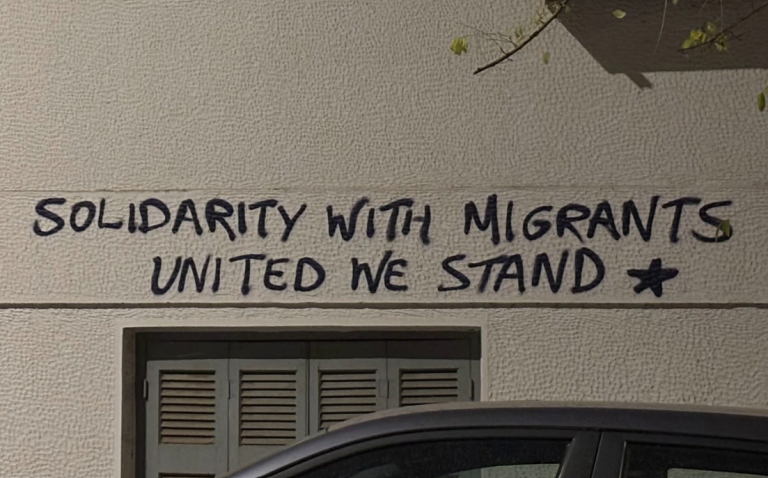
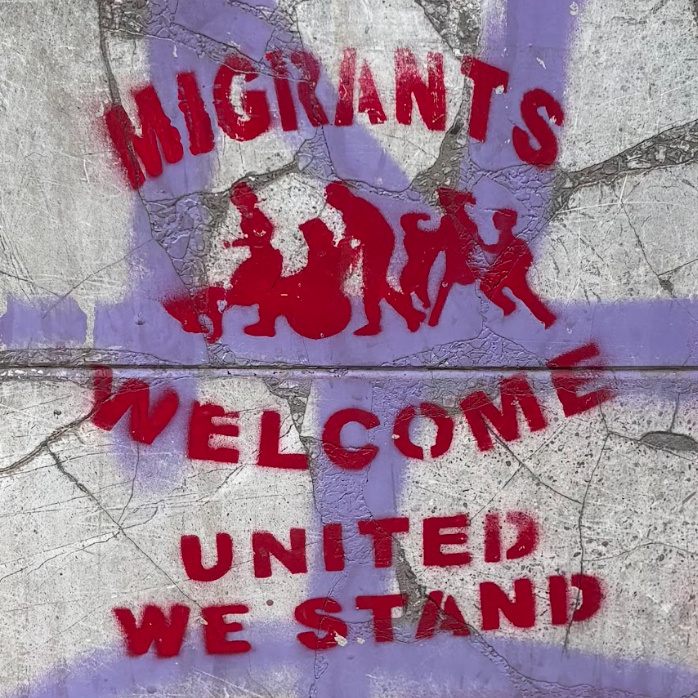
I think in this particular time and space it is imperative to discuss what is going on in our political climate when it comes to “othering” people.
To immigrate is to live with alterity which is to be marked as “other” in ways that shape daily life. For immigrants, difference is not abstract, it appears in accents, names, food, documents, and the constant negotiation of belonging. Alterity is not simply about being different, but about how society defines who is familiar and who is not.
Immigrants often exist in a state of paradoxical visibility. They may be highly noticeable because of language or appearance, yet invisible in cultural narratives and decision-making spaces. Their labor is relied upon while their voices are overlooked, reinforcing a sense of exclusion.
Living with alterity requires constant emotional labor. Immigrants learn to adapt, code-switch, and move between worlds, often feeling they belong fully to neither. Yet this in-between space also creates unique insight, resilience, and empathy.
When people are framed as “other,” they are often reduced to stereotypes rather than recognized as complex individuals. This simplification makes it easier to justify exclusion, discrimination, and violence. History shows that alterity has been used to rationalize colonialism, racism, and oppression by portraying certain groups as foreign, inferior, or less human. Alterity also reinforces power imbalances. Those who define themselves as the “norm” gain authority to judge, control, or silence those labeled as different. This dynamic limits whose voices are valued and whose experiences are dismissed, shaping social systems that privilege some while marginalizing others.
On a social level, alterity weakens community. It discourages empathy and mutual responsibility, replacing relationship with fear or misunderstanding. When difference is treated as a threat instead of a strength, opportunities for collaboration and collective care are lost. Ultimately, alterity is harmful because it disrupts connection. It prevents us from recognizing interdependence and shared responsibility, making it harder to build just, inclusive, and resilient societies.
Understanding alterity in the immigrant experience means recognizing that difference is not a failure to belong. True belonging does not demand erasure, it allows people to exist fully, carrying their histories with them.
The claw marks left by alterity
Alby J.
As I look out the balcony of our hotel in Rhodes, I can see the coastline of Turkey curving around us. The hills of green forests and red stones peek through a slight veil of fog like a bride at a wedding. It’s beautiful and a little disorienting how close we are.
One of the first terms we learned this January was the word “alterity.” It means to radically exclude, to other, to assign an alien label to a group. We discussed it in terms of polytheism and monotheism, as the word “polytheism” is a description of alterity assigned to those religions by monotheistic religions. A better description would be “pantheon-based religions.”
People sometimes debate why we still study religion, or why a person would want to major in it. Out of all the avenues colleges offer, religion is not one with a steady job at the end of the road, and when studying ancient religion especially, people may wonder the point. Aside from being an interesting study into our history, I think the word “alterity” provides a good explanation.
The othering, to be radically exclusionary, has been rampant throughout human history, and I am finally tall enough to see how it happens. Opening social media to see all the news from the United States this month has been…interesting to say the least. Disheartening might be a better word. Frightening. I am glad to be breathing in the salt air of the Mediterranean, let’s go with that.
Still, I find an odd comfort in the knowledge that we have been doing this for long enough there’s an academic word for it. Alterity. If there’s radical exclusion, there must be radical inclusion, too. Having the word means there’s a way to fight it. I don’t believe human nature is inherently cruel, I can’t. I love being alive too much. I mean, I get to study in Greece! How cool is that?
As we’ve spoken about many times in class, we learn how to lead thoughtful lives by looking into our past, our patterns, both as individuals and a society. Alterity has left claw marks through all of our history books, but in those scars there is a way to find our next steps, the ones that lead to a kinder, more inclusive future.
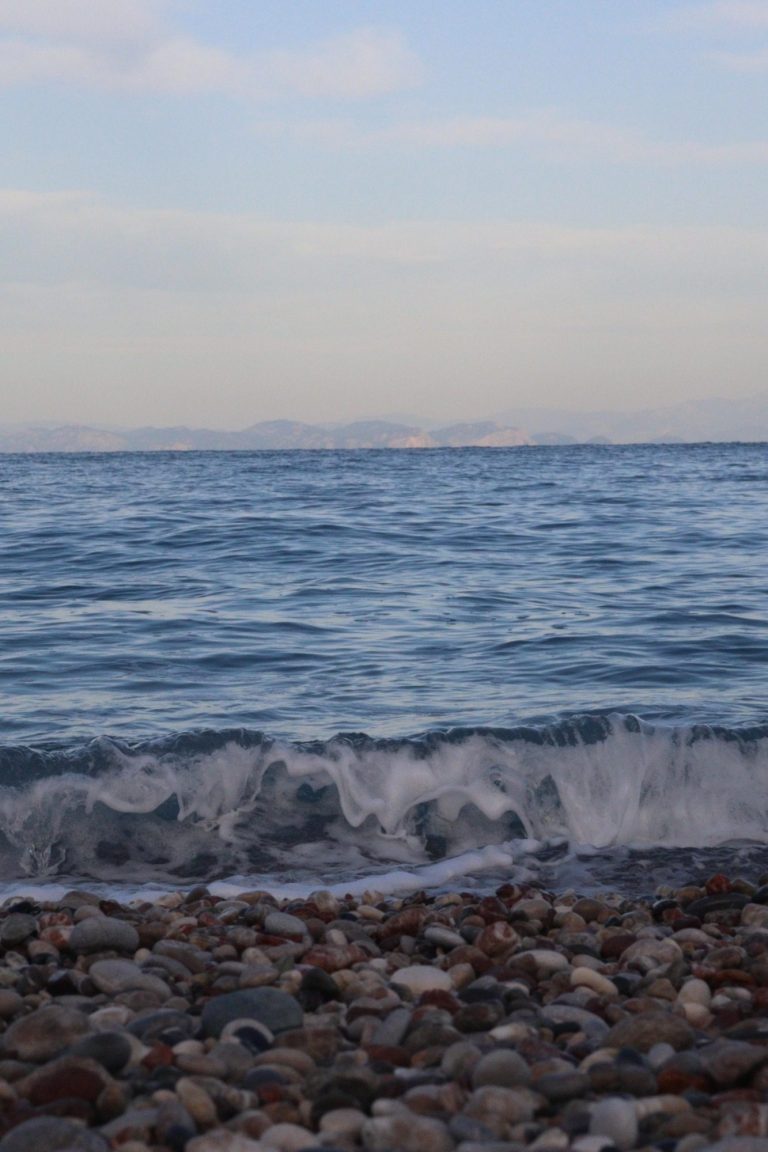
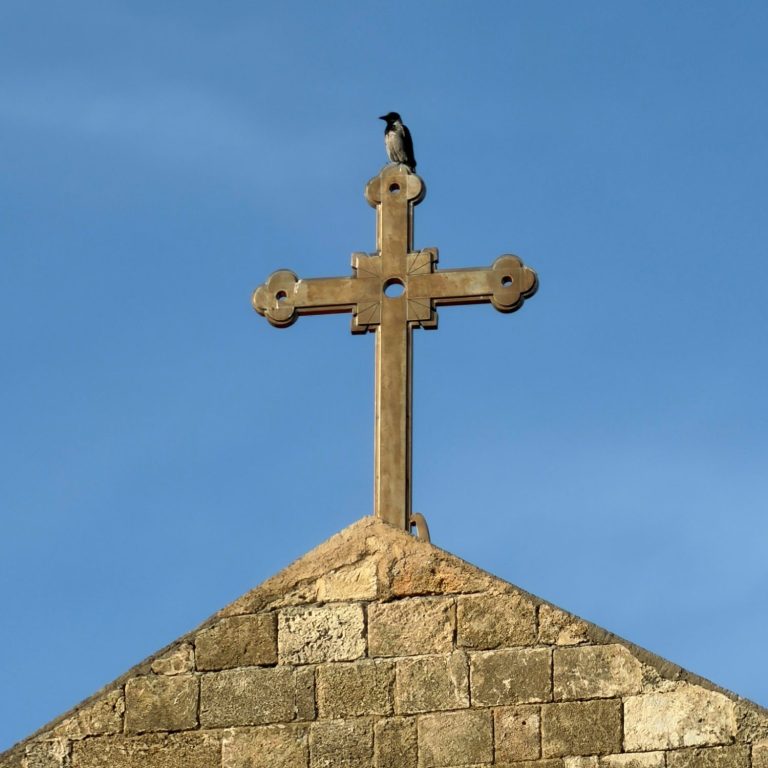
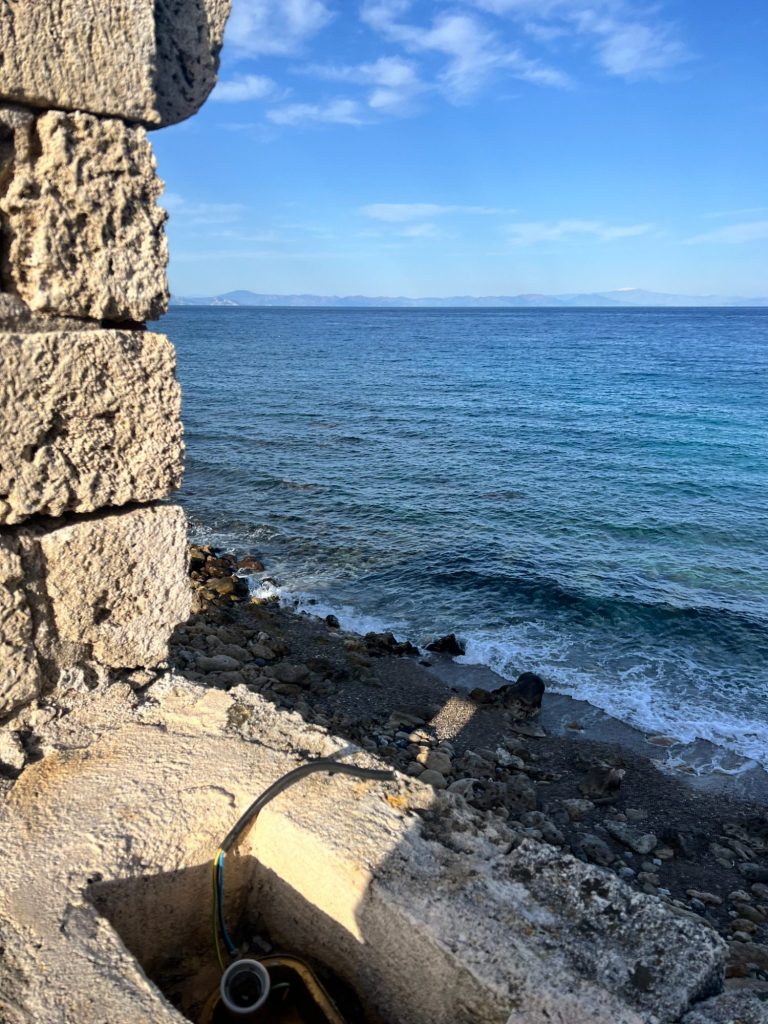
On a less philosophical note, please enjoy these photos of Rhodes so far. Very happy with the beach. Absolutely gorgeous.
(Song recommendations: Mind Over Matter by Young the Giants, Secrets from a Girl (Who’s Seen it All) by Lorde, Ancient Dreams in a Modern Land by Marina)
Being seen:
Alterity Abroad
Jalen E.
Walking through Rhodes, I’ve become more aware of differences in ways I didn’t expect. One of the most immediate has been my hair. Back home, it’s normal—something I rarely think twice about. Here, it draws attention. Not in an uncomfortable way, but in a curious, appreciative one. I’ve gotten smiles, comments, and lingering glances that feel more observant than judgmental. It’s a small thing, but it’s made me aware of how visibly identity can travel with you.
That awareness extends beyond people to the environment itself. Even the water looks different here. The waves along the shore move with a steadiness at some points, and violently in others that I’m not used to, and the color shifts constantly depending on the light. I haven’t gone in, but standing near it is enough to notice that this place follows its own rhythm. It doesn’t adjust to me, I have to adjust to it.
This is where alterity starts to feel real rather than theoretical. In class, we learned that alterity refers to the act of defining others as fundamentally different, often through labels imposed from the outside. We discussed this especially in relation to religion, where terms like “polytheism” were used by monotheistic traditions to describe pantheon-based religions, creating distance rather than understanding. Experiencing difference firsthand, even in mild, positive ways, makes it easier to grasp how powerful that process can be.
What stands out to me is that alterity doesn’t always come from hostility. Sometimes it comes from attention. Being noticed for my hair hasn’t made me feel excluded, but it has made me more conscious of how quickly difference becomes visible, and how easily it can be framed, either as something to appreciate or something to reject.
Studying ancient religion has shown me that societies have always drawn lines around identity, belief, and belonging. Being in Rhodes makes those ideas feel present rather than distant. The ancient world isn’t just something we read about; it’s something we can still feel in how difference is perceived and navigated today.
For me, alterity here hasn’t felt negative. If anything, it’s been a reminder that difference doesn’t have to create distance. When approached with curiosity and respect, it can become a point of connection instead.
Alterity (and the lack thereof)
Mia R.
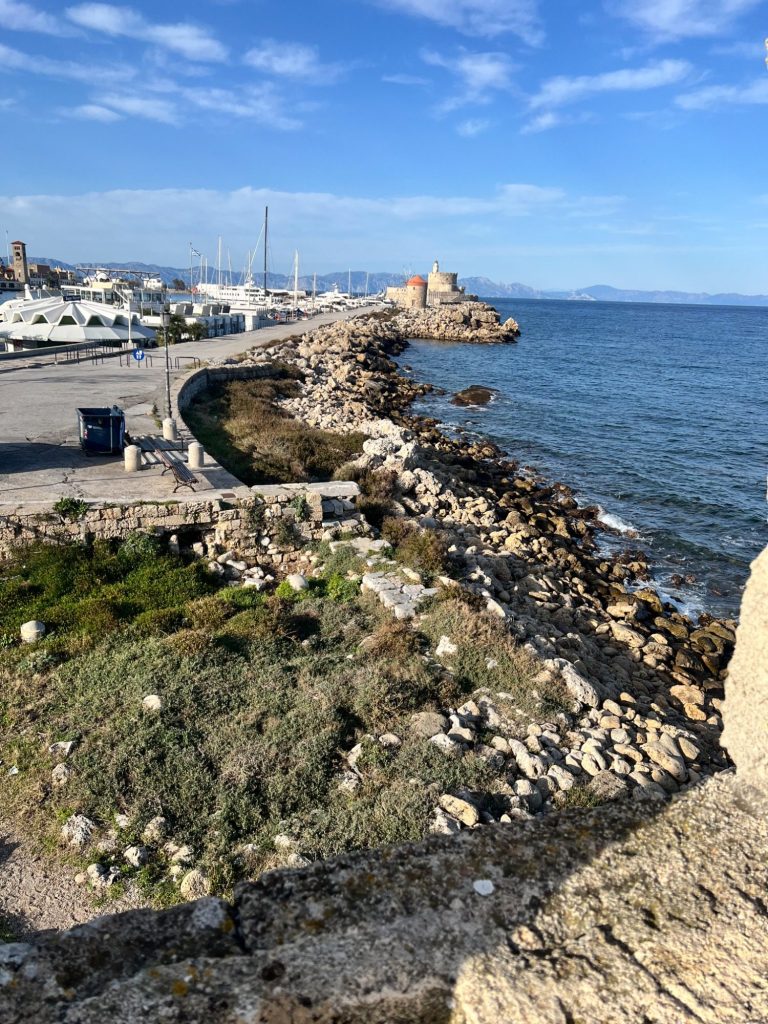
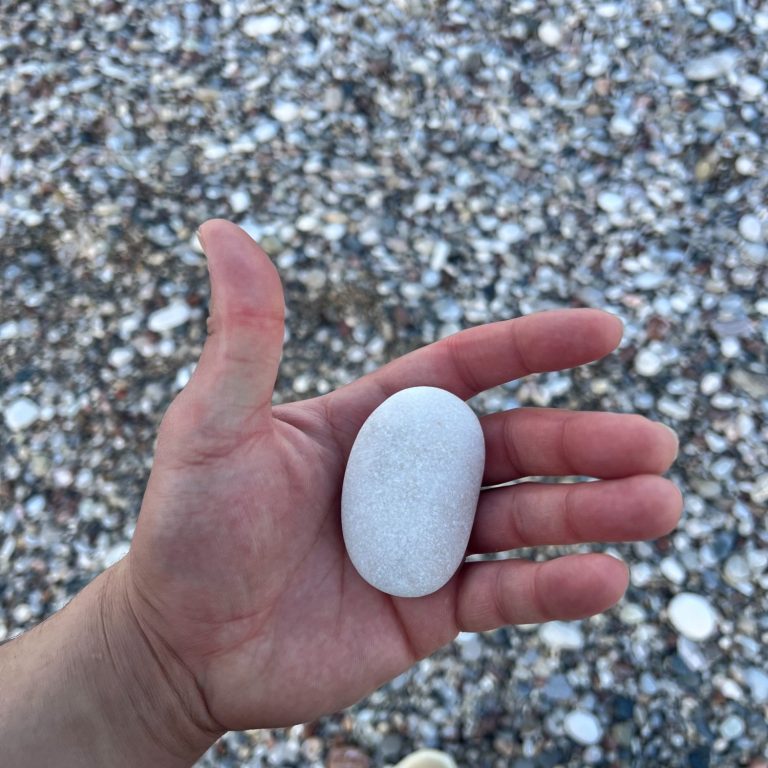
One of the things that has surprised and fascinated me the most about here in ancient Greece is seeing the wide influence of cultures and religions present everywhere. From architecture to art to everywhere in between. Prior to coming here, I’d have assumed all influences were majorly ancient “Greek” resembling the classic epic myths I’ve long gotten used to seeing. While there are plenty of those here, that’s not all we’ve seen! From seeing monasteries in Meteora in the 11th century, to looking at the Old Town Rhodes which has a church, a mosque and a synagogue, to finding artifacts that show it, Greece and our studies have demonstrated plenty of religious plurality.
Religious plurality is the idea that people of different religions cannot only coexist, but coexist closely among each other. Looking at religious plurality in the Bronze Age is a key part of our study here, and in Greece we’ve seen plenty of it here. One reason plurality was so possible in the ancient world was because of a general lack of alterity. Alterity is a term for othering, meaning to exclude and designate an “other” as separate and different from you. In the modern world, we are surrounded by the behavior of alterity and othering.
Being here in Greece, and studying how much religious pluralism there was in the Bronze Age becomes both healing and powerful then. It is a reminder that if in the past, in a time with way less technology and scientific knowledge we still managed to have such a respect for each other’s beliefs and each other, then surely we can get there again today no? Walking through the modern Olympic stadium, and seeing the small museum with its collection of posters from Olympic games all around the world, I couldn’t help but be filled with that hope for the future, for a world with a little more unity and a little more understanding.
Included Photos: Grand Meteoron Monastery, A Mosque at the Old Town of Rhodes, Collection of Different Olympic Posters at the Modern Olympic Stadium
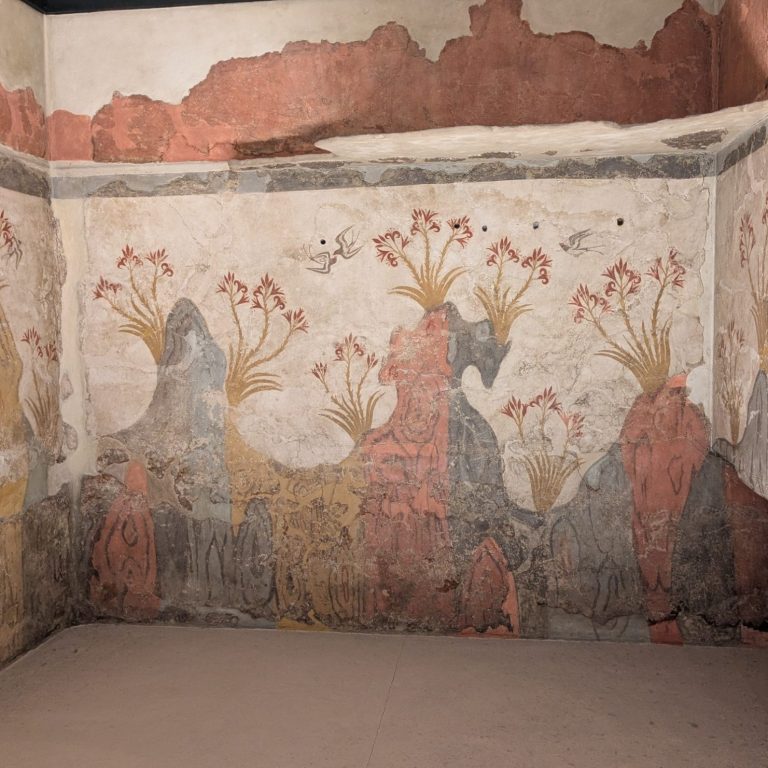
The power of images
Mikayla H.
One of my favorite images I have seen so far on this trip has been that of the Spring Fresco from Thera in the Hellenic National Archaeological Museum we visited in Athens. I lingered there for a good few minutes. I felt very affected by the colors and beautiful nature depicted. It’s a striking restoration. I think it stood out as my favorite because, while the rest of the displays in the museum were interesting, they drew from a small pool of color (mostly bronze and marble). To see reds, whites, blues, blacks, and yellows, that an artist applied to the wall of a room over 3,000 years ago really captured my attention and emotions. There’s something very charming about the birds and flowers, and I am grateful that they are familiar. That fairly universal recognizability made me think about how I’m not the only person with whom this fresco resonated. In fact, this was confirmed when I saw that there was a t-shirt in the museum gift shop with aspects from the fresco printed on it. I bought one and I might get one of the elements tattooed. And then a piece of this artist’s work from thousands of years ago will live with me and in my head we will be connected and anyone who might see my tattoo one day and recognizes the flower will have the opportunity to connect with me and isn’t that a potentially wonderful thing?
Anyways, I really loved the Spring Fresco. No offense meant to the artists of history whose mediums were less vibrant but no less beautiful. The ability of a static image to hold someone’s attention, in today’s attention-based economy in which attention spans are shortening, I think speaks to the potential power of an image.
I more or less mentioned this above but another power images can hold is their recognizability.
Also at the Archaeological Museum were many pieces depicting an octopus. Our professor referred to it as the flying spaghetti monster, or something to that effect, I believe. I am not sure if this is a god, but I think it did have worshippers. And the octopus/flying spaghetti monster found some new ones that day when we visited the museum. My classmate Kate was determined to get as many pictures of this guy as possible, and I suggested we start a church for them when we return. There’s already a vague spirituality around The Octopus in Tacoma, it wouldn’t be too hard to recruit and convert folks. To connect this to the beginning of the paragraph; I think the reason an image of an octopus resonated with us is its recognizability. Go to any art market in the Puget Sound region and you will find a tote bag or a lamp or a print or something with a depiction of The Giant Pacific Octopus.
This is kind of why city-states of the ancient Mediterranean had overlapping pantheons, right? A mutually recognized need for a god of the sea, for example, is why Poseidon goes by a few different names.
These ancient worshippers of the flying spaghetti monster can mutually recognize with Kate and I the need for a funny, cool, little octopus guy.
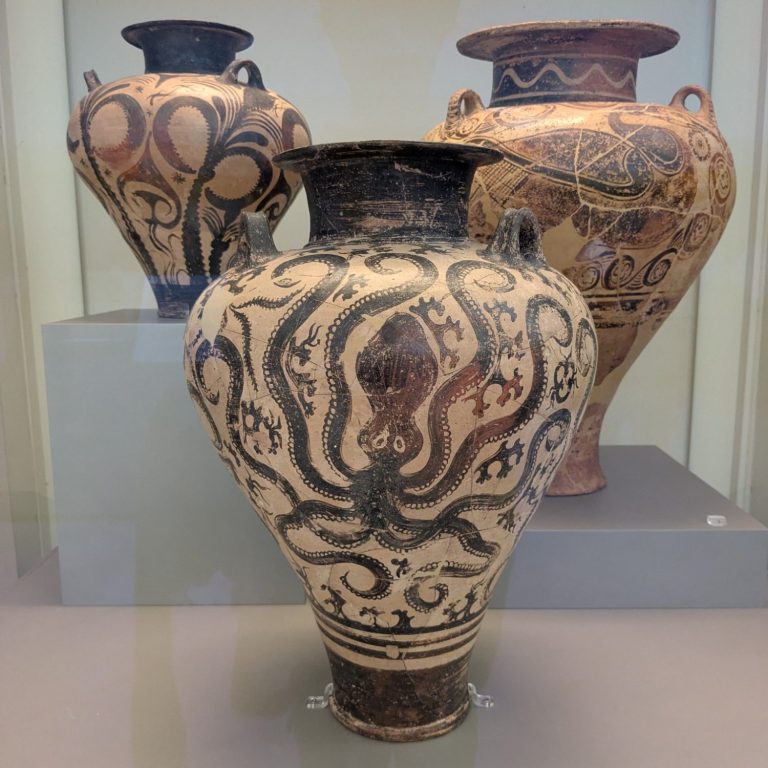
Power in the everyday image
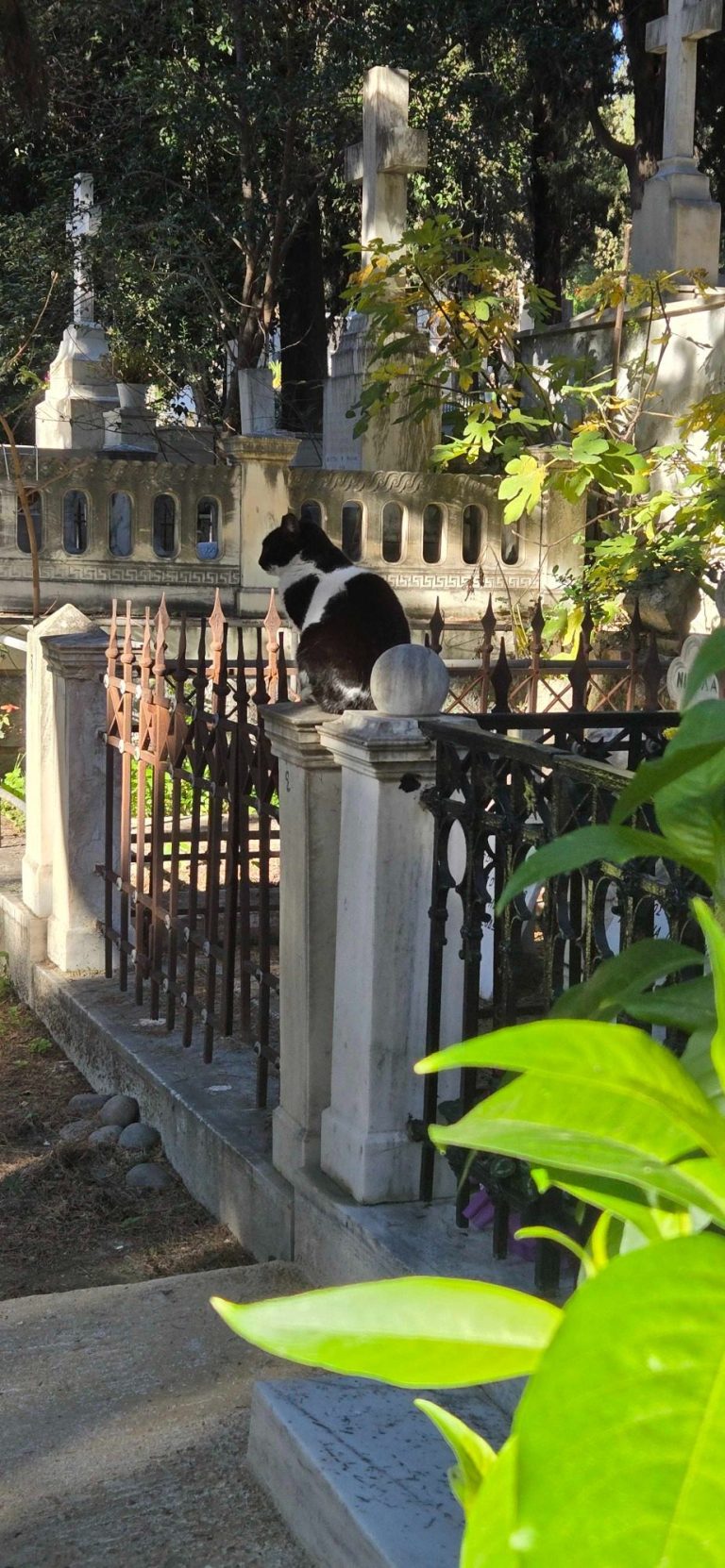
Sam B.
Images and photos aren’t always impressive or dramatic. Many of the photos I’ve taken here are simple and mundane. Quick pictures of dinner, a quiet street, or a place I pass every day without much thought to it. At first, these photos don’t seem very significant. However, looking closer, they hold a lot of meaning.
We often take photos of very ordinary moments without much thought. Whether that be a sunset on the walk home, a meal shared with others, or a street that catches our attention, these photos are taken to either remember something, such as a place's name, or to share with someone else. In the moment, they don’t feel very important and are usually quickly forgotten as we continue with new experiences. Yet these photos capture small pieces of everyday life, freezing it like a memory, holding meaning simply because they show a lived experience.
In contrast, the photos I have taken of the monasteries and museums had a clear intention. They were meant to capture specific spaces, structures, and information that connected to what we learned academically. Unlike the mundane photos I took, these images were taken with purpose and attention to detail, serving as reminders of religious and historical ideas and practices that connected to class.
While these two types of photos differ in their purpose, they both hold power in their own ways. One preserves knowledge while the other preserves experience. They both show that images hold power by holding meaning beyond just being an image. Intentional or unintentional, they help to shape the memory of experiences.
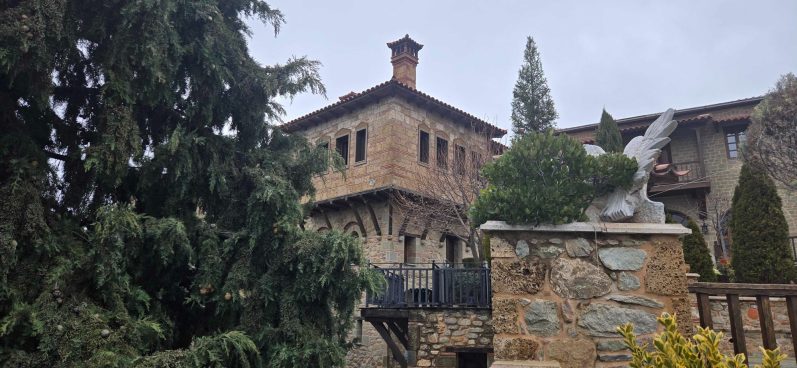
Art brings people together
Clay C.
Many places in Greece have images; they tell a story without needing words. Whether it is an art mural or a painting on an ancient vase, images will be found. I’ve seen many different pieces of art and photos from all over Greece.
These past few days, we’ve been visiting monasteries in Meteora and museums in Delphi. Many different types of images are present. A striking example is the painting of the Stairway to Heaven seen in three of the monasteries we went to. It depicts people ascending a ladder up to the heaves, but some people have fallen off the ladder. They are dragged down by what I assume to be the Christian depiction of demons down to a monster, where they are devoured. Saints watch on as people climb, and angels provide wreaths to those who are entering heaven. In the church area there were many depictions of different biblical scenes, like the crucifixion of Jesus, and many paintings of monks and other saints.
In terms of studying ancient religion, images are a way we can observe ancient practices. Mythology was commonly painted onto things like pottery, carved into stone, etc. Being able to see examples of these at museums like the one in Delphi has definitely been a highlight. Knowing that the tradition of making art has been carried on for millennia is comforting in a way (and it’s funny to know that graffiti has been around since ancient times as well).
Seeing these creations has been inspiring. While I’m not religious, it’s nice to know that the art in the monasteries could bring people together. People still go to the monasteries to pray and to reflect, as we saw quite a few individuals sitting in the churches. We’re going to see more places and museums in Greece, and I’m interested to know what other images we will observe.
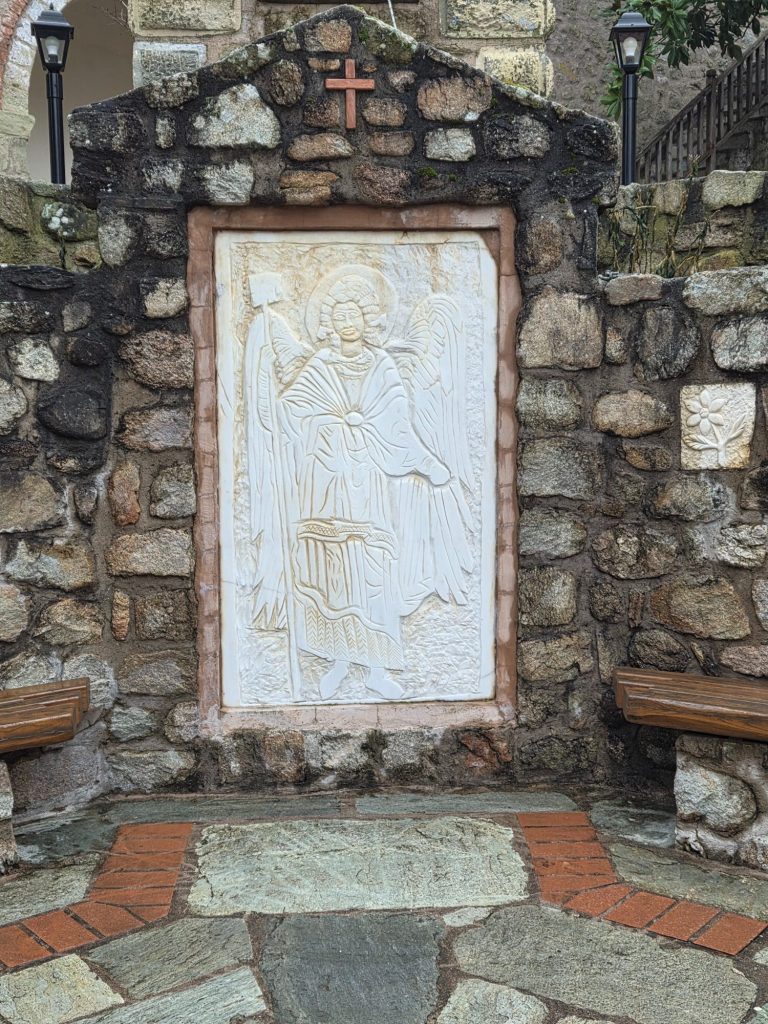
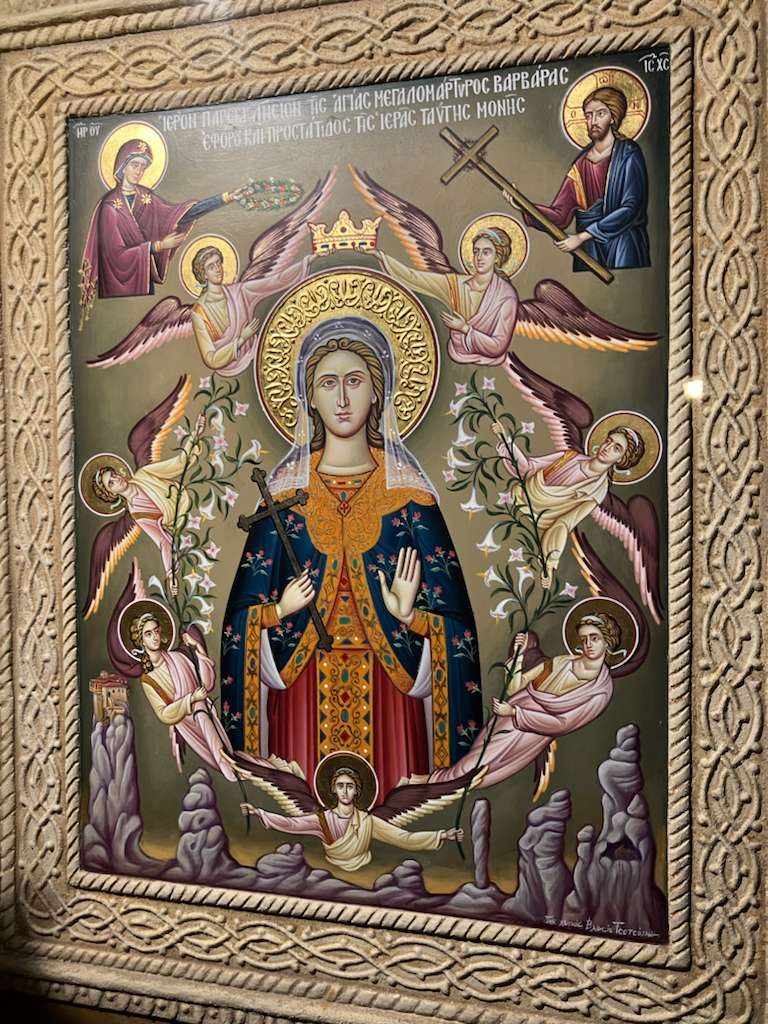
Worth 1000 words
Pedro C.
One of the most notable things about our journey is the sheer amount of stunning sights we’ve been treated to. Greece is as famous for its landscapes as it is for its ancient ruins and monuments, and everything we’ve seen indicates a clear pride in that. Some of the most striking images definitely have to have come from our recent visit to the monasteries of Meteora, though, both from the inside and outside.
Our journey to the monasteries happened on a misty day, the countryside obscured by a thick white fog that the striking silhouette of domes atop rocks pierced dramatically. Something immediately eye-catching about these monasteries was the rocks they were built on top of; not hills, not mountains, but pillars jutting steeply from the earth. There’s a long and fascinating history behind this choice of landscape. Professor Finitsis told us about how the monks set up these monasteries during very troubled times, leading to the decision to build them somewhere that’d be practically impossible to enter for anyone they didn’t like. Before they decided to install some actual roads, any visitors had to either climb a rope ladder or be hauled up the cliffsides in a net. During the Ottoman occupation of Greece, these monasteries wound up being tough nuts to crack because of this strategic placement.
The long and winding stairs to reach the entrances themselves were memorable in their own way, but the real treat was when we actually entered the monasteries. Take a right turn from the entrance of our first monastery, and there’s a dimly lit room filled with the scent of incense and the shine of gold. Something consistent in every location we visited was the presence of icons in the chapels. These icons all depicted either biblical figures or saints in the distinctive Greek Orthodox style, which included lots of gold and a complete lack of shading. There was actually an explanation for this, that being how the images were meant to bring the viewer spiritually closer to heaven, and therefore the heavy emphasis on light served as a way to coax them into a holier state of mind. As the tradition of icons took off in an era where illiteracy was the norm, it really hammers in the power of art as a medium to connect people to holy ideas.
Push in even further past the chapel, and there’s not just a few icons on the walls anymore. The walls and ceiling are literally all covered with paintings. The sheer volume of it all blows you away, especially with how consistent the artwork is. So many different pieces lovingly made across countless centuries, and it feels like there must’ve been a single person with a clear artistic vision who directed the creation of all of these. If nothing else speaks to the dedication of the Greek Orthodox church to maintaining the message contained within their art, keeping it consistent and safe from potential destruction from outside forces, then the sight of these monasteries does.
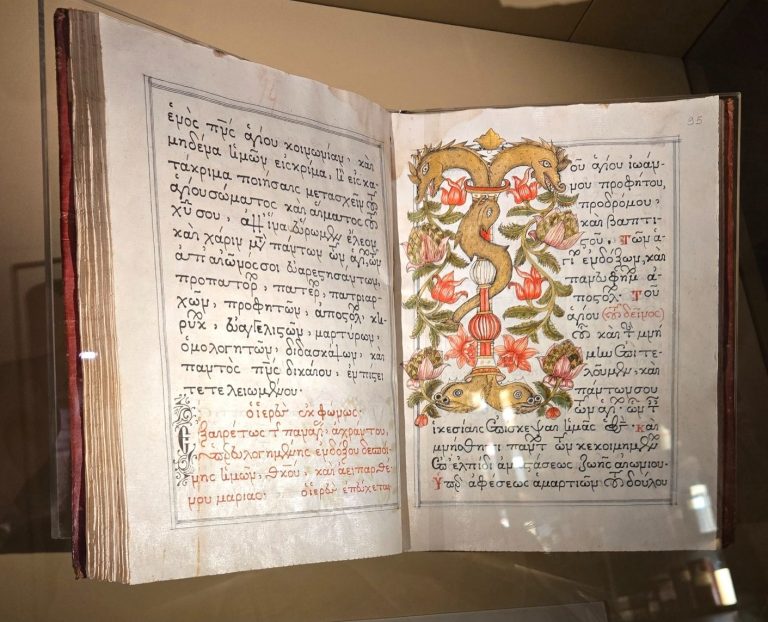
The power of words
Samael B.
After 2 weeks in Athens apart from weekend visits we’re now on the road. We’ve been able to see so many ancient and holy sites so far, such as Asklepion, Delphi, and Meteora. These visits have been so beautiful and informative, plus we’ve had so much fun getting to see in person the things we’ve been studying for both this class and others. Something that really stuck out while we visited these places was all the written text that’s scattered through the museums and sites themselves. It’s everywhere, new and old, in all different forms and serving all different purposes.
One lesson our professor taught us was the ‘power of words’ and their importance to religion and culture. This understanding of the strength words have – whether the words themselves or the way they’re used – has existed for thousands and thousands of years. In ancient Egypt, a name wasn’t just what you were called but also imbued with some of the essence of what you were, so the names of gods themselves carried power. Incantations, spells, etc. get their power from both the words chosen as well as the way they’re used. But words also carried information, being literate held power and status, and what we know of people in the past is from what they’ve left behind - we haven’t heard people from the bronze age speaking to us orally, but we can see some of their artwork, their architecture, and their writings.
So now, when we visit these sites, we can see the evidence of the power words hold for people everywhere. Ancient Greek musical inscriptions carved into walls, old manuscripts that were collected and produced by monks, current plaques telling us the history of a place or holding lines of religious texts at holy spaces. Words have served a huge variety of purposes, but no matter how much language has changed over time we continue to use it in daily, scholarly, and sacred life – because words house power.
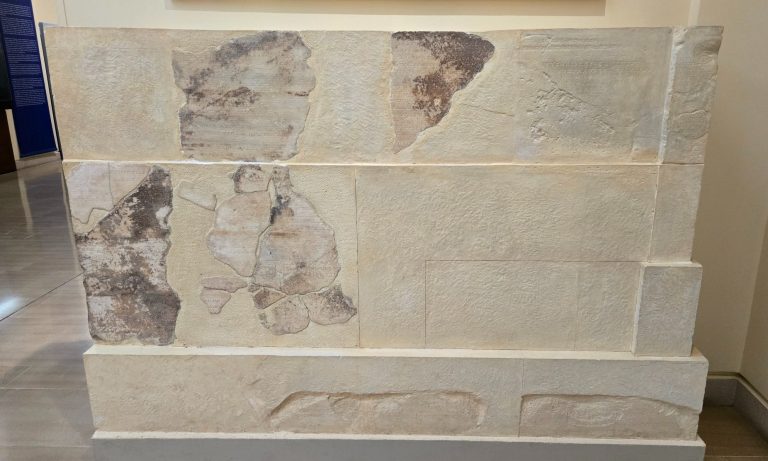
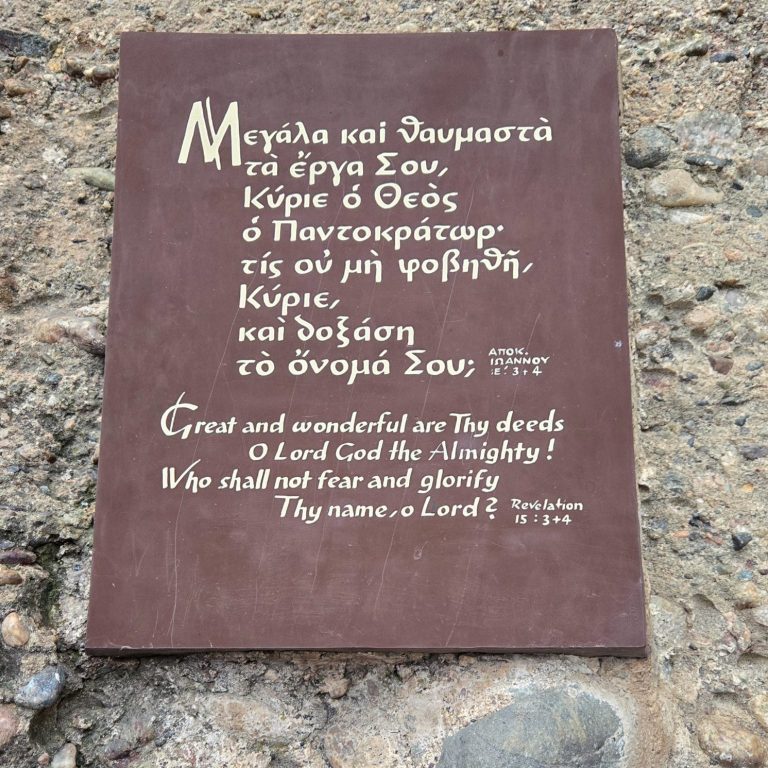
I now pronounce this blog...
Kate F.
As children, we are often warned that our words have power, but in the ancient Mediterranean, that idea had a completely different meaning. Due to the lack of literacy in the Bronze Age, words and images were the most powerful way to convey ideas.
Today we walked around Meteora, with its towering mountains topped with gorgeous monasteries. Try your best to swallow any fear of heights, because these buildings are worth the trip. The sanctuaries are decorated from floor to ceiling with religious depictions. The center of which is decorated with massive gold chandeliers. Truly an awe inspiring place. Once you exit the sanctuaries, if you are lucky enough not to have fog blocking your view, there are sweeping views of the countryside down below. It is gorgeous enough that I couldn’t help but think, I would get married here if I had the option. The location just felt that magical and special.
This adventure called me to reflect on the power of religious words. Sentences like “I now pronounce you…” or even a simple “Amen” carry a historical weight that I don’t usually think about. These words have been used to give decisions or prayers special power. I hope that if I ever hear “I now pronounce you” it can be in a place as powerful and magical as the Meteora monasteries.
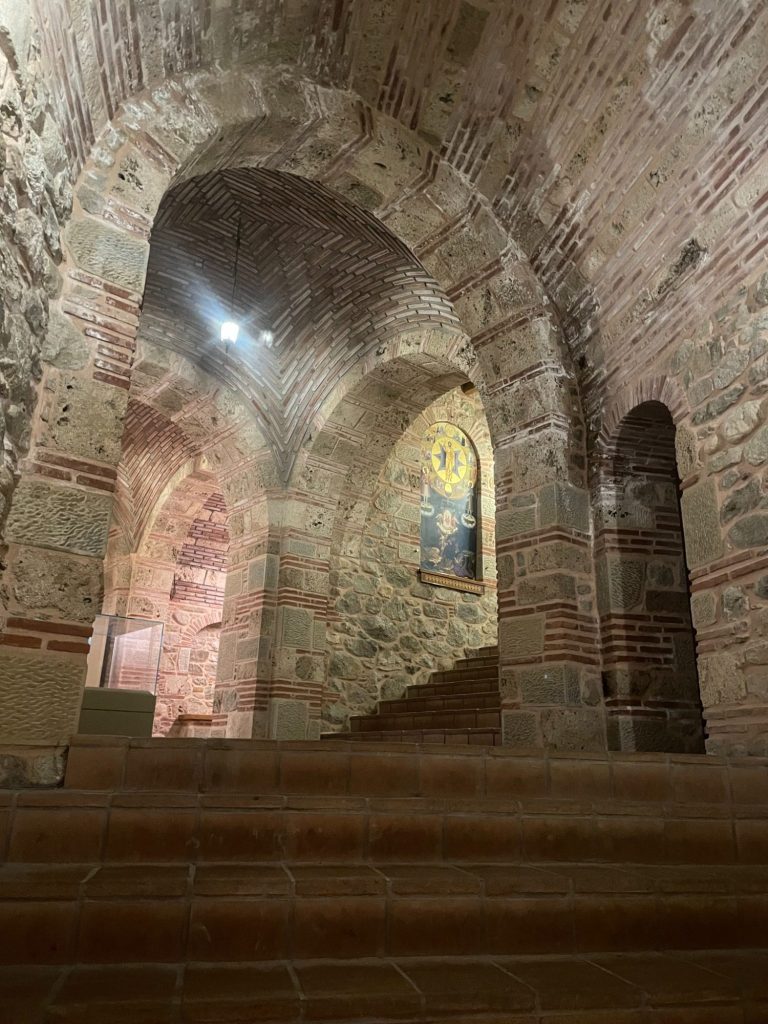
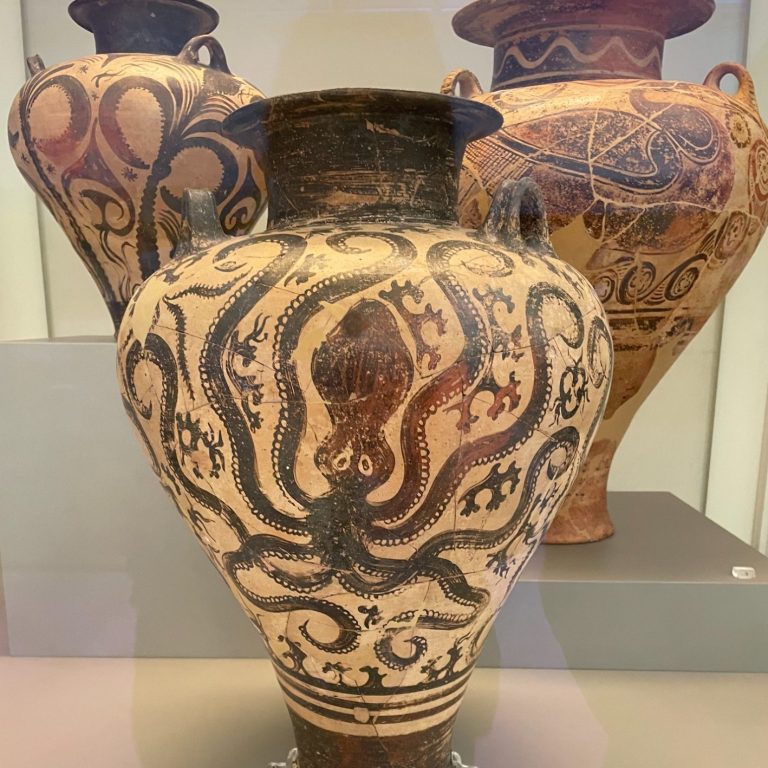
Parchment of my mind
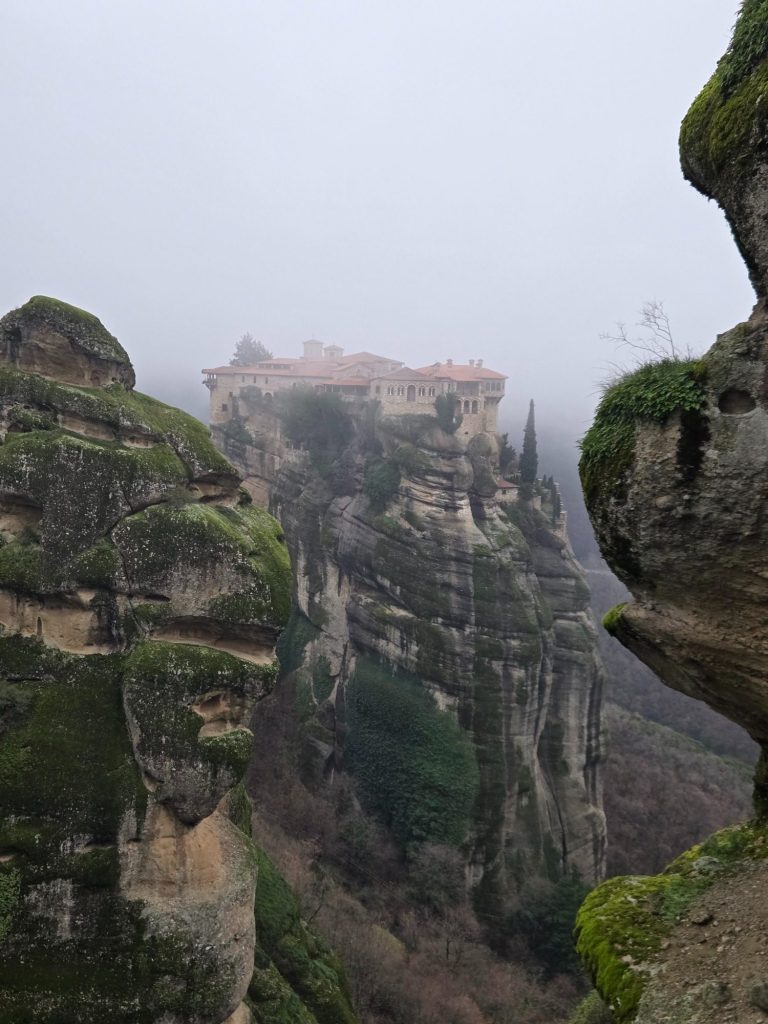
Jaquie L.
A psychosomatic effect is a physical impact in the body, stemming from a psychological origin. In other words, the mind perceives something as powerful enough to create a physical result, and so it does. It's why we see children who have been encouraged perform better than those who have been torn down, people given sugar pills in studies sometimes have a positive response, or even a surge of adrenaline allows a mother to lift a car in a moment of panic. The impact of a powerful belief, emotion, or other internal thought creates a physical reaction within the body, for better or worse.
Within the Monasteries of Meteora, I felt this truth like the breath of life. Thousands of years of faith were all around me. It was painted on the walls, laid brick by brick into the foundations, and quite literally carved into the stones of Meteora’s towering pillars. She is alive with belief, and that has impacted everyone from the ancient Greek slaves her monks once protected, to the loving, stray cats who greeted our class with such happiness. The faith of these monks has had a tangible impact upon everything from politics to art, even for something so small as a cat just wishing to curl up in a visitor's lap.
I will never forget this visit. The awe of standing in the clouds as tiny, soft drops of hail showered us in greeting. The comfort of considering my family while in walls kept so sacred for so many generations. The weight of joy and wonder at taking in each, magnificently penned page of parchment that's been painstakingly, lovingly protected for so many years. Life may be a chaotic happenstance of unknowns, but in that moment, surrounded by words from ancient minds, I truly felt the peace and joy that comes from a heart filled with faith and belief.
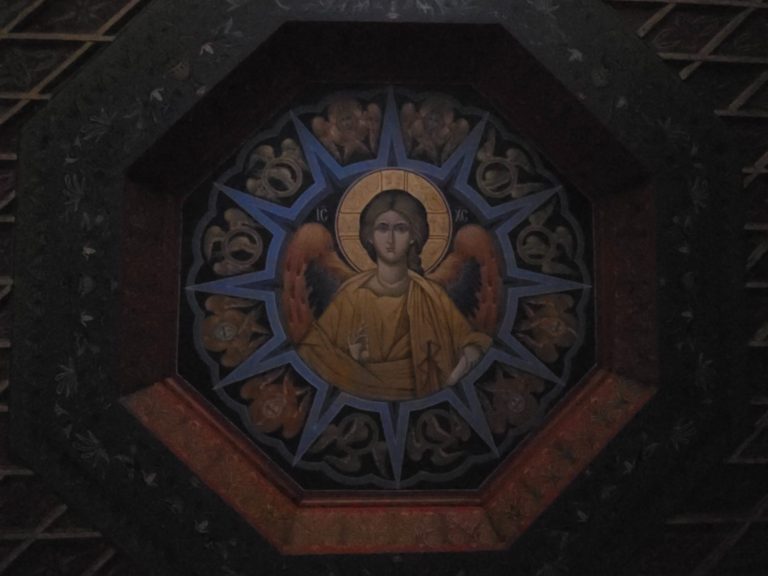
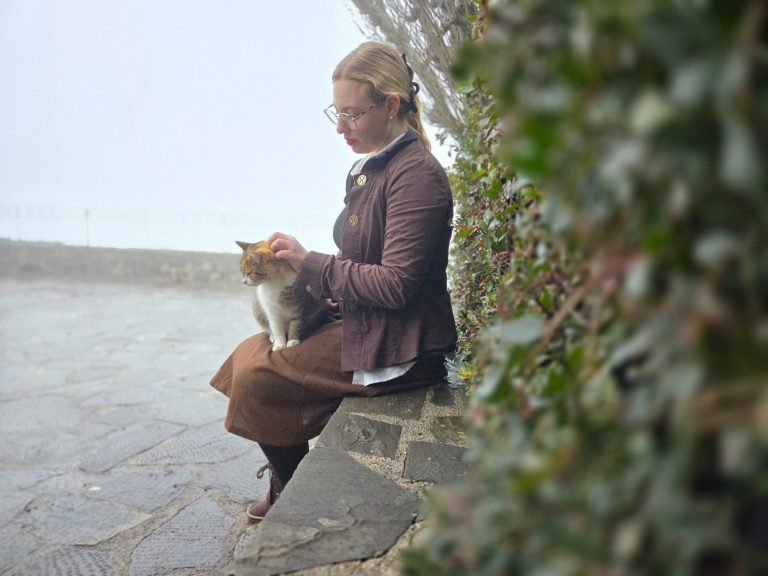
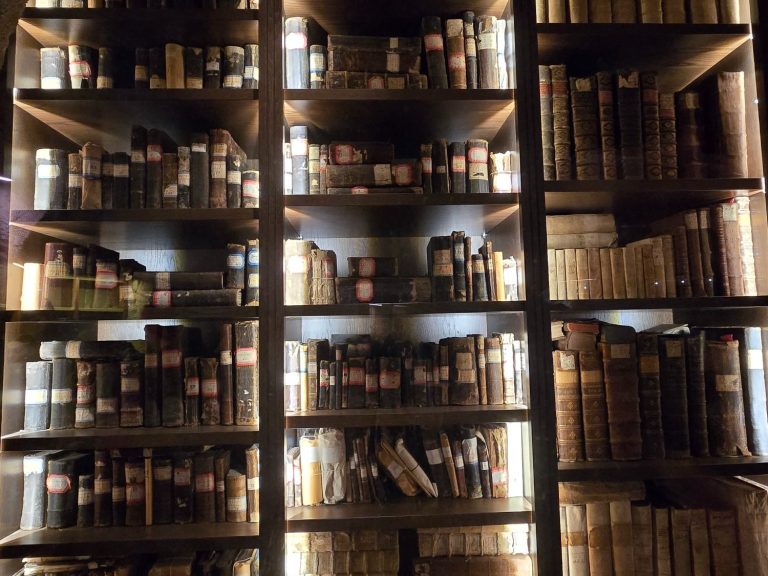
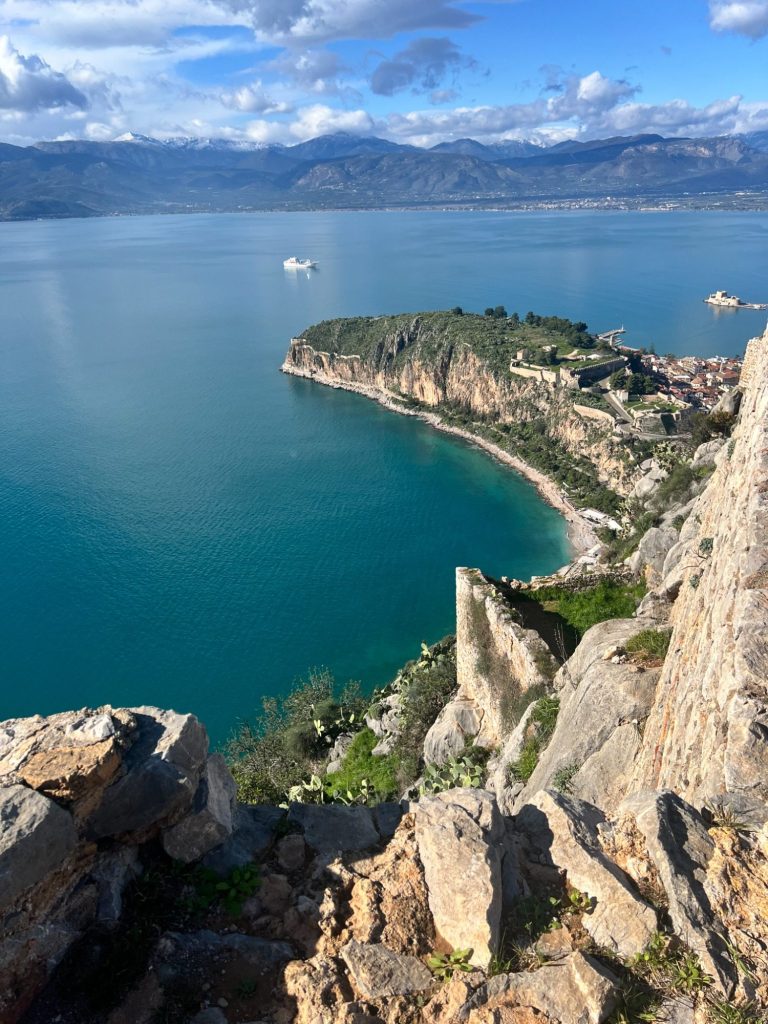
Blessings and Offerings
Jalen E.
One of the recurring ideas in our class while being in Greece has been the relationship between blessings and offerings. In the ancient Greek world, these concepts had clear religious meanings: a blessing was understood as divine favor or a gift from the gods, while an offering was something given to a deity in hopes of receiving that favor in return. While those definitions are rooted in ancient religious practice, experiencing Greece has encouraged me to think about how blessings and offerings can also exist in a more modern, personal sense.
During our time in Athens, I’ve found that many of the blessings I’ve experienced come from being fully immersed in this place. Site visits have been one of the most obvious blessings. Walking through the Acropolis Museum, the National Archaeological Museum, and being at historical sites such as the Panathenaic Stadium allowed history to feel tangible rather than distant. Seeing marble sculptures, temple fragments, and funerary reliefs in person gave depth to ideas we’ve discussed in class and transformed them from abstract concepts into lived experiences. These moments felt like gifts and opportunities that not everyone gets, and ones that I won’t easily forget.
Another blessing has been the people. Meeting classmates more deeply, forming connections, and experiencing Greece alongside others has shaped my understanding of this trip. Interacting with locals even if it was just through brief conversations, shared smiles, or simply observing daily life, has also been meaningful. Athens feels alive and layered, shaped just as much by modern residents as by its ancient past. Being welcomed into that rhythm, even temporarily, certainly a blessing in itself.
At the same time, I’ve started to think about what Athens offers, and what I offer in return. In a modern context, perhaps an offering doesn’t have to be something physical placed at an altar. Instead, it can be attention, respect, and presence. By engaging thoughtfully with the city by listening, learning, walking its streets, and observing its spaces, I feel as though I’m making an offering of awareness and gratitude. Being outside in Athens, experiencing the climate, the sounds, the ruins woven into everyday life, requires openness and curiosity. That willingness to experience the city fully feels like my own form of offering.
This idea connects closely to another concept we’ve discussed in class: sacred space. In ancient Greece, sacred spaces were clearly defined temples, sanctuaries, and cemeteries set apart for ritual and reverence. Today, sacred space can be far more personal. For me, certain parts of Athens already feel sacred: standing beneath the Acropolis at sunset, walking through museums filled with centuries of devotion and artistry, or quietly observing graves and memorials in the city’s cemetery. These spaces invite reflection and respect, even without formal ritual.
Being in Greece has blurred the line between past and present, blessing and offering. Athens has given me knowledge, inspiration, connection, and awe. In return, I try to offer attentiveness, gratitude, and respect to the city, its history, and the people who live here now. Experiencing Greece in this way has helped me understand that blessings and offerings are not just ancient religious practices, but ongoing exchanges between people and the places they inhabit.
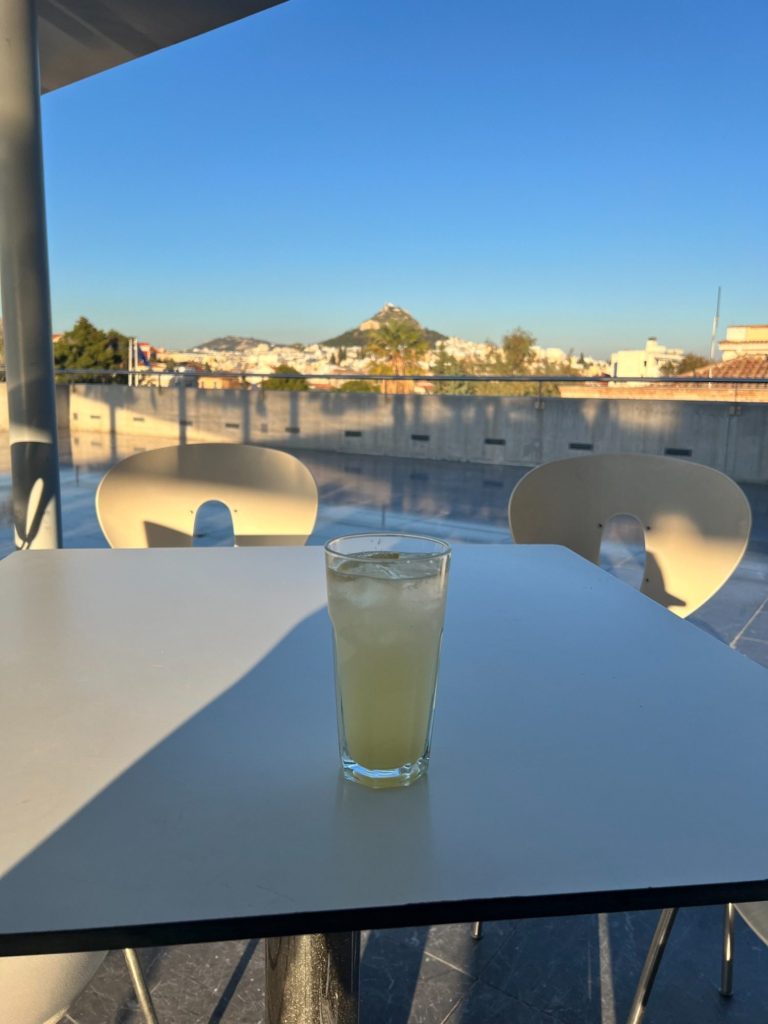
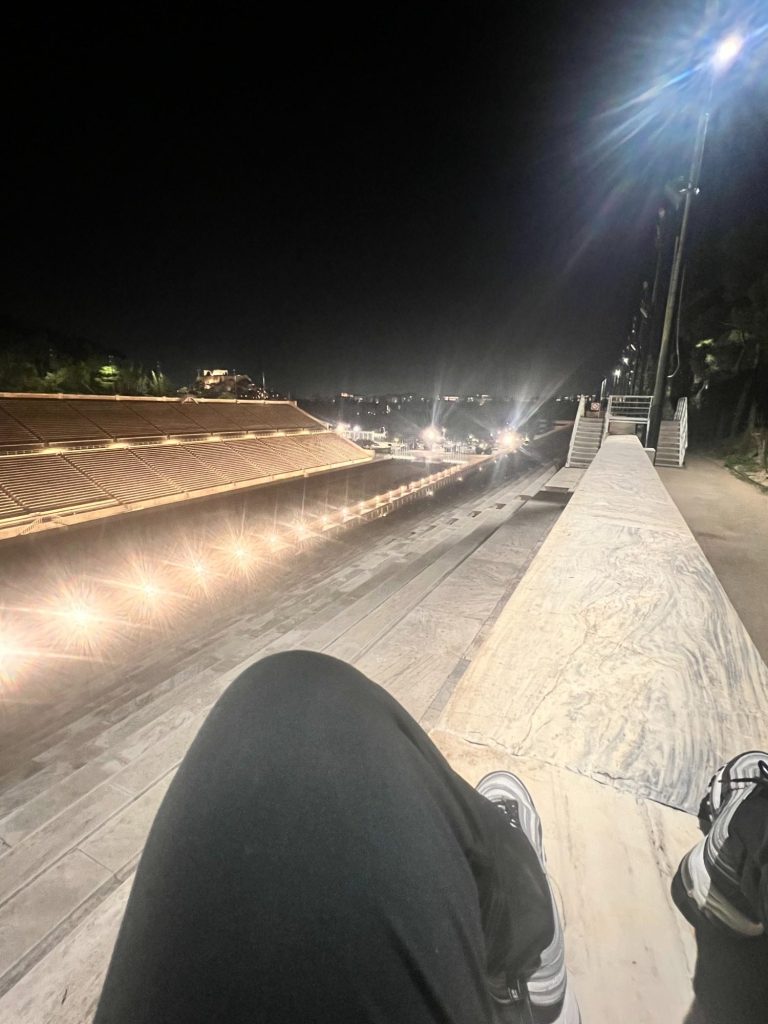
Something larger than ourselves
Ani D.
In a world that moves fast and asks us to take more, do more, and want more, the practices of blessings and offerings invite us to slow down and remember our place within something larger than ourselves. Across cultures, religions, and generations, people have used blessings and offerings to express gratitude, seek balance, and maintain relationships with the land, ancestors, community, and the unseen forces that shape our lives. At their core, blessings and offerings are acts of reciprocity. They remind us that nothing exists in isolation. Food does not appear without soil and labor. Shelter does not exist without trees, stone, or hands to build it. Life itself is sustained through countless relationships, many of which we rarely pause to acknowledge. Blessings and offerings make those relationships visible.
Blessings and offerings are simple yet powerful practices that remind us of our relationship to the world around us. They encourage us to pause, reflect, and recognize that what we receive food, shelter, knowledge, and life itself is not guaranteed, but given through interconnected systems of care, labor, and land. Modern life often encourages separation between people and food systems, consumers and consequences, humans and nature. Blessings and offerings work quietly against that separation. They reconnect us to process, to origin, and to responsibility. On a communal level, shared blessings and offerings strengthen connection.
A blessing is an act of gratitude and intention. It acknowledges abundance while recognizing vulnerability, shifting our mindset from entitlement to appreciation. A blessing is more than a ritual phrase or a spiritual formality; it is an intentional moment of recognition. Below is an image of a Red Admiral that I felt was a blessing in disguise I got to see!
By offering thanks, we honor the people, plants, and processes that make our lives possible. Offerings extend that gratitude into action. Giving something back such as food, time, or care, helps maintain balance and reciprocity. Offerings take gratitude one step further by transforming intention into action. To offer something is to give back. It is a recognition that taking without giving creates imbalance. In a way, I see an offering as a remembrance, and the sculpture we saw at a cemetery in Athens felt like it encapsulated what I believe an offering is.
These practices teach that taking without giving creates harm, but so does forgetting the relationships that sustain us. In a world shaped by disconnection and overconsumption, blessings and offerings reconnect us to responsibility, respect, and balance. They remind us that sustaining life requires not just taking, but giving in return. Blessings and offerings do not have to look a certain way to be meaningful. They can be spoken aloud or held silently. They can be elaborate ceremonies or small, daily habits. What matters is the intention: acknowledging interdependence and committing to balance. In a time when so much feels extractive and disposable, these practices offer a different way of being rooted in respect, care, and continuity. They ask us to remember that every meal, every space, every life is part of an exchange that stretches far beyond ourselves. By practicing blessings and offerings, we don’t just honor what sustains us, we help ensure that it can continue to sustain others, long after us.
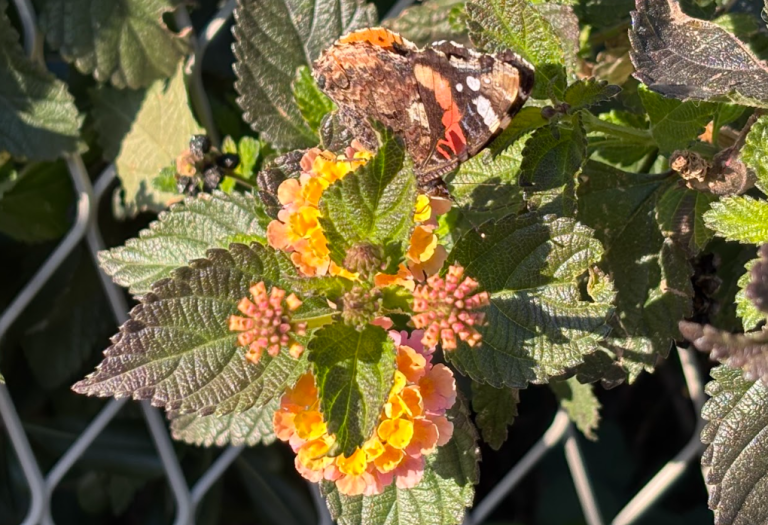
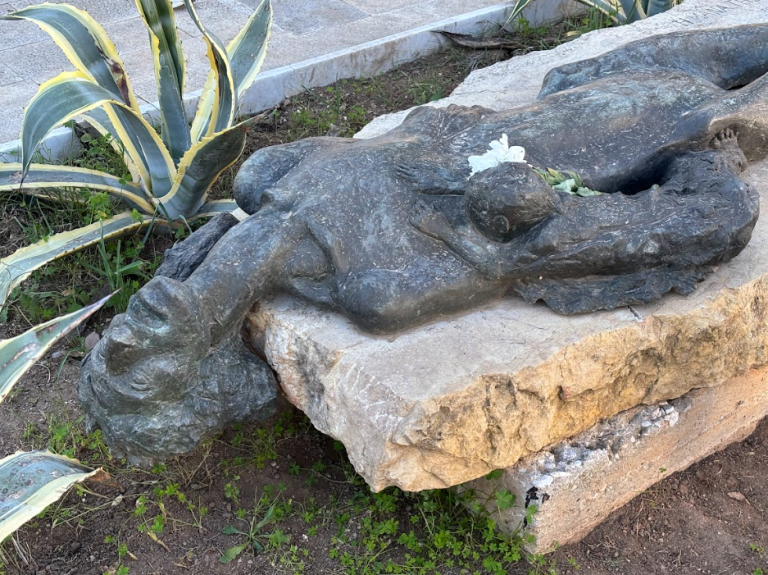
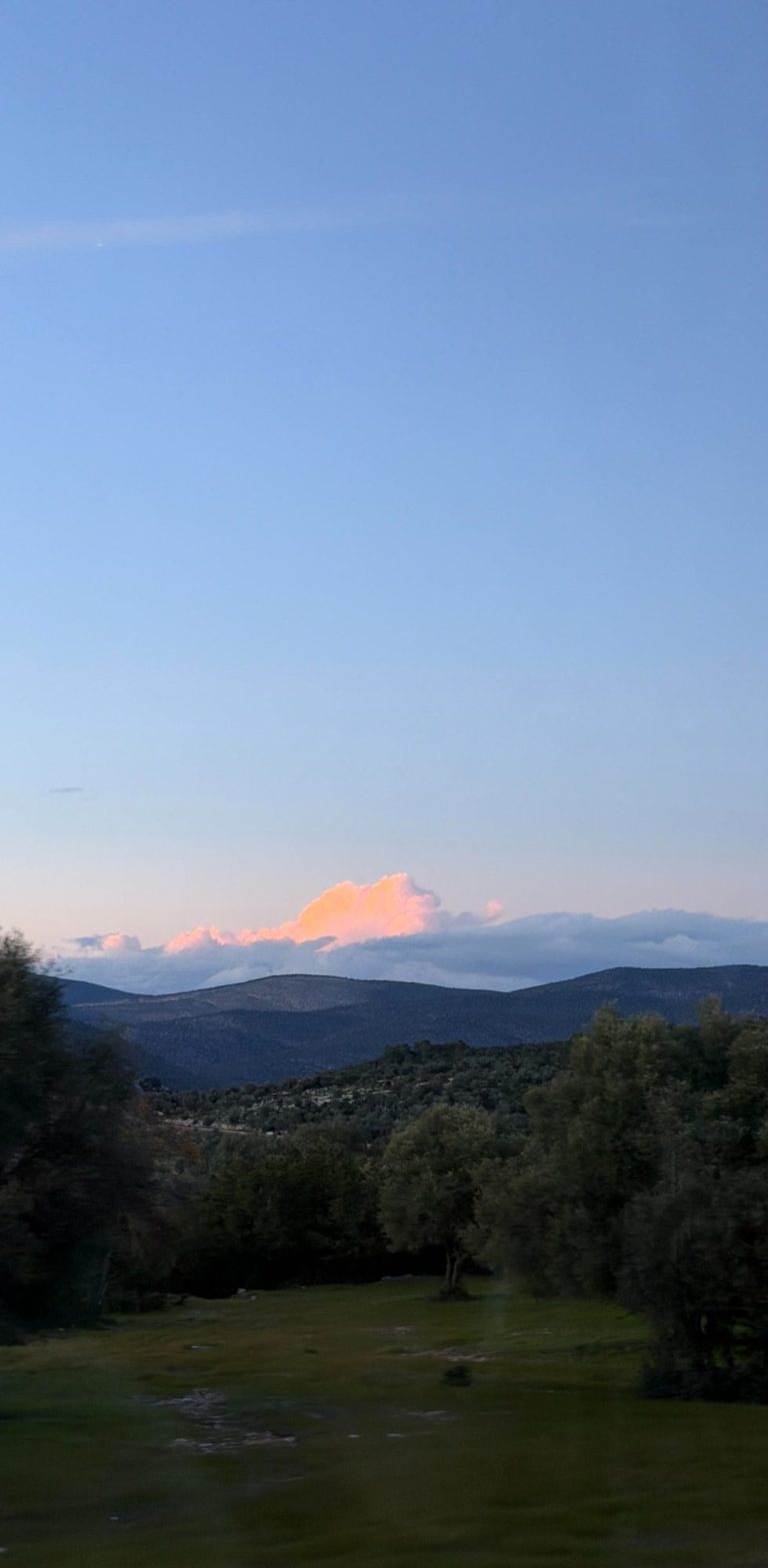
I could go fill an entire novel, but I don’t want to get preachy here. I’m already toeing the line, I know.
Our prompt for this entry is blessings and offerings. I have felt very blessed these last few weeks. I like to think of these blog posts as a sort of offering back, as the only reason I am able to go to Greece in the first place is because of a long stream of luck and support back home. In class, we define offerings as special gifts to the gods to renew trust and make sure they still have your back. I like to think of you, dear readers, as those gods. Take these blog posts as a token of my gratitude, that you have given me your time to read these few words and that you care enough to think of me. Even if I am not texting you every day, please know I am thinking of you. To go back to our definition of offerings, I hope these posts are enough to renew your trust in me, and you better still have my back.
Sending love.
(Song Recommendations: Fast Times by Sabrina Carpenter, Lovefool by the Cardigans, Waterloo by ABBA)
Counting my blessings
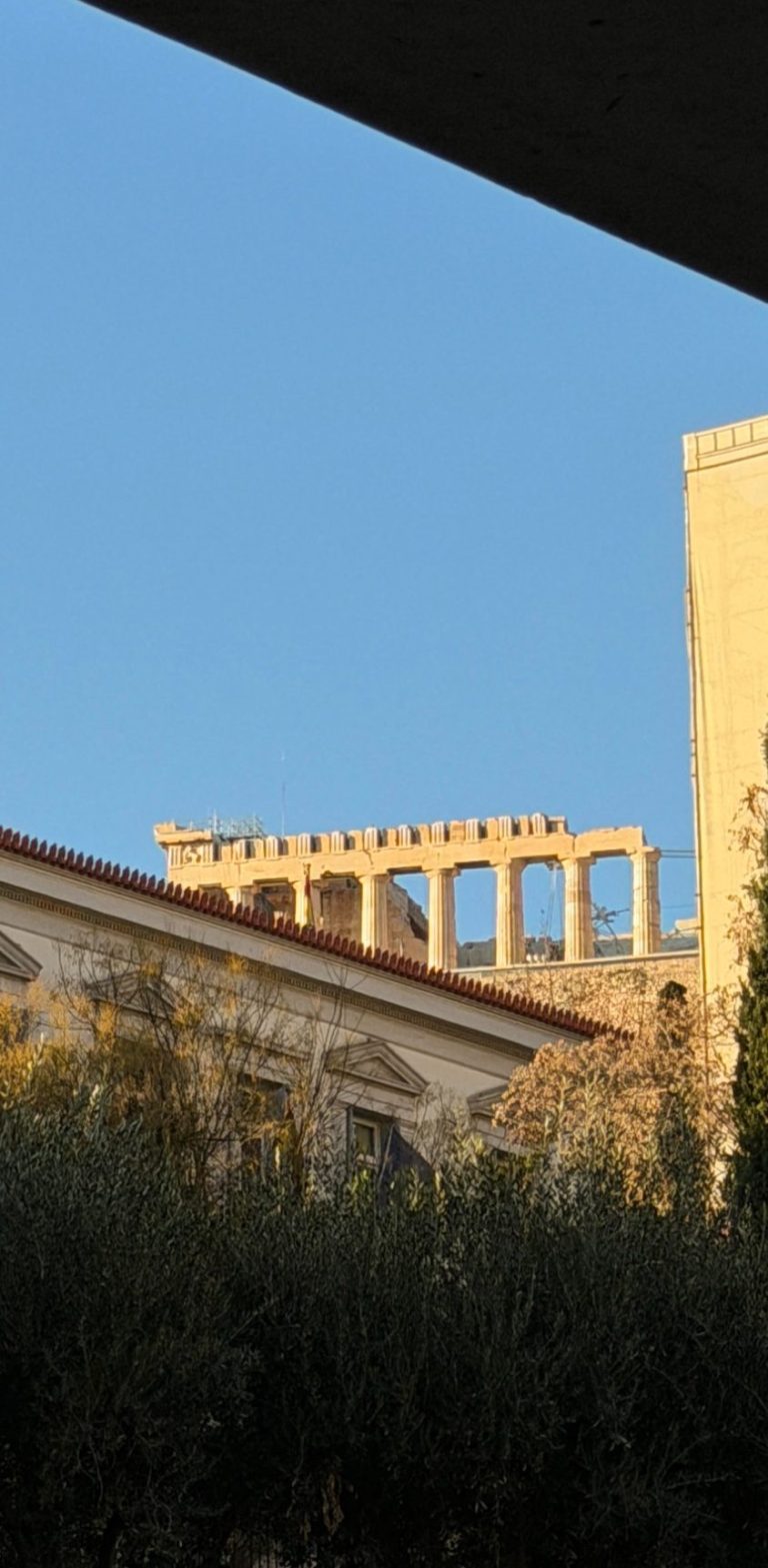
Alby J.
At the risk of sounding cliche, I am going to open this blog post by listing some of the blessings Greece has given me so far. Buckle up.
- The air
- Walking under the Acropolis
- Fresh-squeezed orange juice in the morning
- Kekkos Cafe (loml)
- Laughter til my ribs ache
- Smoothies
- An easy walk to class
- The opportunity to say ‘look at the color of that water!’ at least a million times
- Orange trees along the streets
- Pigeons
- Class lectures
- Colorful graffiti
- Pancakes from Ombrella Cafe that I dream about every night
- An excuse to bring out my camera
- History that makes my stomach drop just as much as the views
- Stray cats
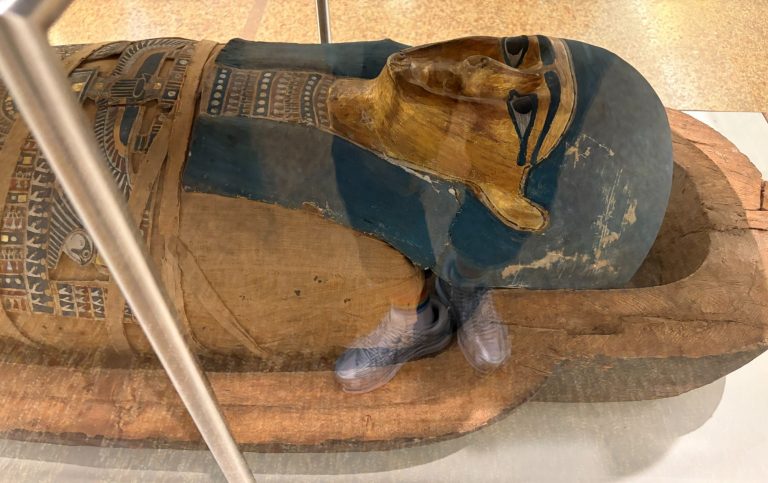
Blessings from Athens
Mia R.
Yassas!
One of the things that comes up repeatedly in our class conversation is the idea of blessings and offerings. I’d say we’ve experienced plenty of both!
As I’ve learned in class, blessings and offerings were defined differently in the ancient world. A blessing could be thought of as divine favor or gift from a divinity, while an offering was something you’d give to a deity in hope of obtaining their blessing. But in a modern context, we could think of a blessing as something that is a gift and an offering as something that a place or person provides.
Athens has given me the gift of getting to see the influence of mythology in marble and alabaster, and provided me an opportunity to learn more in depth about ancient Greek (umbrella term) religiousity/spirituality. For someone who’s loved learning about Greek mythology since elementary school, there is something deeply cool and deeply surreal about getting to focus on this subject for an entire month, and see it all around me wherever I walk.
This week brought site visits to museums and a cemetery. We visited the National Archeological Museum, the Acropolis Museum and one of the most special cemeteries in Athens, where all the people who had done something special for the city got buried. From looking at the wide range of archeological finds at the first museum, studying the carvings of gods depicted on the pediments of the parthenon, to quietly admiring all the funerary friezes, elements of these stories that deeply fascinated me for over a decade were all around us.
Another idea we talk about in class is the idea of sacred space. How it can be different for everyone nowadays. How personal it can be for different people. Being here in Greece, in Athens has been so wonderful so far. I could absolutely call parts of Athens my sacred space.
PS: Finding Egyptian mummies in a Greek museum was a CRAZY cool surprise.
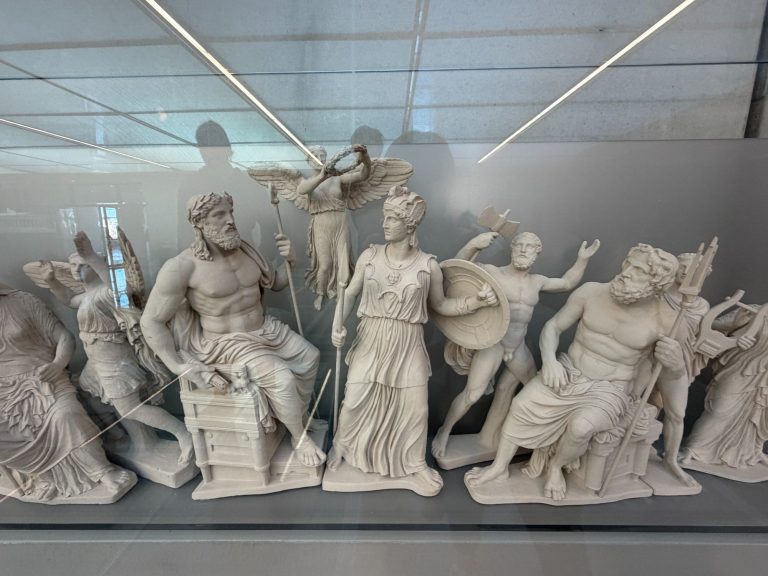
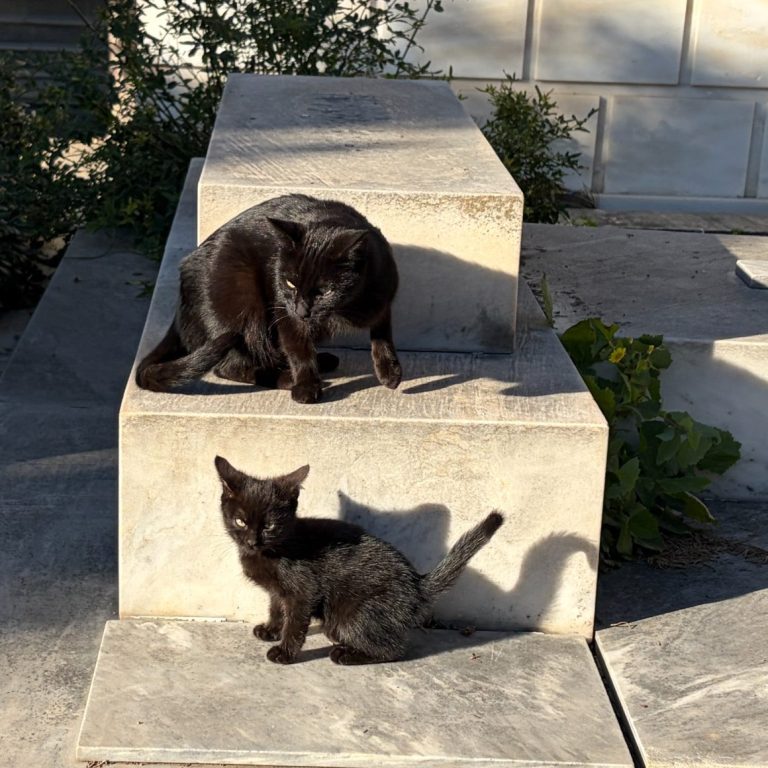
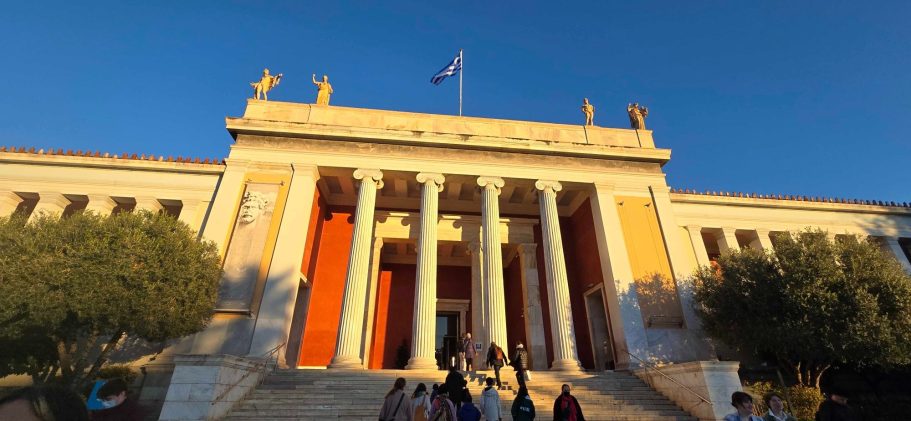
Practice & Community
Sam B.
Spending more and more time here has shown how daily practices have started to shape how our group and the community interact. Routines have shown up in how we all go about the day, and it has built a sense of connection. Practice has played a crucial role in building community, both within the classroom and in the surrounding area.
In the group, shared practices have become part of the routine. Going to class and discussing the topics, getting food in groups, and exploring the city and museums together have all helped to create a sense of familiarity between us all. The repeated habits of day-to-day here like walking along the same route to class or gathering together in the same places has hugely contributed to the sense of community through these shared experiences.
Beyond just our group, continuing to watch and observe the local practices has also shown more of the functions of everyday life here. Observing how people regularly interact and meet in public spaces, such as sidewalks and cafes, also reveals the community and its connections. Watching the repeated actions of the people here helps to understand and see that community is maintained through daily interactions and practices. Small moments like stopping for coffee or a quick chat play a larger role in building connection.
The experiences from the past week and a half have done well to show that community develops over time with repetition. And that the shared routines, issues, and everyday interactions in and out of our group have started to feel a lot more familiar. Practice has helped us adjust and create a sense of belonging and community here that will hopefully continue to get stronger as our time here goes on.
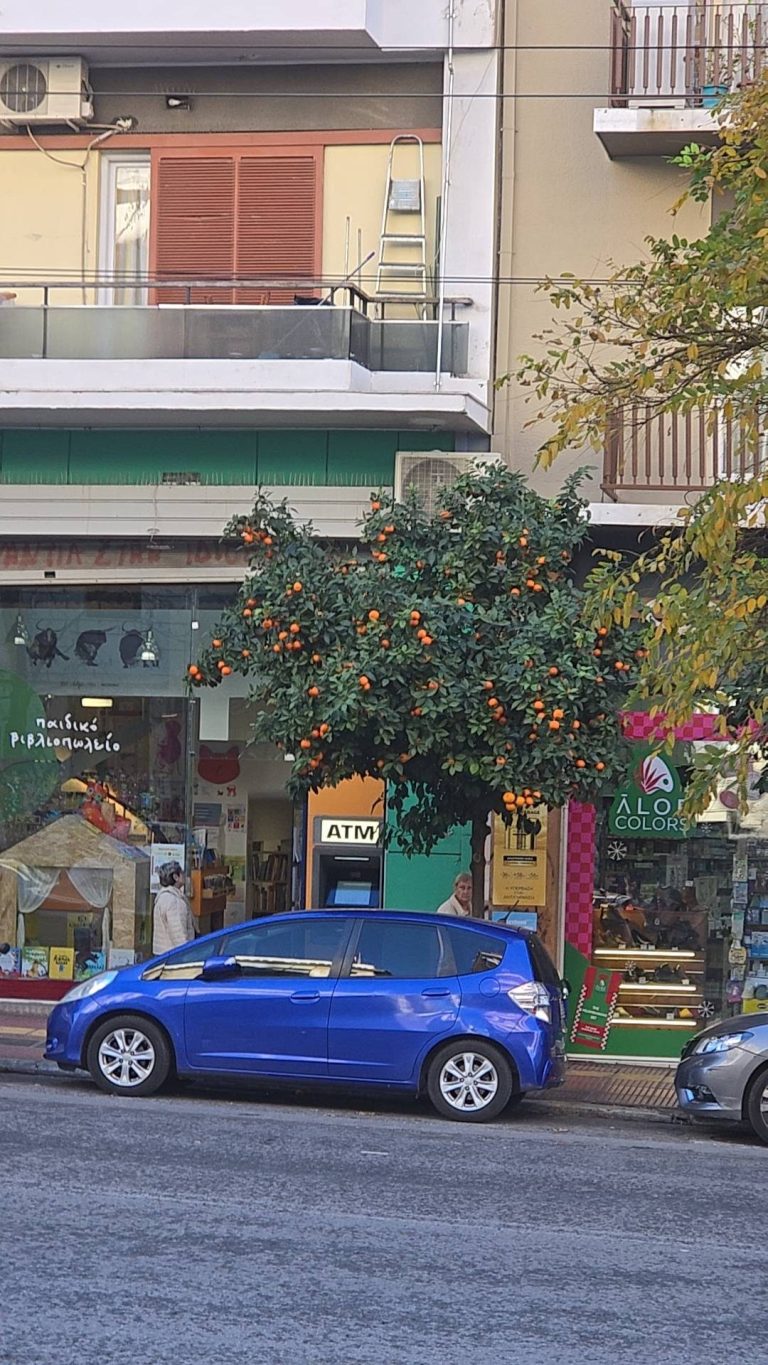
Mikayla H.
The man who runs Le Petit, the cafe that has seemingly become our (meaning, our class’s) coffee shop, recognizes us and engages us in conversation. This feels perhaps cynical, but one might see it as a sales tactic, to encourage customers to keep coming back, but I think looking at it more optimistically, this is him practicing community. When I went there this afternoon, he was sitting outside talking to some, presumably Greek, patrons, but stood up and shook my hand as I approached. Again, you can call this a sales tactic but, this doesn’t happen to me in Washington. As he was preparing my moka, we talked about the raising of expenses in Greece and the U.S. I told him, doing my best to consider the conversion rate, that a mocha in Tacoma would cost me slightly more than the one he was making for me. We exchanged a little bit of working-class sentimentality, “Gotta make a living, ya know?” And he said, “I’ll see you in the morning, right?”
He probably will. It’s very good coffee.
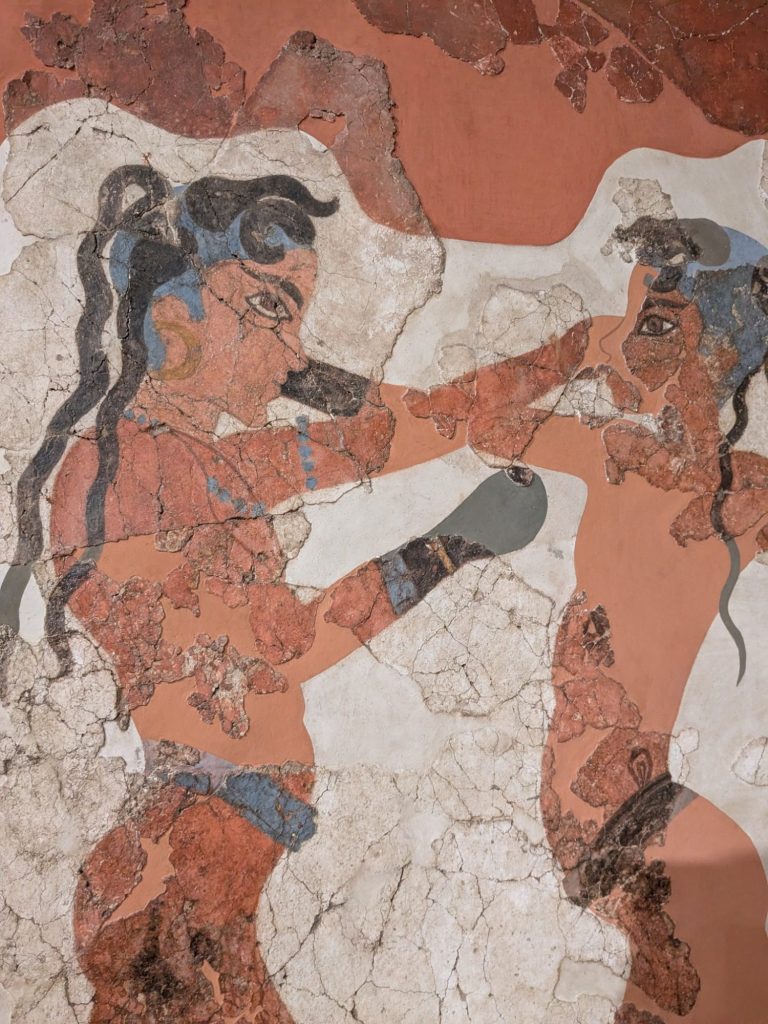
The other place I have to visit again is run by the middle-aged man with the scraggly beard who made me some juice from his juice bar/produce stand, who spent nearly ten minutes helping me find a place where I could buy a towel (I found exactly what I was looking for too!), who has “Wrecking Ball” by Miley Cyrus as his ringtone, was a good example of what community in practice can look like. It’s helping people. It’s hospitality. It’s philoxenia.
I’m obviously not a part of the Athenian community, but to treat someone as if they could be, that welcoming demeanor, is something more Americans could learn from I think.
And then tonight, I went to a cafe with a couple of classmates to work on homework, and asked the friendly gray-haired gentleman for anything warm to drink. He made me a whiskey-heavy toddy, (write drunk, edit sober, right?) and later, after I came out of his bathroom, he had a complimentary shot of whiskey waiting for me on the counter.
I can only really speak for myself, but I think that as a class, we’re all getting a little more comfortable with each other, and forming a little community of our own as well. We were introduced to divination and prophecy today in class, and I think it is perhaps an omen of positive things to come that my team won a game today by forming an (almost) human pyramid (they wanted me to get on top but that did not feel safe without a stepstool). Omens, we learned, are a sign that something is in the process of becoming, that something is latent and about to jump out. This gives one interpreting an omen an ability to make a choice, based on that interpretation. I will choose to keep seeking out experiences in Greece, and trying to practice community within my sphere based on examples shown to me.
Community as a practice
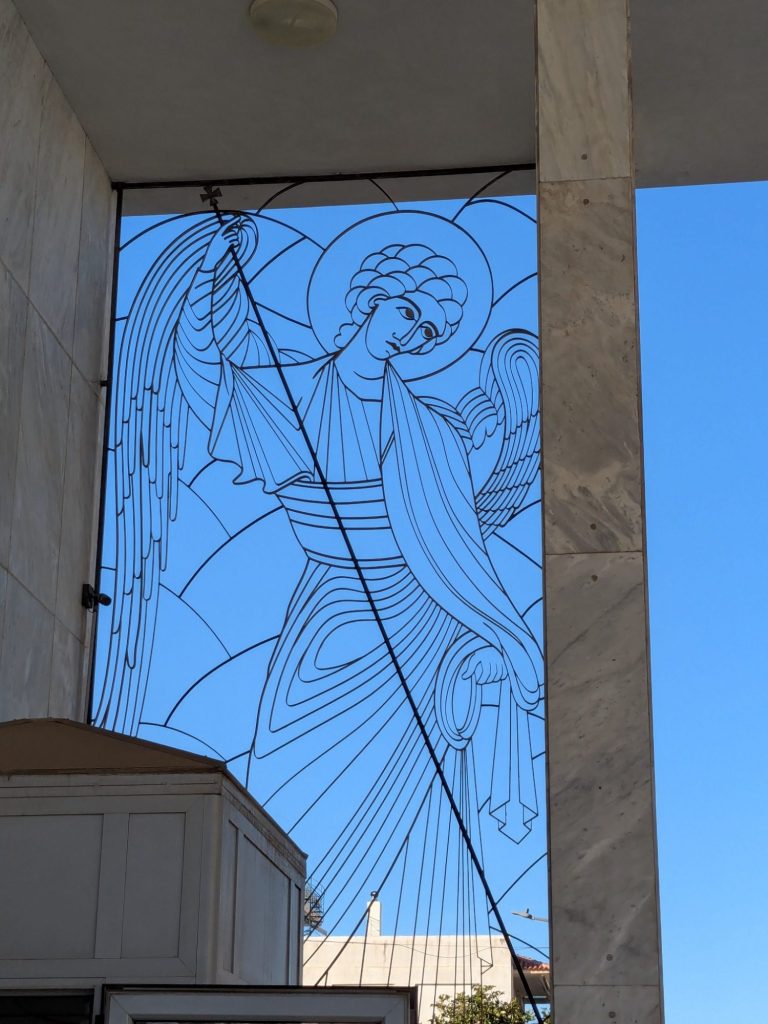
2. Mia covering my dinner bills yesterday. A group of us decided to go out for gelato after our high-energy dance lesson, which soon turned into a quest to find some great Greek grub. Unfortunately, I hadn’t brought my wallet with me, seemingly rendering an hour’s worth of wandering around the streets moot. Thankfully, Mia offered to cover the bill for me that night, allowing us to enjoy some delicious gelato and tasty gyros together. That was a really fun night out.
3. Jalen and Samael for helping me carry my laundry to and from the CYA center. My load turned out to be larger than expected, especially with the towels I’d added. Factor in all the traffic and stairs, and a simple journey to our classroom suddenly felt like an accident waiting to happen. Luckily, they took enough off my shoulders that both trips happened without incident, even when I had to ask Samael twice because the dryer turned out to not be done the first time. Clean clothes are great!
4. Clay for offering invaluable moral support in giving flowers to the neighbors. Apologizing is never easy, especially to strangers who had to help you clean up a huge mess in the middle of the night,
A practice of thanks
Pedro C.
Nearly two weeks in, and we’re on the verge of leaving Athens! It’s equally hard to believe that so much time has passed as it is hard to believe that it’s only been two weeks with the amount of incredible things we’ve seen. And as everyone prepares to pack for the next phase of our journey, I thought I’d just share the top five moments I had with other classmates of stumbling and being picked up:
1. Almost running out of battery for my phone on Sunday. I’d anticipated this happening, since we’d be out all day, and brought along a charger, but it turned out to be incompatible with my phone. By the time we were leaving Nauplio, my phone was very nearly dead. Then Ani swooped in and lent me a charger they’d brought, getting me through the rest of the afternoon. It was particularly generous of them, considering how many people were running low on battery, including Ani. I never would’ve lasted the rest of the trip without that.
so having backup around made the task significantly easier. With two of us talking to two neighbors, it felt like we were on more even footing and could try to handle the situation with the politeness and respect that it needed. Additional thanks to the neighbors for actually accepting that apology.
5. Everyone who talked through ideas for my presentation activity and participated in it today. This trip has been jam-packed with work for all of us, and I don’t think I was alone in struggling to put the finishing touches on my presentation. At this point, it represented over six months’ hard work and research, and turning all that into a fun little group game somehow felt impossible. It never would’ve happened without everyone who let me verbally stress and bounce ideas around, and it absolutely would’ve been impossible to survive the actual presentation without everyone in the class who joined in on the game that I wound up coming up with. For everyone’s sakes, thank you for playing along.
Thanks to the entire class for everything!
Old and new traditions
Clay C.
Being part of a community is an incredibly important part of life. Humans are social creatures, and we rely on our peers in more ways than we can imagine. Observing the culture in Greece today and in ancient times is an interesting difference in how their practices shaped their communities.
When I’ve walked around Athens, I’ve seen many people eating out or sitting at tables with drinks. They’ll be laughing and having a good time, and I’ll see the same people at the same spots day after day. These people have found a community in their friends and are able to experience the joy of human connection.
I have also had the privilege of connecting with people while I have been here. I’ve made friends with my classmates and a common practice is to go out to lunch (or dinner). Yesterday, many of us went to a Greek dancing lesson, and afterwards a small group of us went to get gelato and pasta. I ended up in Makenzie’s apartment afterwards to try an ancient beet stew recipe, and we ate together and shared reading recommendations for a few hours. I didn’t end up going back to my apartment until 10pm!
When we observe ancient practices, one that stood out to me was hymns and prayers. These were a way to connect with the gods, but they weren’t typically individual. Instead, hymns were communal, and many people would gather together to essentially do a group prayer. They would sing, and sometimes be accompanied by music, but they would be brought together to worship. This gave them the chance to strengthen their bonds with each other as well as the gods, and in ancient times, having people to rely on was vital (it was very easy to die back then, so the more people you had to help you, the better). Prayer was also something that would be done out loud, and group prayers were a common way to talk to their gods (silent prayers were also seen as suspicious).
Overall, not only have I witnessed ancient and current communities and practices, I’ve also begun to develop one of my own. Our class could be considered a community, and I’ve enjoyed spending almost two weeks with them here in Greece. While we are reaching the halfway point, we still have much more to see, and I am excited for where we are going to next!
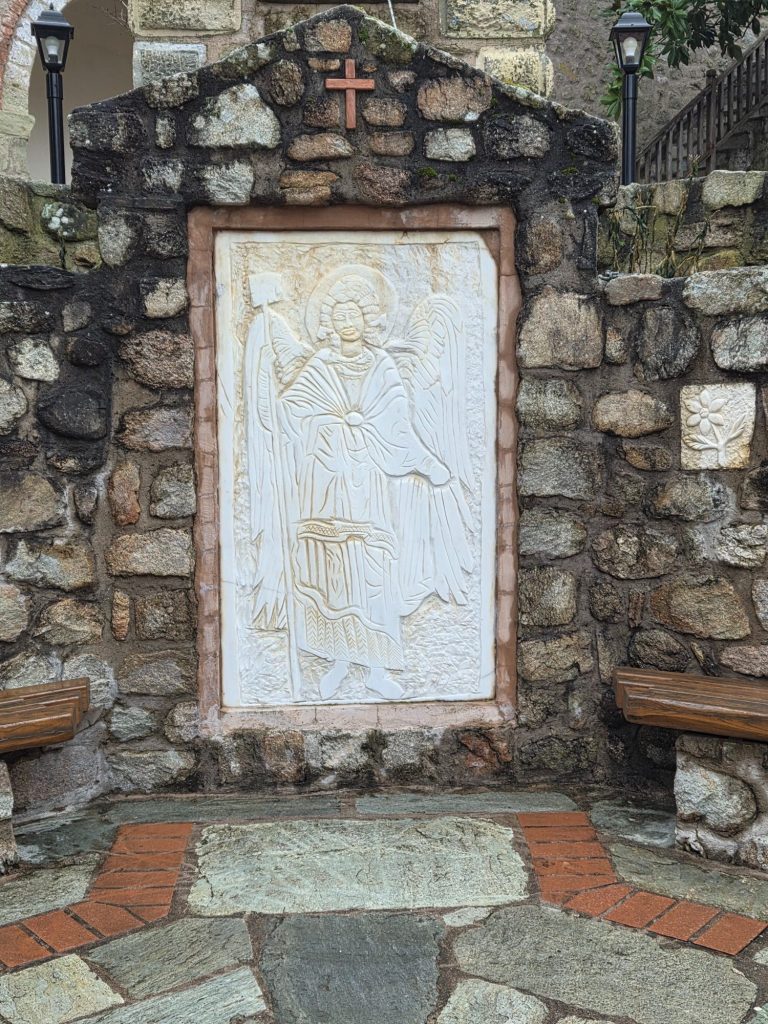
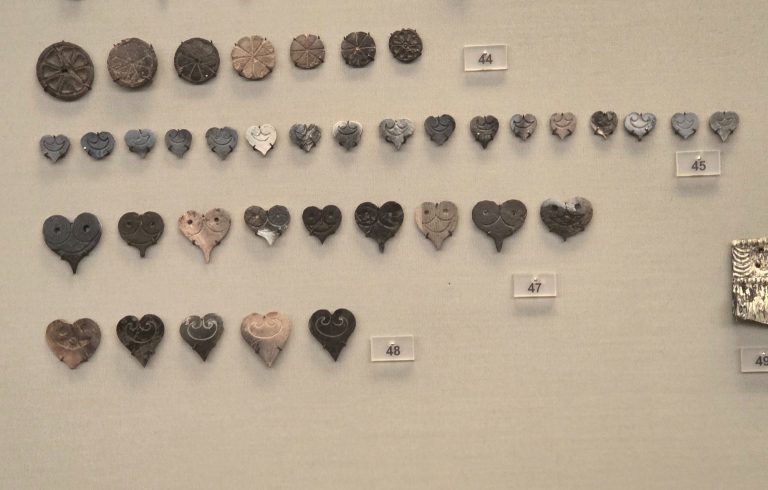
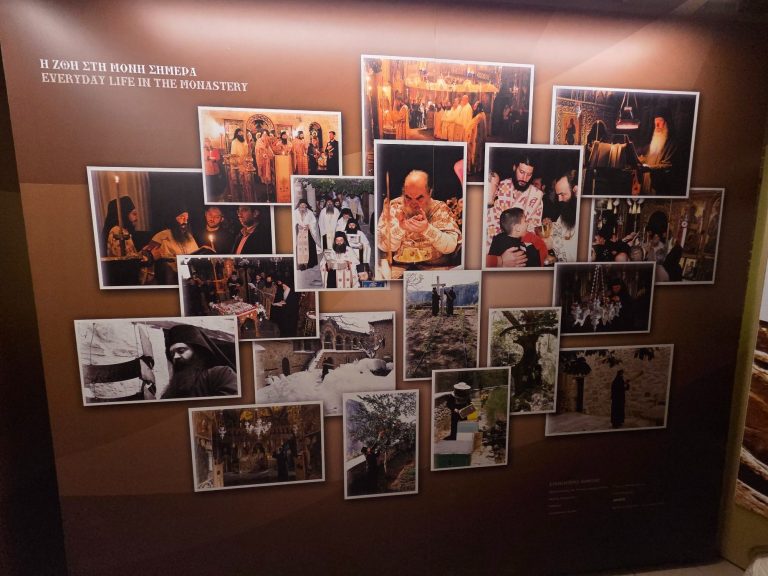
True lies
Kate F.
True Lies: the idea that myths don’t tell historical facts but instead tell us about the values of the culture who tells the myth. A favorite myth of mine in class has been Atrahasis, which tells the story of the creation of humans and a wise human who listened to a god in order to survive the purging of humans from the world. Why did the gods want to purge them? The humans were being too noisy. Classic. The truth in this story is something you wouldn’t necessarily expect. The myth ended with the gods deciding to control human population, and therefore noise, by making some women infertile, some have miscarriage, and other babies dying in infancy. The myth shows the incredible value that Mesopotaminan culture had towards their babies and how important it was to continue attempting to give birth to children even if your first pregnancy was not a successful one. I would like to extrapolate that thought and apply it to modern day, where miscarriage and infant death is a taboo topic. I believe we could learn to normalize this difficult topic, just as this story helped Mesopotamian women in the ancient world.
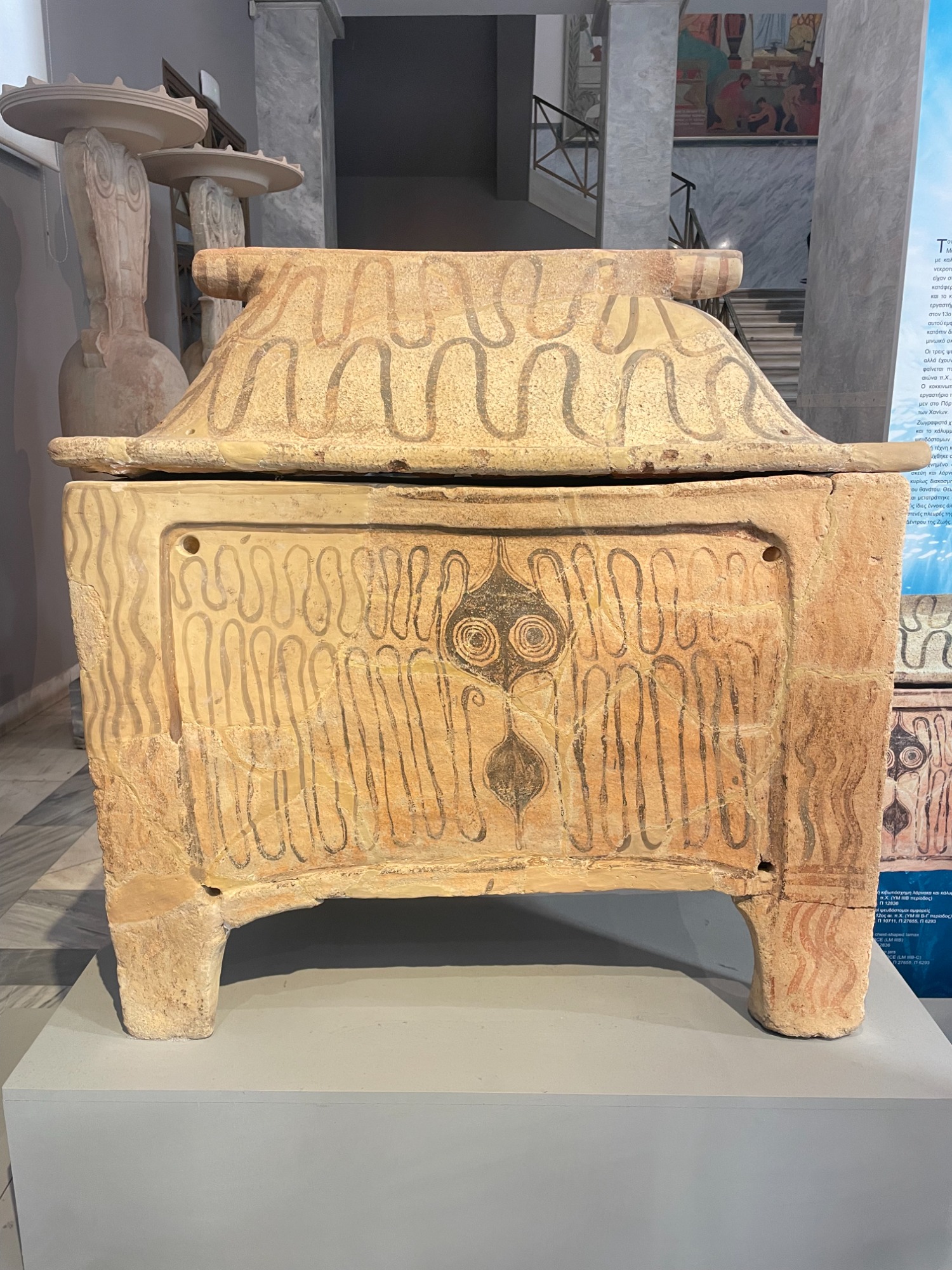
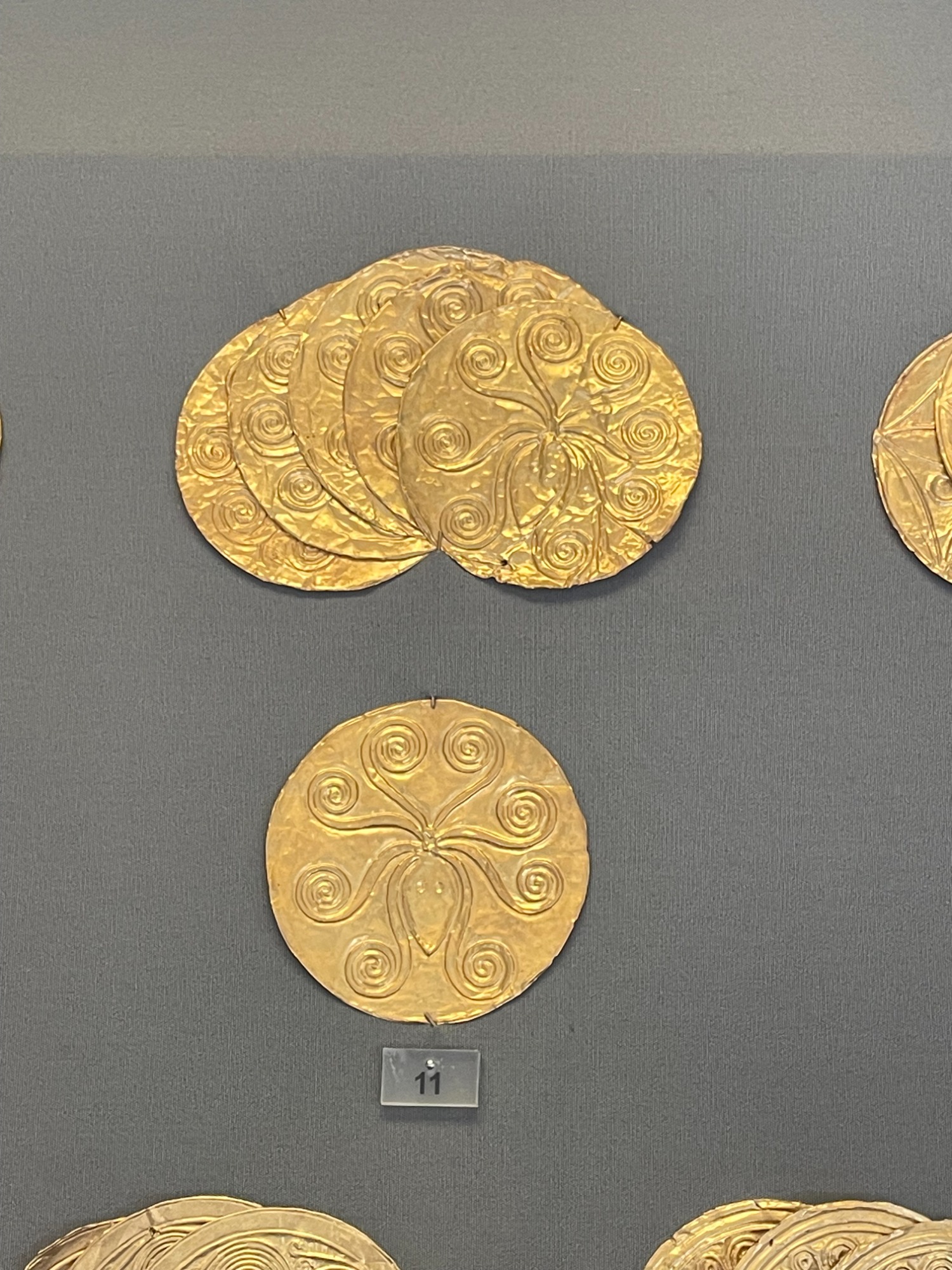
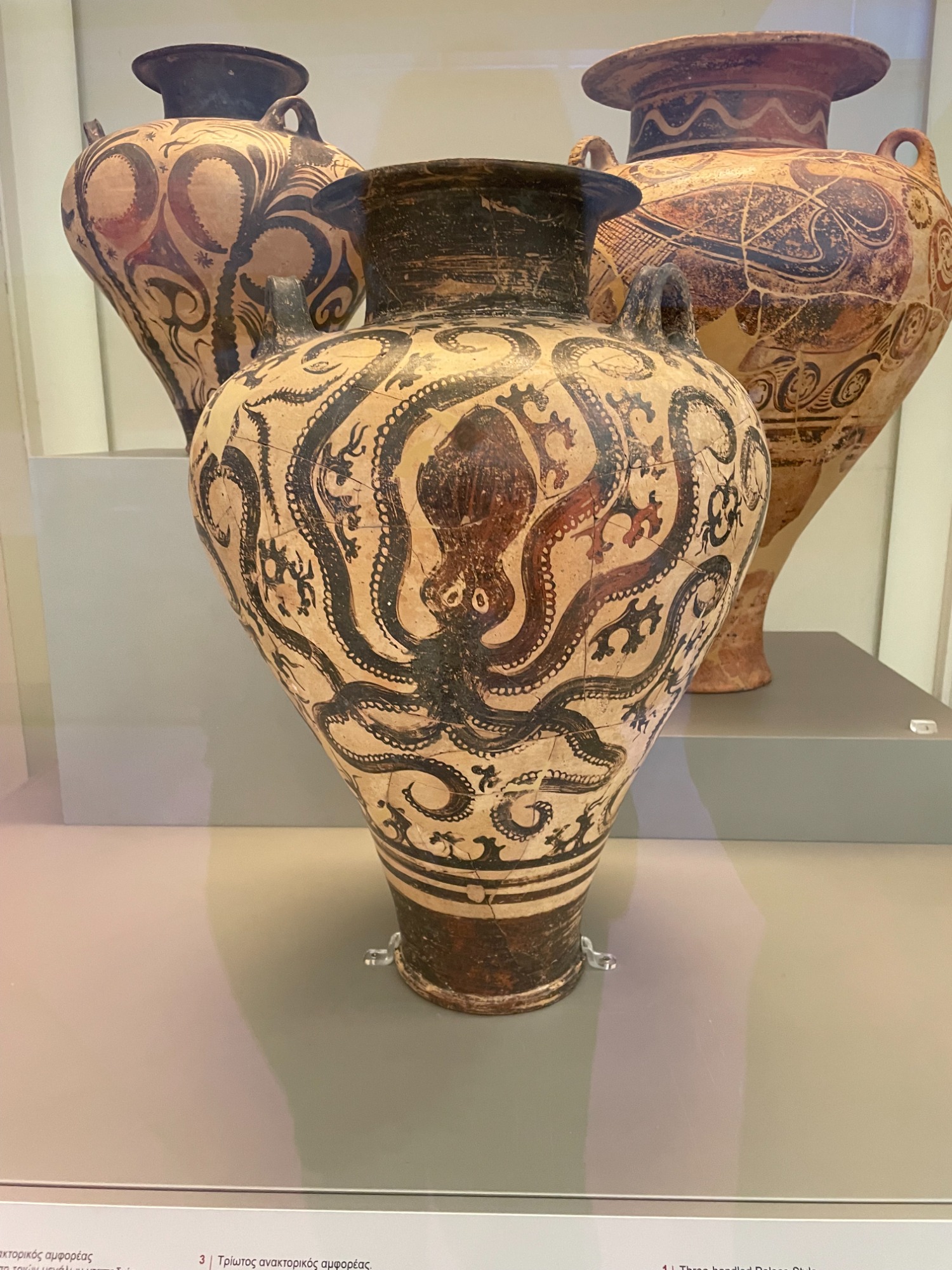
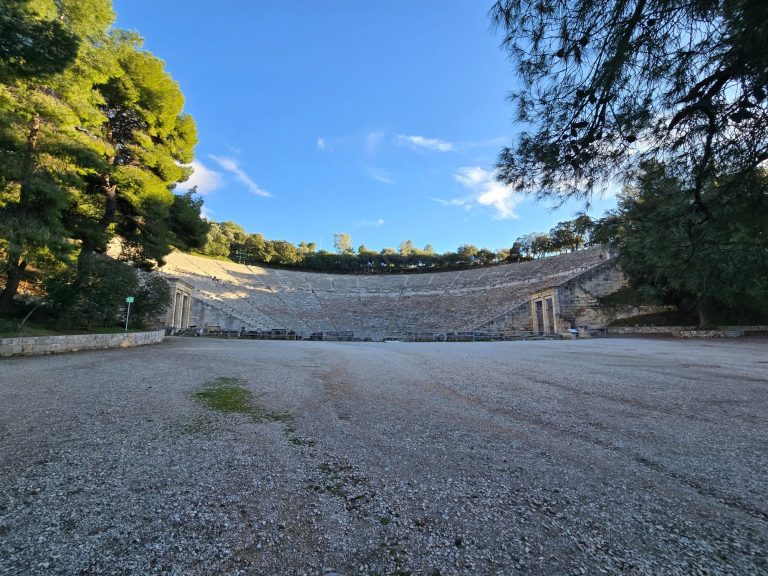
Transcendent power of belief
Jaquie L.
When stood upon ancient ground, the weight of the world falls upon your shoulders and you’re left wondering, “What were the realities of this history that have since become myth?” The Ancient Theatre of Epidaurus is part of a sanctuary devoted to Asclepius, and still holds performances even to this day. There were no performances the day we visited, but we were able to see a demonstration of the acoustics within the structure. Sitting in the stands, looking out over the view, I was captivated by the way the stands must have once been filled. Perhaps they all sat in silence like we did, eyes fixed on the sands below, listening intently to the actors on the sands below. For them, the performances held the power of healing, hence the theater’s construction within the sanctuary of a deity of healing.
Today we often wave away these ancient beliefs as unscientific. However, there will always be something so moving about being surrounded by an audience all fixed upon the same story being enacted on the stage before you. Theatre and story have a truth and a power to them. A moment of brevity can salve an aching heart, laughter can ease the stress of a weighty life, and the catharsis of a tragedy may offer solace to a sorrowful mind. Faith and belief hold power, and myths are more than fiction.
As I stood before the vacated stands after the audience had left, I sat in that weight for a time. Theatre has always been a huge part of my life, and I would not be where I am today if it weren’t for performing arts. Standing there, in one of the ancient Greek theaters, it felt as if I’d made a pilgrimage to the birthplace of something sacred to myself. The tears I shed were not of sorrow, but of gratitude. Gratitude for the myths that held truth enough to be the foundation of theatre. Gratitude for the honor of standing in the birthplace of what has changed the course of my life.
Gratitude for all those who believed in the truth of faith – that a teen thousands of years later might one day find herself living a life she could once have only dreamed of and whispering to their ghosts, “Thank you.”
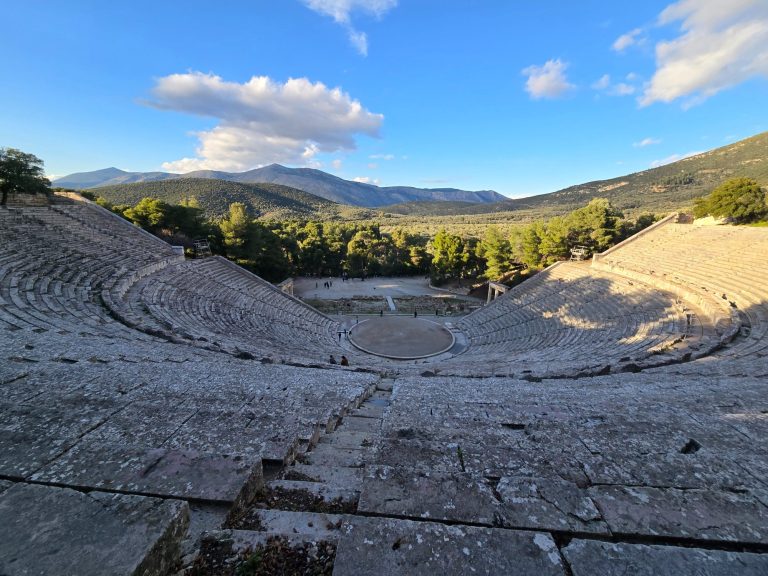
Truth that resonates
Samael B.
As we’ve been here in Greece for over a week now, we’ve had a couple of days to visit and explore ancient sites and archaeological museums. While visiting Athen’s National Archaeological Museum, our professor pointed out the boar tusk helmet on display. Part of their Mycenae collection, it both shows the surviving panels of the helmet itself as well as renditions of how it would have looked originally, the plaque underneath the display said the contents of the case mostly dated to the 14th and 13th centuries BCE. Professor Finitsis told us that originally our only knowledge about them came from the Illiad, and people had dismissed it as having been something made up – despite its specific detailing, people had assumed that no one was making anything like that in early civilizations. But after these archaeological finds, we know that they did exist.
While this is fascinating and good proof that we can’t make our judgements on what’s true by assuming any level of incompetence of people of the past (part of an incorrect notion that history is a linear march of progress), we have been well warned to not assume that myths inherently have to tell us anything that ‘really’ happened in history. Instead of trying to place myth on one end or the other of an incorrectly flattened scale between what’s ‘true’ and ‘false’ we should consider myths to be a sort of “true lie.” While myths were often originally inspired by real-world events or circumstances, they often changed greatly right off the bat or as they were passed among civilizations and generations. While they can be helpful to corroborate things we did know happened (as long as we’re careful about our assumptions), the specific events weren’t necessarily the ‘truth’ meant to be passed down.
Instead, their value came from true feelings and understandings that resonated with people as a whole. People passed myths along because they felt something in them relevant to the human experience and would continue to be important to us. We can see this just from the material goods those myths inspired and left behind – people valued antiquity’s beautiful statues, impressive architecture, etc. even without always having the story to put behind it, because the themes and senses they drew on just resonate with people as a general whole. So while myth might not give us a completely accurate account of historical events, they tell us about who we were and who we are, because they show us what we care about and what resonates with us throughout the generations.
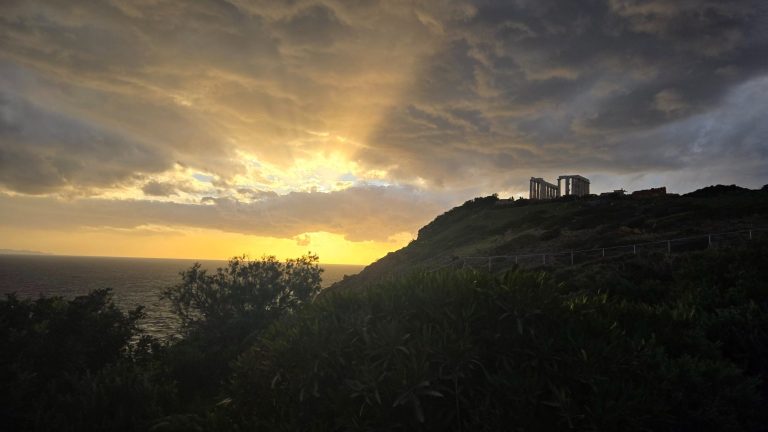
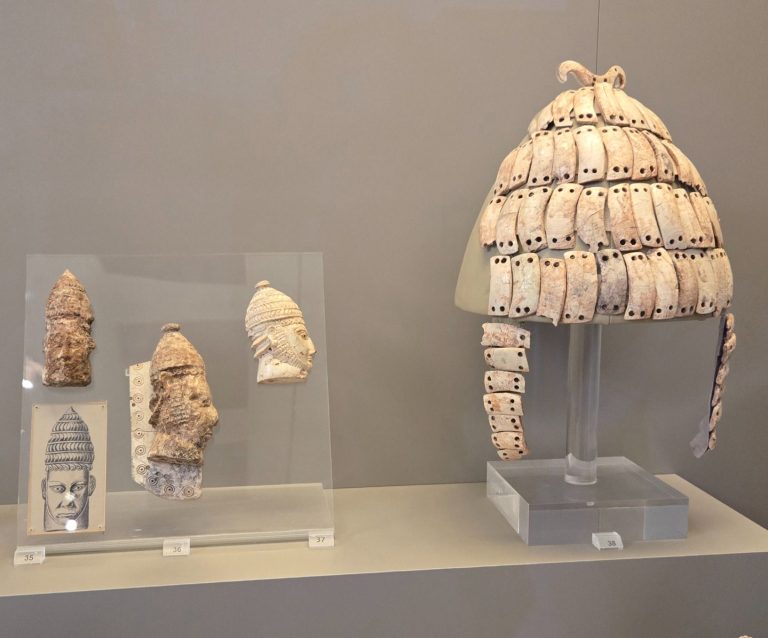
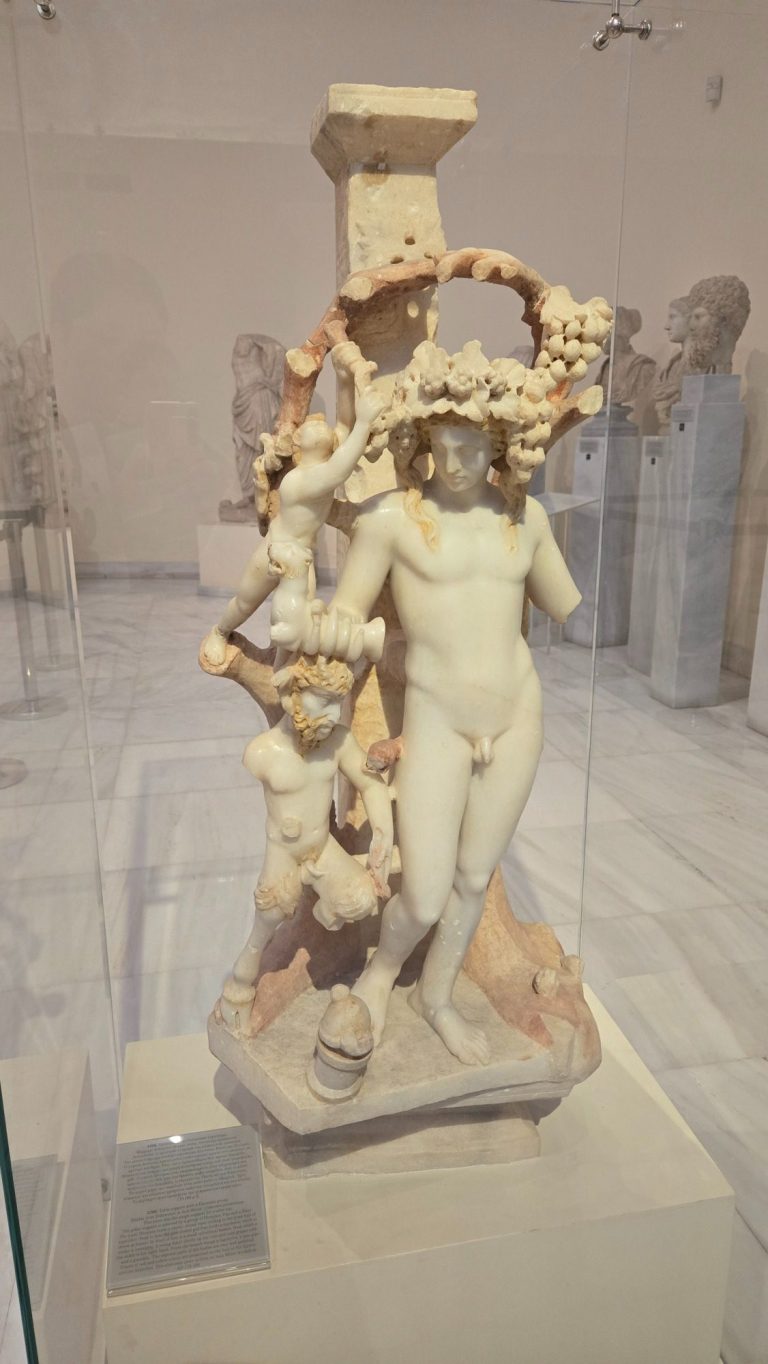
Humans need a story to live by
Alby J.
“Humans need a story to live by” has been one of our class mottoes since the first orientation meetings last spring, and I wrote it down on the back of a flashcard while studying for our first quiz. As an English major, I am well familiar with the concept. Where would I be without my books, my tv series? I know the philosophy goes much deeper, but even on the uppermost surface level, I learned a lot of my values from reacting to fiction. The truth stored in fantasy novels may not be historical, but it still has a deep profound meaning, no matter what Plato may say about myths. Storytelling is intrinsic to human nature, and vital to our understanding of this chaotic world of loose ends.
I’m writing this blog on the tail ends of our first site visits– to Lake Vouliagmenis, the Temple of Poseidon, Mycenae, Palamidi Fortress, and Epidaurus– so you’ll have to excuse a bit of poetic waxing. As I look back on the weekend excursions, I keep thinking about how many others walked the same trails as me, gasped at the same views, pointed to the same eternal turquoise waters. Humans have written the same message on stones since we learned the words: I was here. I kept my hands to myself on the ruins, obviously, but the mantra rang in my head all the same. I was here. The same walls that we made myths of, I have walked beside (and pet stray cats on).
Our professor says religion is the language of metaphysics. Human nature is to translate the incomprehensible, often through even more convoluted, complex, crazy mediums like writing, or painting, or even, god forbid, through science. Humans orient themselves through periods of time, and tell stories of gods dying to get used to the knowledge that we won’t be here forever. The line between history and myth gets blurred as each generation passes down stories as truth and truth as stories, and we use it to figure out how we can possibly live through all the noise.
In the context of our class, “humans need a story to live by” is the answer to why we call the years 3000-1200 BCE the Bronze Age, and it means we turn our history to myths in order to learn from them. Myths, we’ve been taught, are a sort of “true lies.” They tell us the values of our history, of cultures come and gone, of friends and heroes we’ll never meet. We read a translation of an old poem and laugh at the same innuendo our ancestors were so fond of. It’s always been endearing to me. Time travel, found in your local Barnes and Noble.
It’s true we need a story to live by. It’s how we say we were here.
(Song recommendations: the lakes by Taylor Swift, Dreams by The Cranberries, and Free by Florence + The Machine)
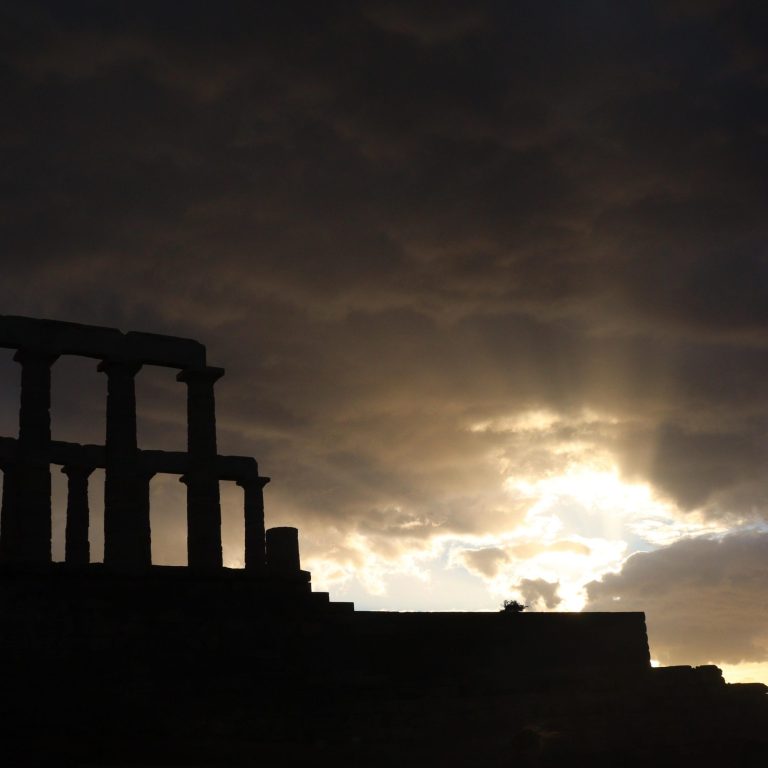
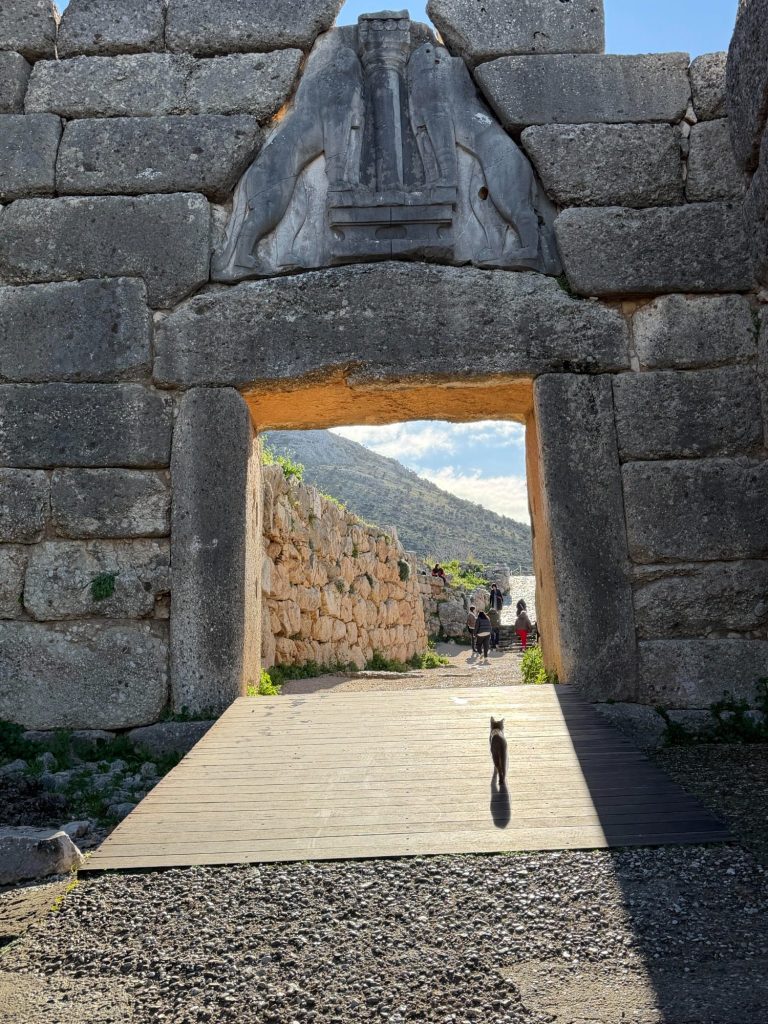
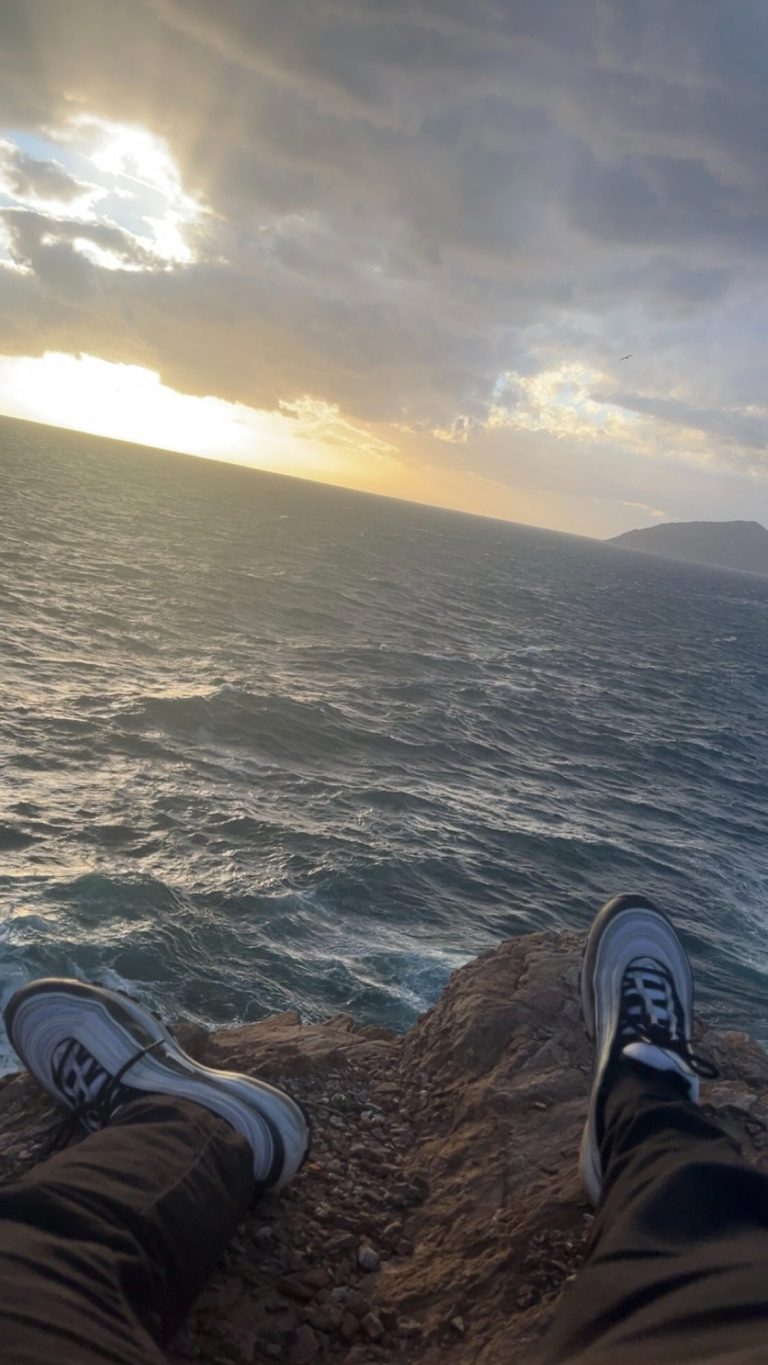
What surprised me most is how familiar those stories still feel. The myths we’ve talked about in class such as gods with flaws, heroes who mess up, people punished for pride or rewarded for loyalty don’t feel distant or outdated. They feel human. Standing at sites like Mycenae, the Temple of Poseidon, or any acropolis, I kept thinking about how these stories weren’t just entertainment. They were ways of understanding the world, explaining loss, justifying power, or making sense of things that felt uncontrollable. In that way, they weren’t so different from the stories we live by now.
I finally get what it means
Even today, we still organize our lives through narrative. We tell ourselves stories about who we are, where we’re going, and what matters. Whether it’s success, love, faith, or freedom, those ideas guide our choices in ways we don’t always notice. The Bronze Age myths we study may be ancient, but the need behind them isn’t. As humans, we still look for meaning the same
way by turning experience into story. That’s what connects us to the past. Different settings, different gods, same instinct. We were here. And we’re still trying to figure out how to live.
Jalen E.
I didn’t really understand the phrase “humans need a story to live by” until we really started to move through Greece. Not reading about it, not hearing it in lecture but standing in places that are older than most of the stories I know. When you’re walking through ruins where people once prayed, argued, ruled, and hoped, it’s hard not to think about what kept them going. They didn’t have our technology or even our explanations, but they had stories. And somehow, that was enough to build civilizations.
Part of my story
Mia R.
Kalispera!
One of the very first things Professor Finitsis told us, was the idea that humans need a story to live by. It is because of this concept, that myths stay so relevant with us. This is a concept I feel I’d always agreed with all my life, before I even knew what the concept was. But it wasn’t until this weekend, with our site visits to the temple of Poseidon, Mycenae, Epidaurus and more, where I feel I truly got what my professor meant.
Walking along the high ocean cliffs and standing atop the sunnied grassy slopes, I felt I was struck with a sense of awe. Not just for the beauty itself, though the sites of nature and stone ruins we saw were stunning in every sense of the word. But rather, truly inspiring to see. To look at the beauty of the natural landscapes and think about all the countless people and myths that stood before us, looking at the same natural beauty, filled with their own wonders and worries. To stand here is to stand in a tradition that goes all the way back to the era where humanity believes in myths. For instance, the temple of Poseidon we saw is said to be the spot King Aegeus, father to the Minotaur slayer Theseus, threw himself into the sea out of Greece. The Sea bears his name today, the Aegean Sea.
I got to stand at that same gorgeous cliff and wince at just how very long of a fall that must be. The waves below were quite rough, fierce and unyielding where the sun here was gentle and warming.
Experiences like these, getting to explore the sites tied so intimately with the mythology I’ve been fascinated by since the first grade, feels like such a gratifying, important part of my own life journey. I cannot even begin to articulate the special sense of reverence I felt when I found relics from the temple of Artemis at the Epidaurus museum. This trip will long be with me as part of my story, and I’m so grateful for it all.
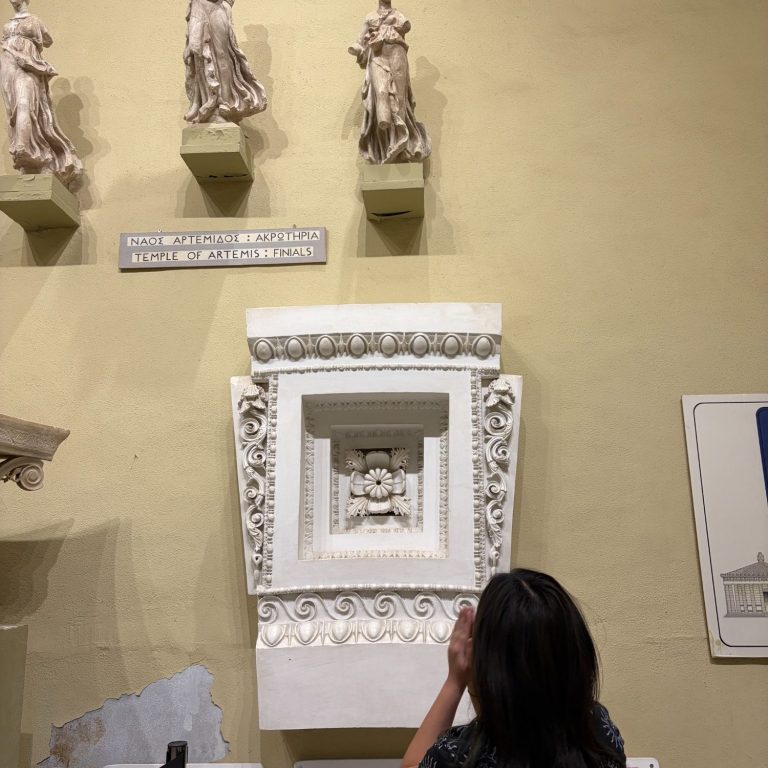
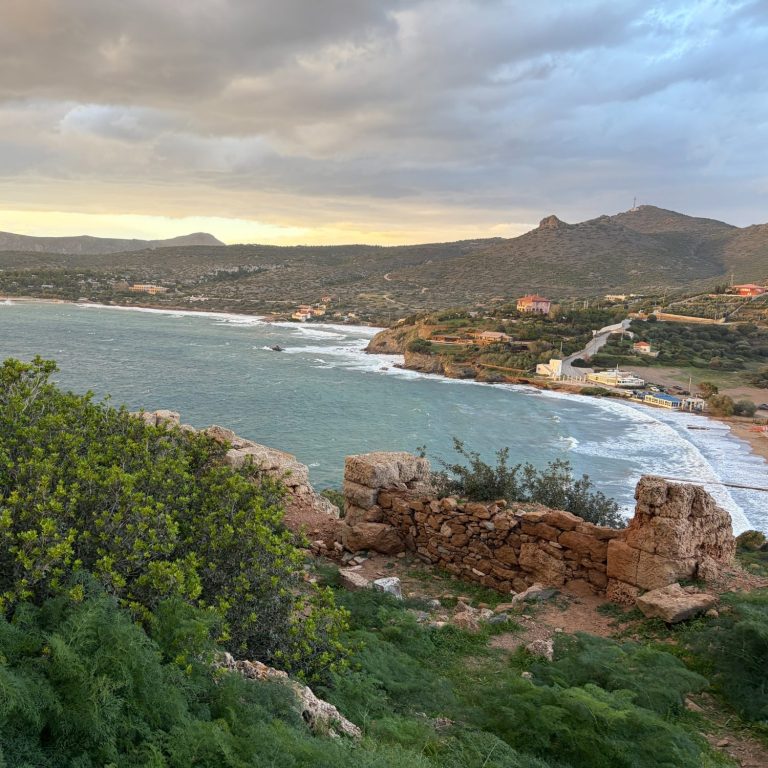
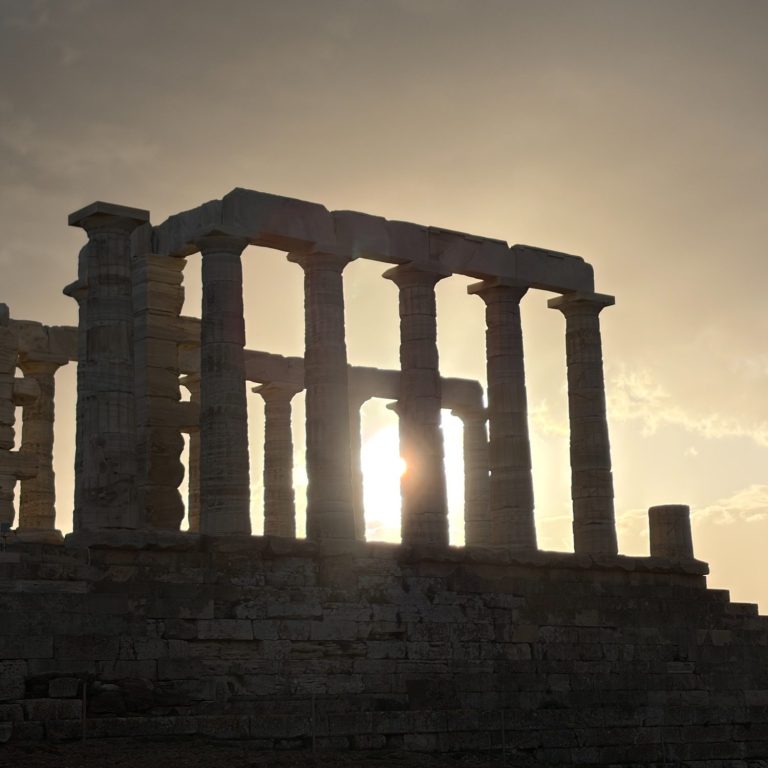
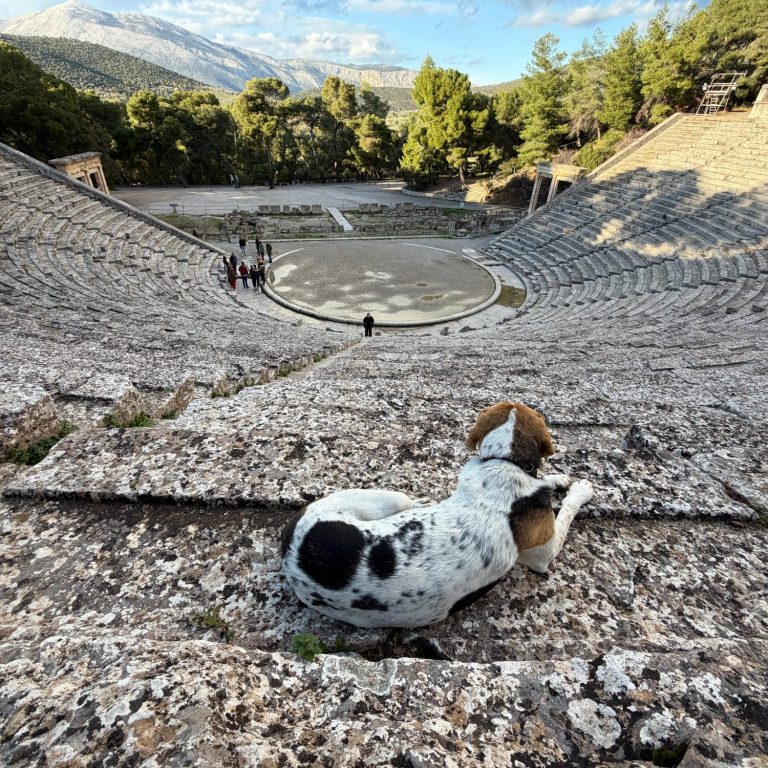
A story worth telling
Ani D.
We are storytelling creatures. From the earliest cave paintings to the latest streaming series, humans have always organized their understanding of the world through narrative. But stories aren’t just entertainment—they’re essential to how we navigate life itself. Without a coherent story to live by, we find ourselves adrift, lacking direction, meaning, and purpose. At the most fundamental level, we need stories to make sense of our existence. A story provides a framework that transforms random events into a meaningful sequence. It answers the questions that haunt us in quiet moments: Why am I here? What am I supposed to do? What matters?
Without a structure, life becomes a series of disconnected moments, much like our days which consist of: breakfast, school, eat, sleep, repeat. When we see ourselves as characters in a larger story, even mundane activities take on significance. The early morning routine becomes preparation for the day’s challenges. Setbacks become plot twists rather than dead ends. Achievements become milestones in a journey rather than isolated victories.
Our personal stories also position us within larger collective narratives—family stories, cultural stories, national stories, religious stories. Many of these stories we have explored in relation to ancient Greek history. As discussed in class, tragedies warn us about hubris and moral blindness. When we adopt a story to live by, we inherit its moral framework. Religious narratives provide believers with clear ethical guidelines and exemplary figures to emulate. Secular philosophies offer their own narrative arcs, such as the Enlightenment story of progress through reason.
Without a guiding story, we may know intellectually what we should do, but without a narrative context, we lack the motivation to do it. Stories bridge the gap between knowing and doing by showing us why our choices matter. Life inevitably involves pain, loss, and disappointment. Stories help us endure suffering by placing it in context. The redemption narrative suggests that suffering can lead to growth and transformation. The tragic narrative finds dignity in facing inevitable loss with courage. The comic narrative reminds us that even dark moments can give way to unexpected joy.
This is why it matters what stories we choose—or what stories choose us. We need to examine our narratives critically, asking whether they lead toward flourishing or diminishment, connection or isolation, truth or delusion. A good story doesn’t eliminate life’s difficulties, but it provides the framework that makes those difficulties bearable and even meaningful.
The question isn’t whether you’ll live by a story, the question is whether you’ll choose your story thoughtfully, revise it when necessary, and live it with intention. Your life is the only story you’ll get to write from the inside. Make it one worth telling.
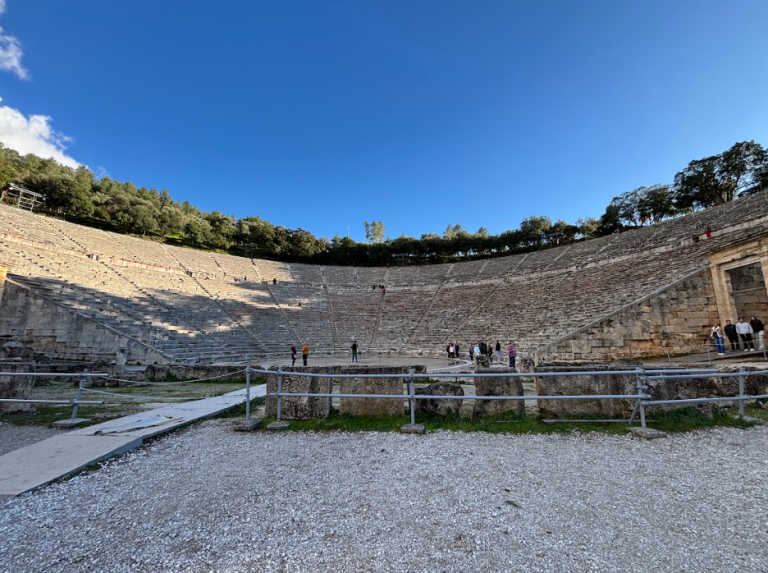
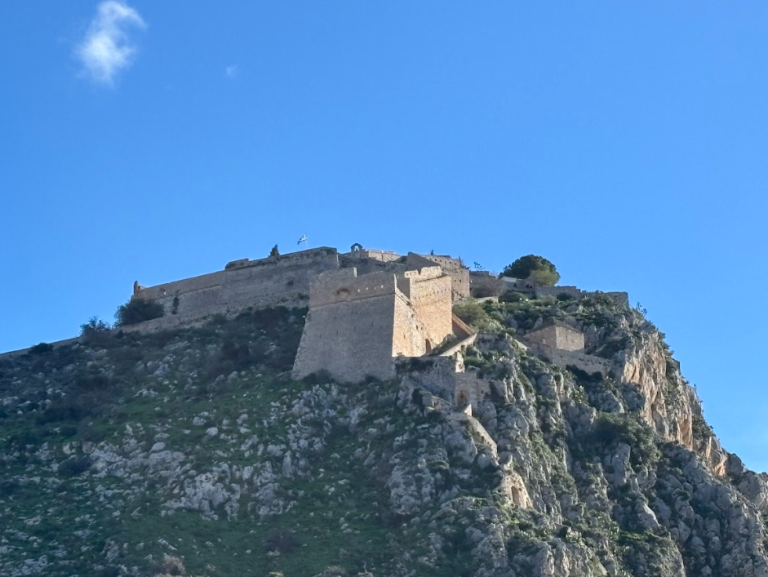
Vegetarian in Athens
Samael B.
Now that we’ve been situated in Greece for a few days, we’ve had chances to go out and eat on our own and with the class. Food is easy to find/access, there’s groceries, mini markets, and all kinds of restaurants all over every street - in a big city like Athens it’s never more than a couple minute walk to find almost anything you need. Even as a vegetarian I’ve not had any difficulties finding food. Plenty of restaurants have at least one vegetarian/vegan option, the groceries have plenty in them, and some restaurants around us are even exclusively vegetarian or vegan.
Food here has been really delicious, and plenty of places aren’t expensive at all. Whether deciding to eat out or in, there’s always something tasty to try. There are of course tons of gyro places, pasta, etc.; and there’s a mixture of places touting traditional Greek food and all kinds of foreign food. With the class, we went out for dinner to Vyrinis. As a vegetarian, I was served a falafel appetizer and a chickpea and spinach dish, and the table shared salad, bread, and some other appetizers. Everything was amazing, but after a mild mishap with lunch (I did not understand the sizing at the gyro shop and somehow my 8 euro ‘lunch’ was enough food for a day) I feel as if I barely made a dent! For dessert we had our choice between three options, and I chose to try the Greek style orange pie – it sort of felt like a cake but with a denser texture and seeping the orange syrup. They gave it to us with a scoop of ice cream and despite my full stomach I mostly finished it, each time I thought I was done it was just too tempting.
While grabbing breakfast from a little corner grocery a couple of us ended up talking with the cashier, and she told us the things that are cheap here are what’s abundant in the region – water is incredibly cheap, citrus fruits are everywhere and sold very cheaply as well, there’s a whole section for tomato products in the local grocery, and of course olives of all sorts are easy to get nearly anywhere. To the class’s delight, a nearby farmer’s market is held on Fridays, and we got to see a whole selection of goods in the bustling street. While we’re here we all can’t wait to keep trying more, and to get a ‘taste of Greece.’
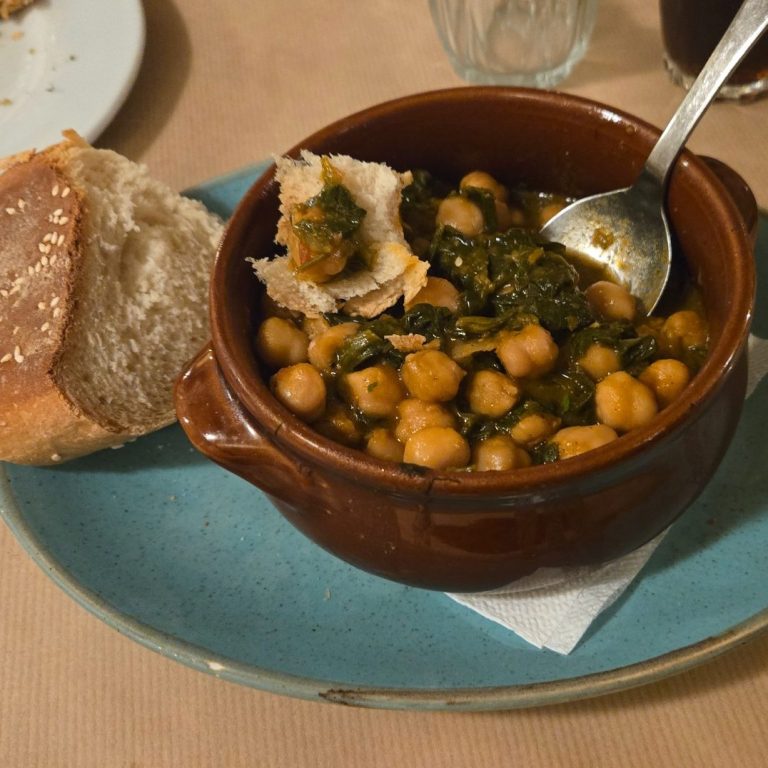
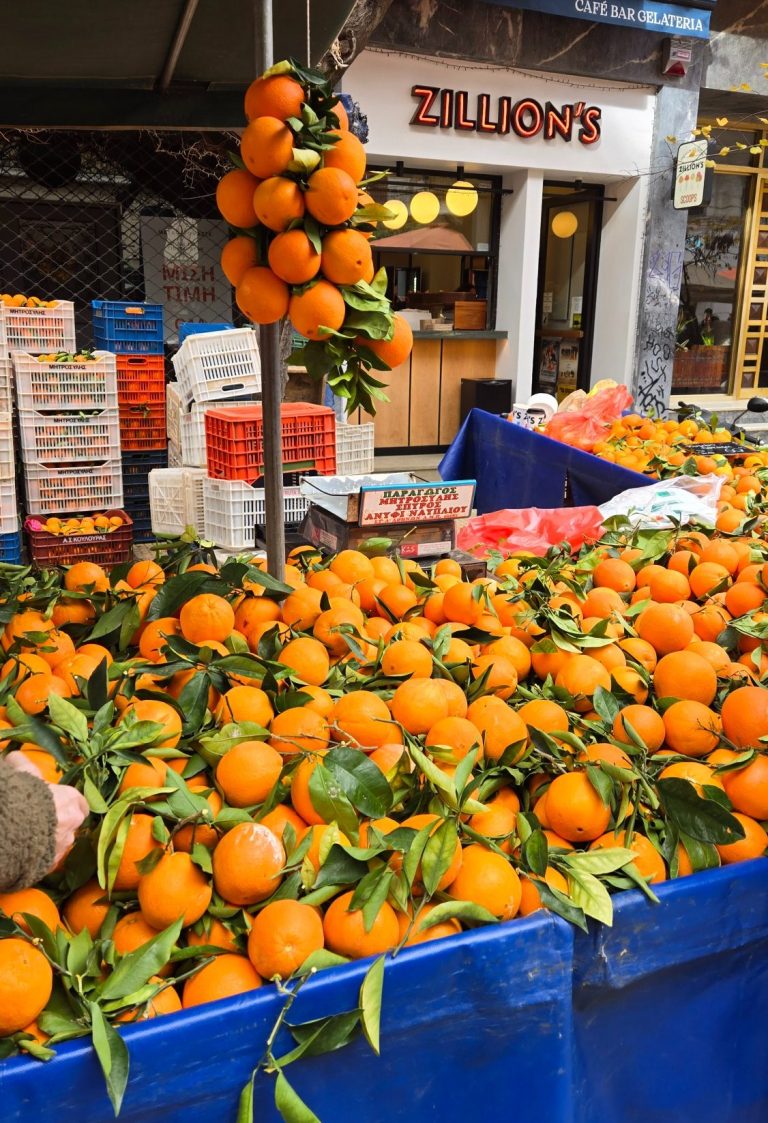
A taste of Greece
Jaquie L.
Only a few days on Greek soil and it finally begins to set in. We’re here. We made it. We’re in the land of myths that I’ve been dreaming of seeing my entire life. It hit me as we were walking to class in the morning with a weight so powerful it nearly made me weak in the knees. I couldn’t stop smiling, and the reality of walking through Athens’ streets was like lifting a veil from my senses and I came alive with the feeling of truly existing within the timespace of the here and now.
It hit me again as my roommates and I were settling into Korres Cafe for an after class lunch. We’d heard such kind things about how welcoming the staff was to Lutes that we had to give it a try, and found them even more warm than we’d anticipated. For the incredibly generous price of 7€ I was able to order a Greek salad with the most delicious olive oil I’ve ever tasted. It was the first time that I understood the concept of taking shots of olive oil (though I don’t recommend that as a concept, to be honest), and dipping their freshly made bread into the flavors of the salad was heavenly. Their fresh squeezed orange juice was what I imagine eating an orange fresh off the tree might taste like, and it came with the classic ice cubes I’ve found are commonplace to put in every iced drink here. We were even given little tarts on the house that were so incredible I bought another one to go for later.
During the lunch, surrounded by all this delicious food, and stumbling through our “survival Greek” phrases to try and be as respectful to our hosts as we could, I was overwhelmed by gratitude for the moment. I was in a cafe in Athens, surrounded by friends and laughter, eating the most delicious meal provided by such a kind, welcoming host. It’s a dream come true beyond dreams, and I could only tell my roommates how thankful I was to be here with them at that moment.
Though I’ve only had a taste of Greece these past few days, it’s been more fulfilling than I could ever have imagined. I’m surrounded by the history that has captivated me since childhood; I have friends who are more than happy to walk with me to find authentic, delicious gyros, and will even remind me that soda here is made with sugar instead of corn, and immediately pour me a shot of Fanta at our welcome dinner last night. I have to say, that first taste of Fanta after decades of being unable to drink it was one of the most delicious things I’ve ever tasted.
Food here is more than sustenance. It’s a powerful connector, and a beautiful reminder of the friends we’ve made, and the people we meet. I can’t wait to try more of the most incredible coffee I’ve ever had, sample local cafes, and (hopefully) make Greece proud with a recreation of Red Beet Stew that was served to welcome guests in ancient history. Crossing our fingers that the farmer’s market has everything we need.
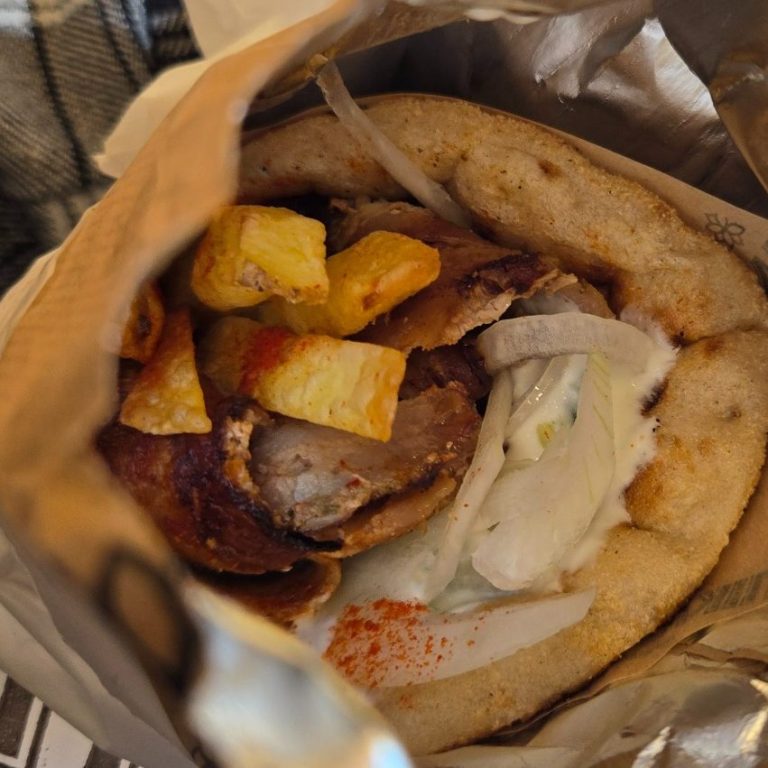
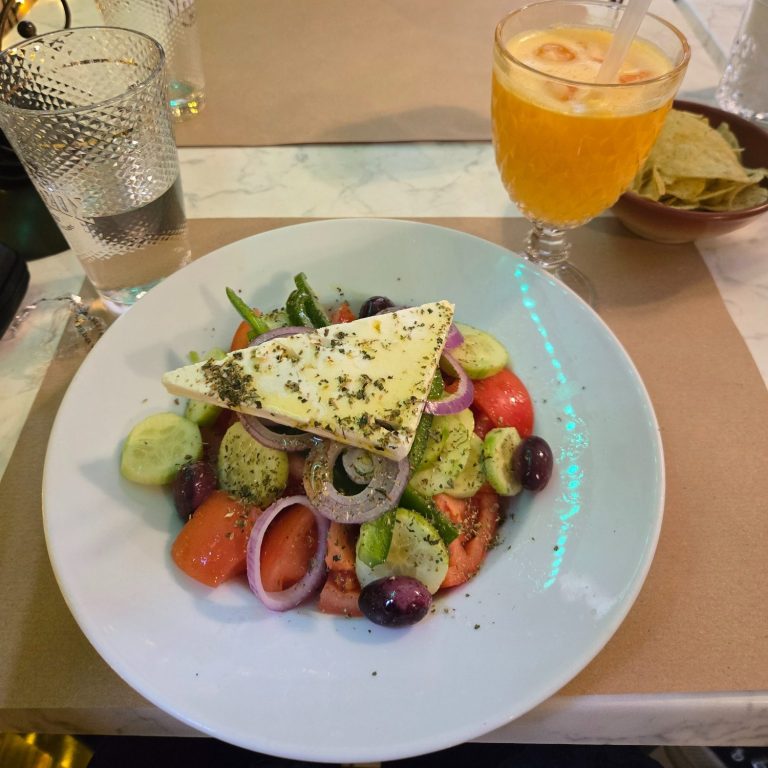
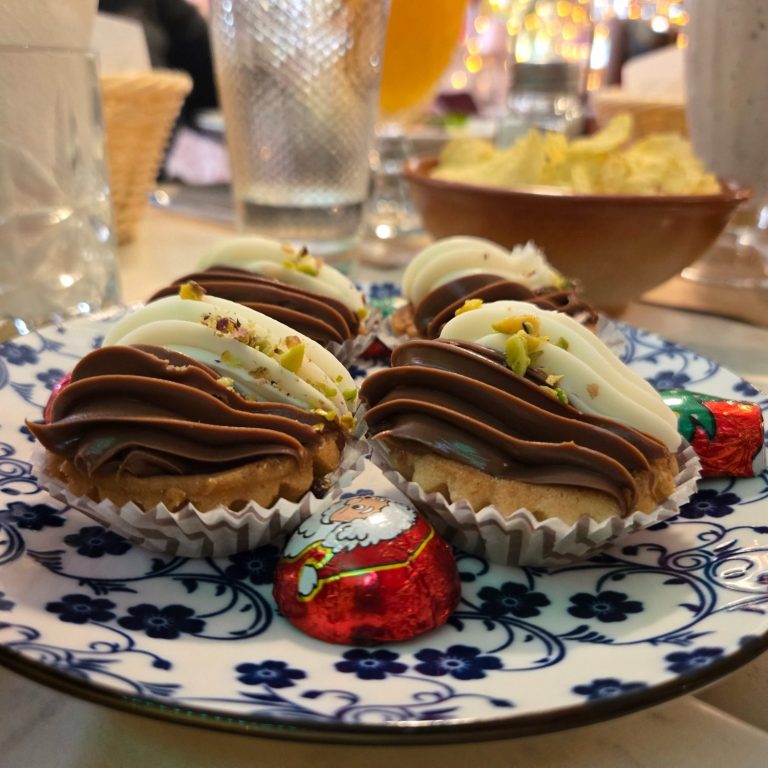
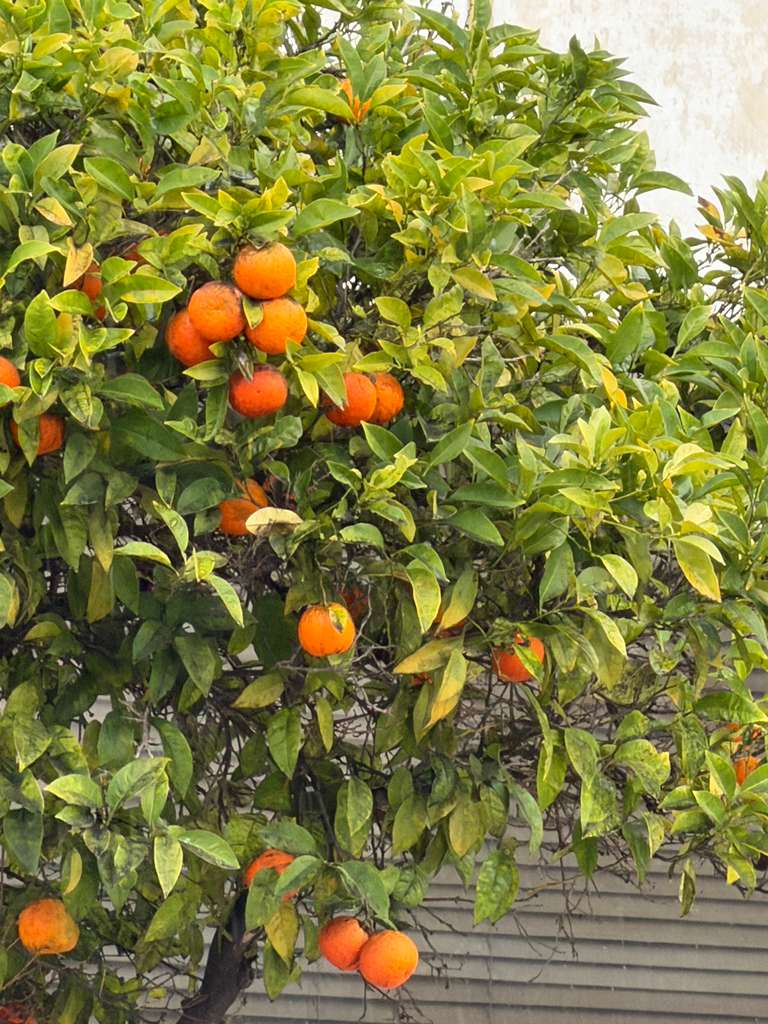
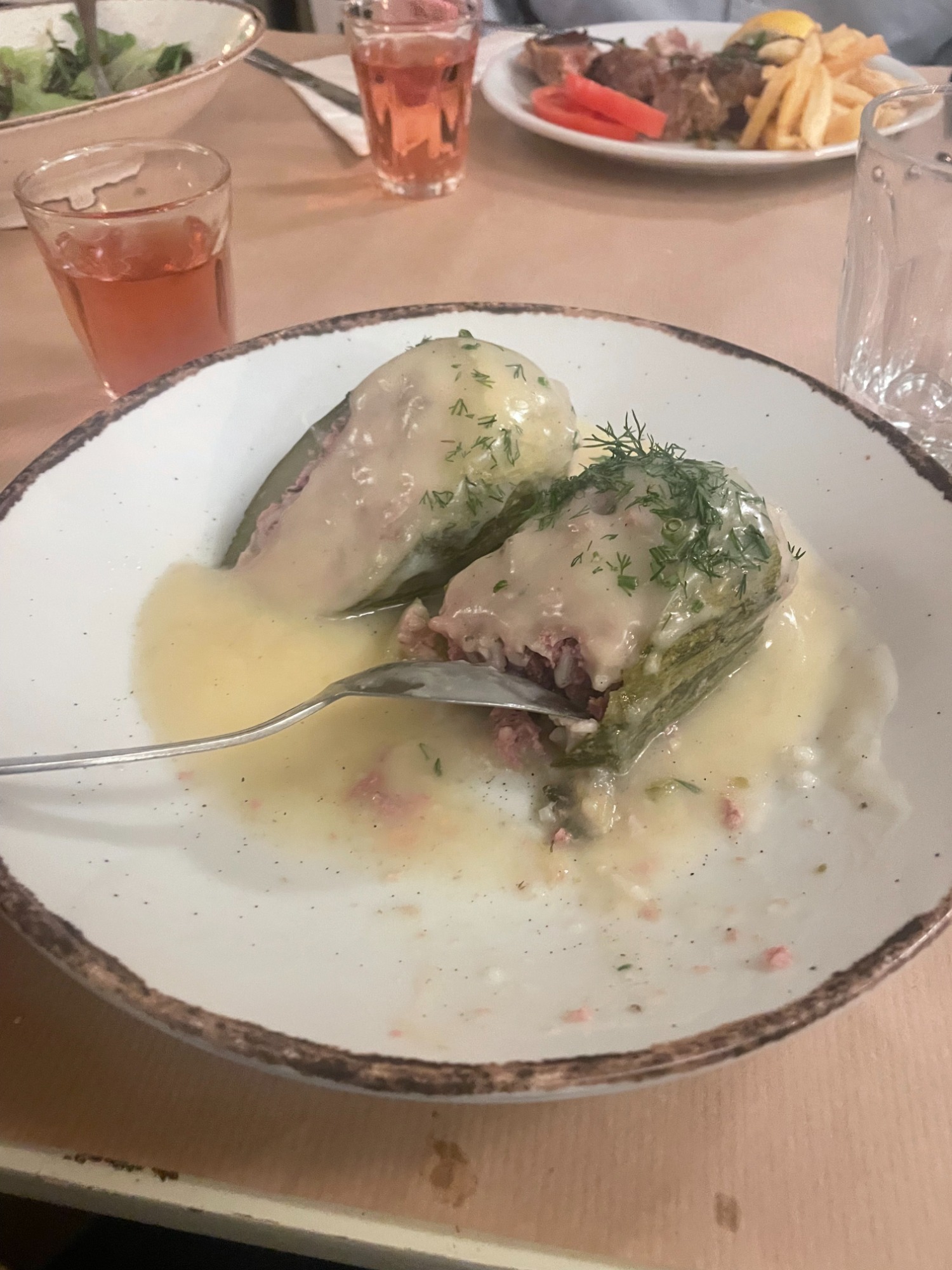
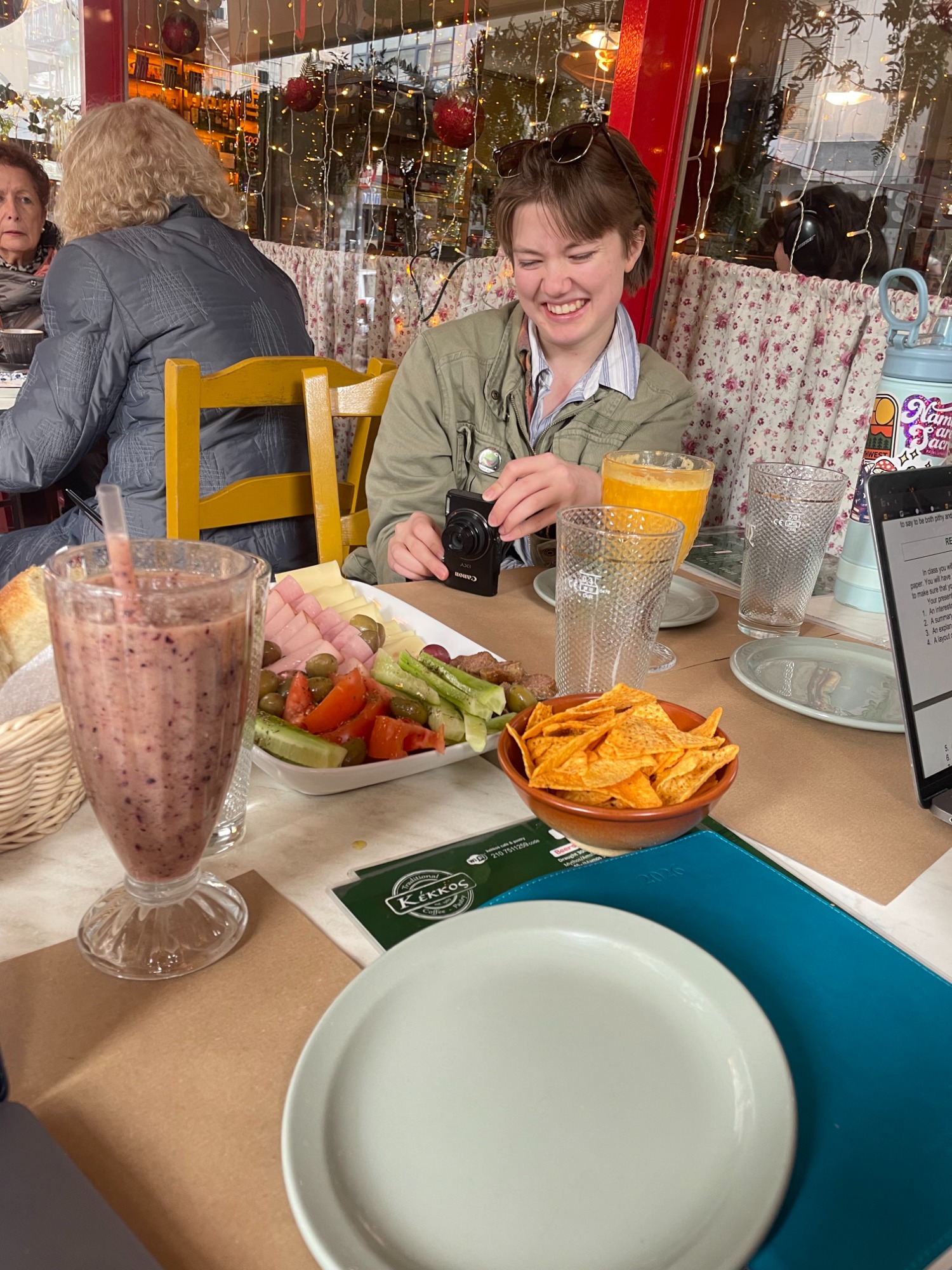
Snack Round-Up!
Kate F.
Like Athens, the food here has been extremely varied, interesting, and fantastic.
It says a lot about the culture here that there are cafes around every corner where you are welcome to sit for hours, eat to your heart's content, and drink amazing beverages. It speaks to a group of people who value conversation and leisure in a way that I do not see often replicated in the States.
As we learn about religious perspectives and paradigm shifts in class, I cannot help but draw comparisons to how we as Americans view Athens and Greece as a whole. The piece we see during our short month of traveling gives us a slim view into the daily lives of Greek people but is heavily influenced by our personal values and understanding of the world.
I am not Greek, and therefore can never fully understand the perspective of the Greek people, but I am very grateful to be able to experience a slice of their lives this month. Especially in regards to all the delicious food we’ve been able to eat so far!
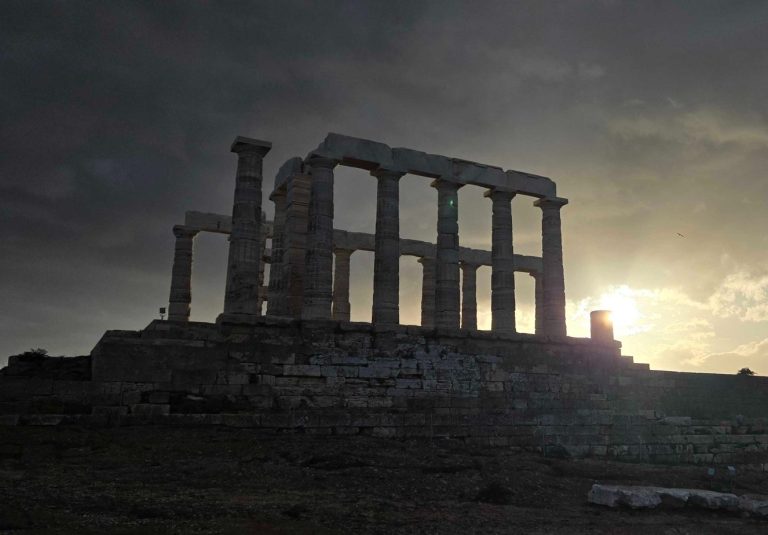
A week in Greece
Sam B.
This first week here in Greece has been very fast-paced, with a lot having happened in the short span of time. Between plans shifting due to people getting sick, both students and our professor, and losing our luggage earlier in the week, we did our best to keep going and adapt to make the most of the time we had to experience different places. Adjusting to the unexpected changes became a normal part of the week, whether that meant entirely changing plans or adjusting them to work out still. Despite everything, the week was still very productive and meaningful.
The weekdays were quieter and slower due to the lighter schedule, but not without their challenges, as several people needed time to recover from sickness. While it was an unfortunate thing to happen with so many people falling sick, the slower pace of the days allowed time to rest and continue adjusting to life here, helping us to recover and settle in a bit more.
When the weekend arrived, our plans to visit various archaeological sites had to be adjusted due to the professor's absence due to falling ill as well. Despite this, we still went ahead with the plan and explored the sites together. Although the experience was less academic and without much guidance, we still learned a lot and were able to see places we had previously only heard and read of. Seeing the temples, fortress, and artifacts firsthand has helped to understand and visualize how daily life and cultural practices were shaped in ancient Greece, connecting to the presentations we had seen in class about these places and their history and function.
By the end of the first week, adapting to make up for changes in the schedule becamethe changes in the schedule had become normal and almost expected. The frustration felt from earlier in the week had faded as we adapted and settled in. Even with the setbacks, the days gave us meaningful experiences, showing that being flexible and adapting played a huge part in how the week worked out to still be successful. Experiencing the sites firsthand connected the concepts, historical contexts, and practices we discussed in class to real life. Seeing the places in person gave life to the material and helped in deepening my understanding of the history and religious culture of ancient Greece.
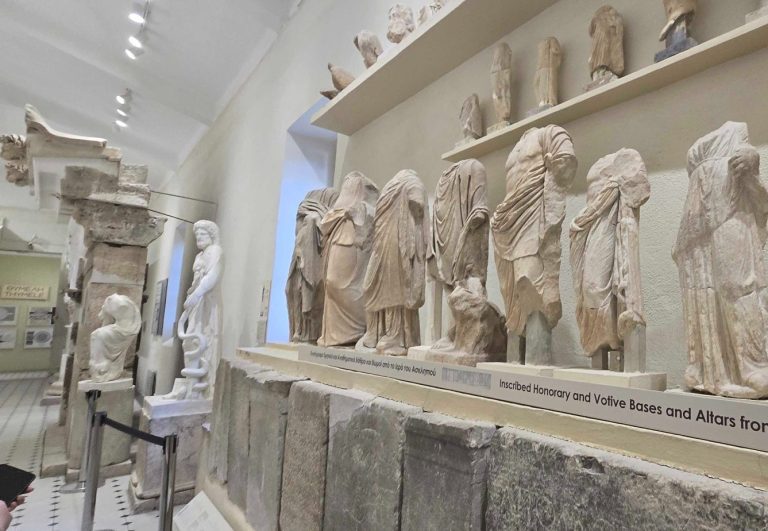
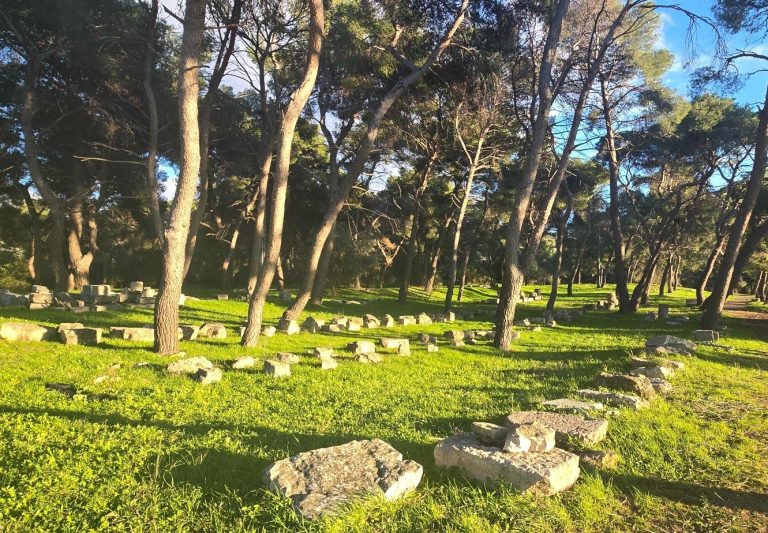
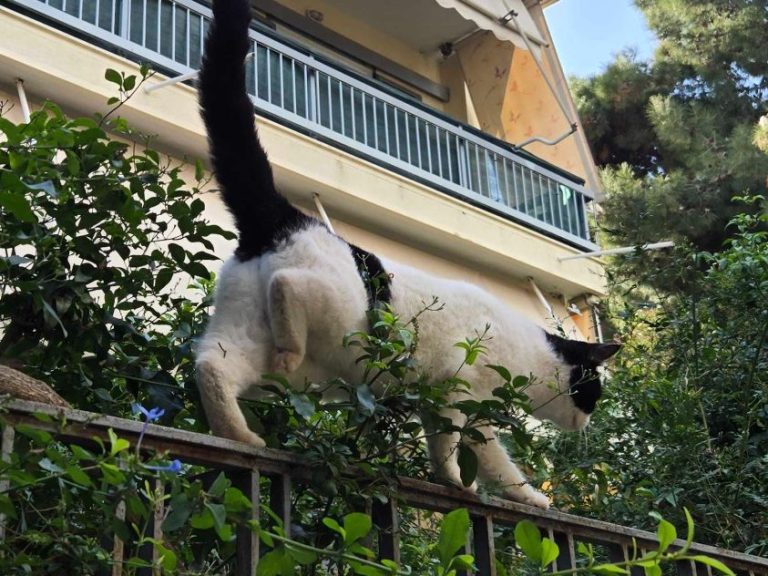
Modern purification rituals
Pedro C.
A full week down, and it still had plenty of twists and turns for us. We were already expecting plenty of excitement this weekend with how many site visits were on the schedule, but Professor Finitsis catching ill and having to stay behind was quite the wrench in our plans. Luckily, the Class Assistant was up to the task of having to herd everyone around. But let’s rewind a bit.
We survived orientation and the welcome feast on Wednesday and Thursday respectively, and on Friday saw Athens from up above the Skyview Bar. The trek there was absolutely one-of-a-kind, but so was the view. It was mentioned in orientation that after a week, the wonder of visiting another country would start to wear off, but with all the new angles we’re discovering every day to see it from, I’m starting to doubt it.
One thing that’s definitely been consistent in the evenings is us arriving at our apartments with sore feet every evening. They weren’t lying when they said that Athens is for pedestrians! That’s certainly made it easier to adjust to the time zone, considering the energy it takes to scramble everywhere.
Maybe that was a big factor in why so many fish appeared at Lake Vouliagmeni yesterday. Providing an all-natural pediatric treatment, it feels increasingly apparent why they might have so much gunk on everyone’s feet to nibble. The sensation is ticklish. The lake was a good spot to take in some sun, relax and get splashed by other classmates or the wind. Those were two of yesterday’s most distinct sensations: the water and the wind. But one can hardly mention those without praising the jaw-dropping views we enjoyed at the same time.
The Sanctuary of Poseidon is stunning. I think it’ll be a defining moment for this trip. Sitting together atop the cliff by the sanctuary with the group felt like something truly special. We made jokes, shivered in the wind, and performed a personal purification ritual on the spot where Lord Byron carved his name into a 2500-year old monument. The camaraderie was at an all-time high. It goes to show that a week in Greece is not nearly enough to get used to it, and our energy is still pretty well-maintained despite all the unexpected things this trip has thrown our way.
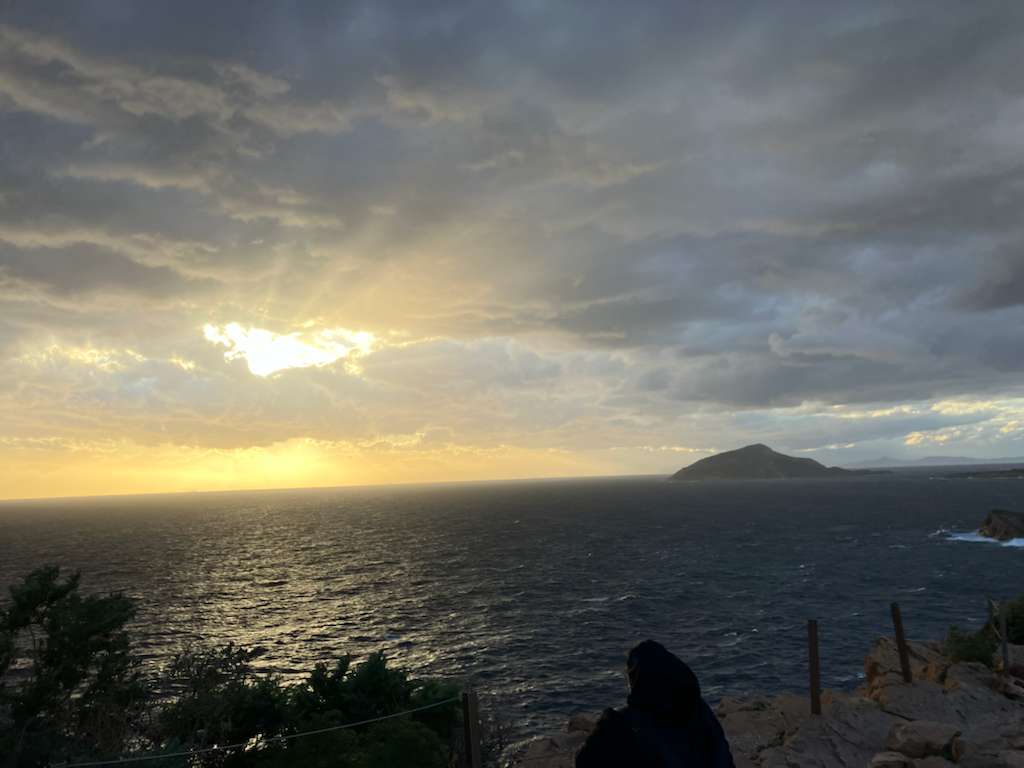
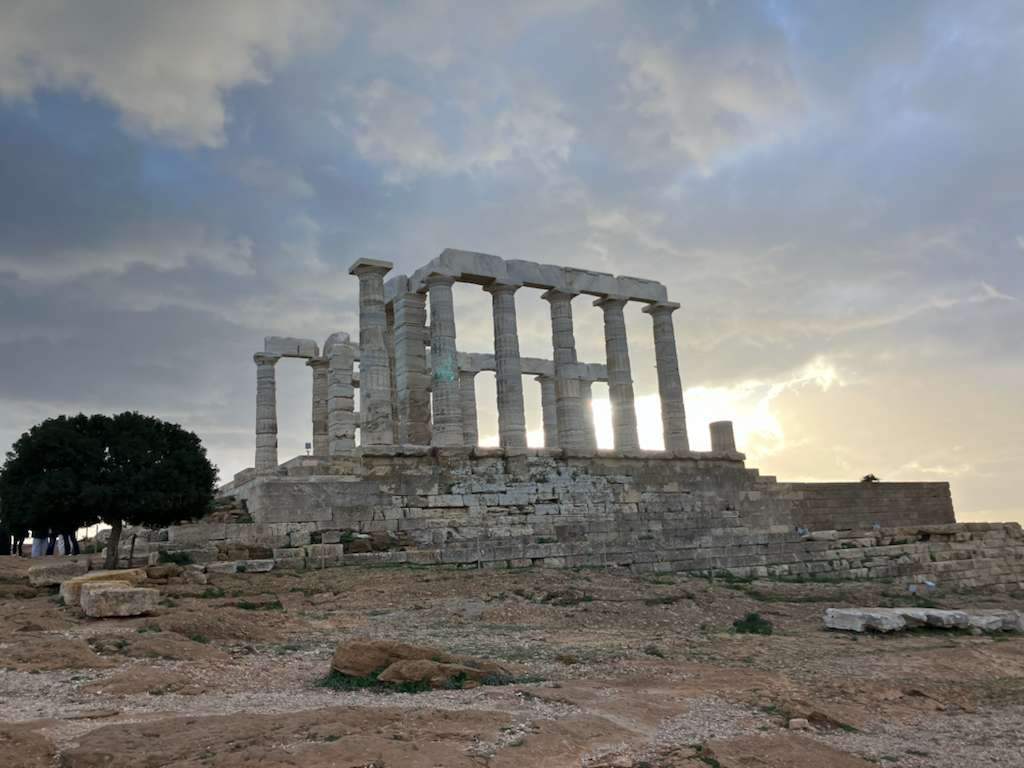
The other side of the other side
Mikayla H.
11/01/2026
This first week is no joke. Just as we were beginning to adjust to our new daily schedule, my apartment was struck with two different kinds of plagues. One of my roommates was up all Wednesday night in the bathroom, and on Thursday night I was pretty sure I was coming down with something. Unfortunately, I was correct. The last two days I’ve used about two and half rolls of toilet paper just blowing my nose and been to the pharmacy thrice. I hate being sick. I am confident that it’s just a head cold, and not bad enough to not participate in the excursions today and yesterday, but right now I just feel kind of crappy and grumpy.
A couple of bright spots before I get negative real quick. I went to a little juice bar and the man running it spent nearly 10 minutes, after he made my juice, helping me figure out where I could buy a towel. He was looking at the map on my phone and the map on his phone and even called someone to ask. Very above and beyond helpful. The other moment that I will take with me is when the man running the coffee shop came out to our little sidewalk table and asked if we smoked before taking the ashtray off the table, while saying playfully and Europeanly: “Why not? It’s never too late to start.”
The last thing I want to do here is complain (But I’m going to a little bit. Sorry.) It is a surreal and sincere privilege being here while my home country is in the state that it is. (Rest in Power Renee Good.) But it’s been a little bit of a rough week. It’s just that I’m sick. I’m low energy and low on patience when I’m sick. Our professor is unfortunately sick too so we missed out on a lot of the context we would have gotten otherwise from on-site lectures.
Yesterday, however, was kind of wonderful. It started later and I was feeling well enough to take a quick swim at our first stop, Lake Vouliagmeni. The water temperature was cold but not too, and the wind was spraying saltwater across the surface every couple of minutes but I loved it. This was the prelude to the wind at Cape Sounion, which showed so much strength there was concern about people being blown over. As far as I know, no one did. I love the wind. I couldn't stop smiling up there.
Having done the group presentation on Cape Sounion I had some meaningful historical context for the site. I could see myself being an Athenian lookout in 400 BCE monitoring the Aegean Sea, it’s an incredible view. On a clear day, you can see a radius of about 15 miles. What remains of the Temple of Poseidon stands as the centerpiece to this awesome jut of land. Visitors are not welcome to actually go in or right up to the temple, but marveling at the architectural prowess that it is from below feels appropriate. There are, what I suspect, are some pieces of it scattered on the ground slightly downhill from it. I noticed a chunk of stone with a square cut out of the center. The columns on the temple are connected with a cube of wood set into the stone.
This week, I’m refocusing. I’m looking forward to regaining full health (I’ve got multiple sources of vitamin C and some nasal decongestant), catching up in class (I’m going to get the spot I like by the window tomorrow), and getting to know Athens a little better (I have some bars in mind).
Hopefully very soon I will be on the other side of the other side.
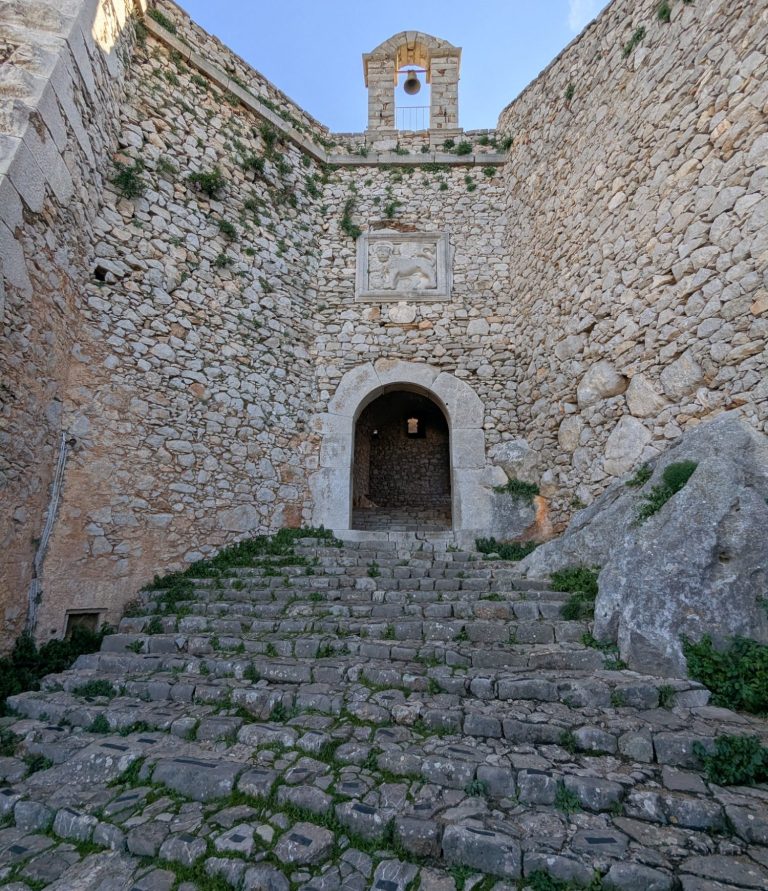
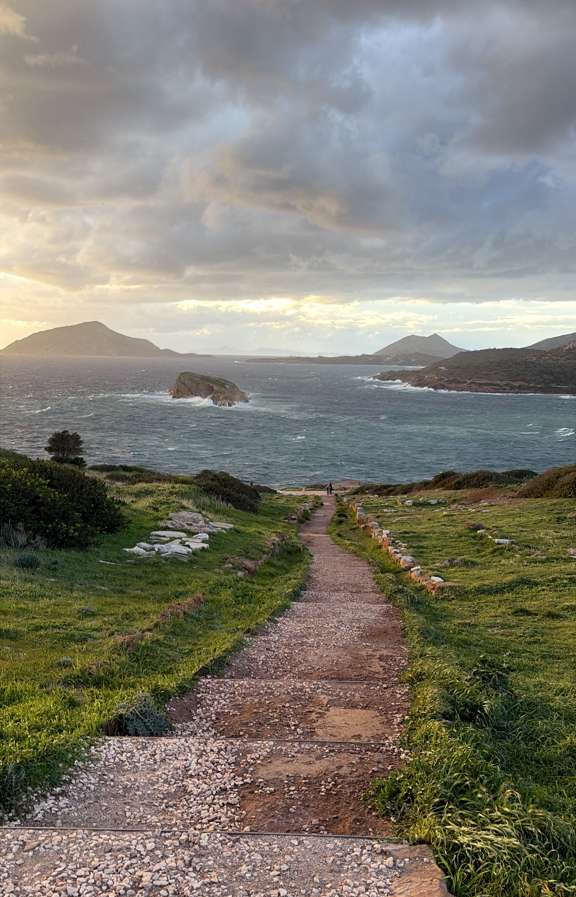
A week in Greece...
The longer I’ve been in Greece, the more I’ve begun to enjoy my time here. After we received our luggage, things have been in a steady state of improvement. Over the past two days, we’ve gone to see a couple sites that my group and another presented on during class as a sneak-peak.
While the beginning of our week was rocky (long flights, no luggage, apartment flooding), the rest of the time has been better. I was actually able to shower properly once I had my shampoo and body wash, and that was incredibly refreshing. We had a neighborhood walk and orientation by CYA staff as everything was open on Wednesday.
During class on Thursday we learned about mystery cults, which were cults that had initiation rituals and members were sworn to secrecy. Which was odd considering that they weren’t outlawed or considered hearsay, so they didn’t have a need to be secretive. Friday we learned about different civilizations (Israel, Anatolia, Minoa and Mycenaea). Mycenaea was of particular interest, as that was what my group presented on.
Yesterday we visited Lake Vouliagmeni where we went swimming. It was incredibly cold, so I was only in the water for a few minutes, but it was still fun. Many of us got in the water, but only for a short time. It was salty since it is an offshoot of the ocean, and the current was decently strong. We then headed to Cape Sounion, where we saw the Temple of Poseidon. It was very windy, but the sun on the water was gorgeous. Most of the temple had collapsed, as we saw some of the granite pieces of pillars farther down the hill, but what was still standing was impressive. We had gotten a presentation on the temple on Friday, so although Professor Finitias was sick, we had a bit of background knowledge.
Today we went to the Isthmus Bridge over the Corinth Canal before heading over to Mycenae. Once we got there, we visited the ruins of a beehive grave, which is where they buried their higher class. We saw the Lion’s Gate and the remnants of the palace, which had been destroyed due to earthquakes and fires. We then traveled to Epidarus, where we observed the acoustics of the amphitheater and saw the temple of Asklepios, a healing site of great renown.
Overall, while the week was busy, it has ended up being a good one. Going to ancient archaeological sites were definitely the highlights of the week. I’m looking forward to what this week has in store!
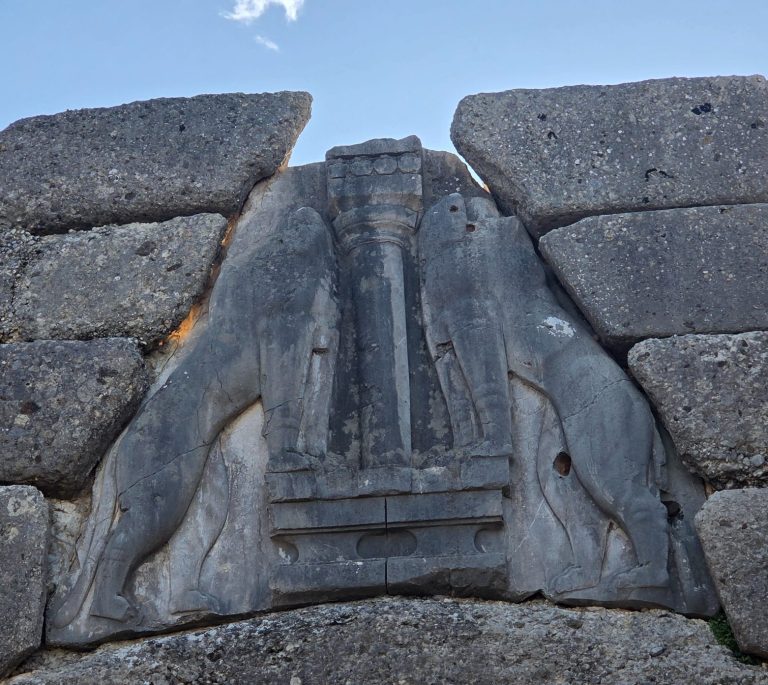
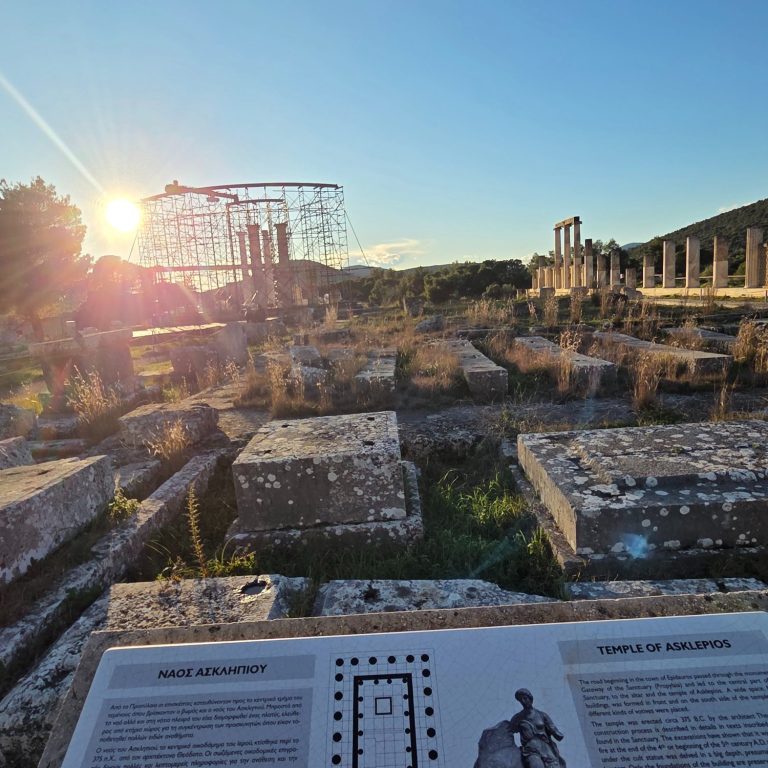
Clay C.
Jalen E.
Olympic Feats and Flooded Floors: Finding My Greek Footing
They say that in Ancient Greece, travelers were protected by the concept of xenia—a divine sort of hospitality. After a few days in Athens, I can safely say that xenia is alive and well, even through the adversity, which personally, I think it makes things better and more interesting.
I arrived in Athens as a bit of an outlier; unlike many of my classmates, I came into this program not knowing a single soul, also had very minimal knowledge on anything to do with Greece. I joined the class late and only did it after a convincing chat with my mom who basically said “You likely won’t go there again”. Although making friends usually comes easy to me, I’m still surprised with how open-armed the environment is. Whether it's my classmates or the locals, there is a level of warmth here that makes me feel at home.
That luggage arrival was a major milestone, mostly because it meant I could finally take my first real shower. However, Greece has a way of keeping you humble. As many travelers know, the plumbing here can’t handle toilet paper, a lesson me and my roommates learned the hard way when our floor (and our neighbors’) ended up flooded. It was a rocky start, but the way our neighbors handled it was a testament to the local culture. Even though it was late on the night of epiphany, they were incredibly welcoming and kind. It’s almost weird how nice people are here. I also appreciate how my roommates handled it. It was a simple mistake that any of us could have made. It’s not everyday that we have to throw our toilet paper in the trash, it certainly doesn’t feel natural. But what Greece lacks in plumbing, they excel in other areas that I’m not quite used to. I was born and raised in Seattle WA, although nobody agrees with me yet, I see so many similarities to my hometown and honestly, better folkways and mores. For example, I instantly noticed that there is rarely any litter anywhere. And people are just genuinely nice and welcoming here.
Now I’ll dive into some of the highlights. Starting off with the Panathenaic Stadium. What an honor to be standing where the world's first Olympics were held all the way back in 1896. One of the world's biggest events and I’m standing where it all began with such a grand stadium, truly a blessing.
The next highlight is definitely the food. One word to describe it? Amazing. I remember within my convincing talk with my mom one thing she highlighted was that the Greeks are known for their food. She couldn’t be anymore right. The simplest looking sandwich here tastes 10x better than an expensive one from the overly fancy restaurant I work at back home. Another highlight is the language. I'm glad we spent time going over the basic greek words, it really helps interact with the locals and even though it’s obvious that I’m not fully understanding what they are saying, I can tell that they appreciate my effort.
Overall, I’m happy that I decided to come to Greece with an amazing group of people. I'm striving to be a good representative of PLU while I’m here and I’m hoping that we already experienced what rock bottom felt like with flooded floors and delayed luggage, it is really only an upward climb from here. I’m excited for what the future holds.
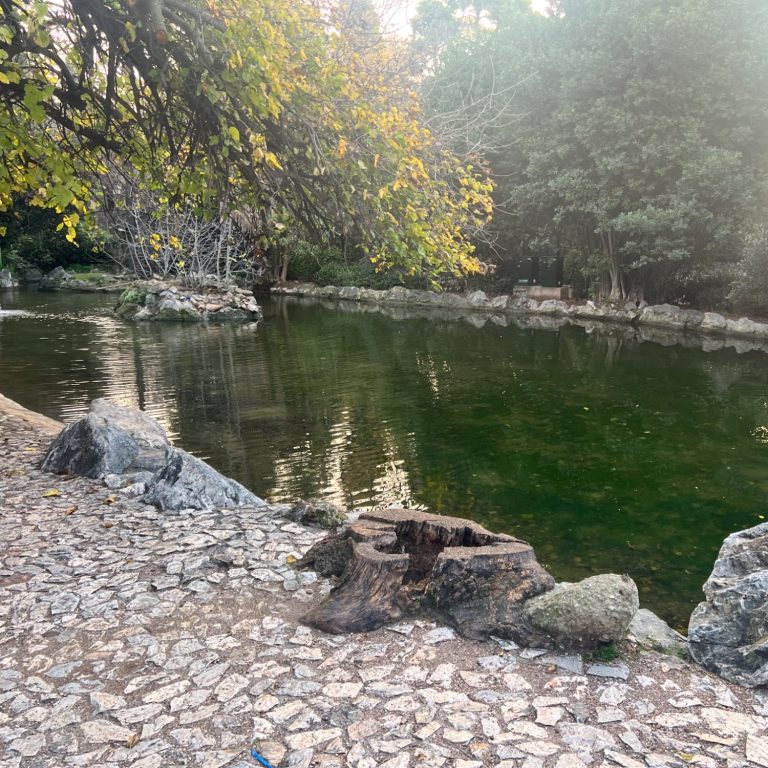
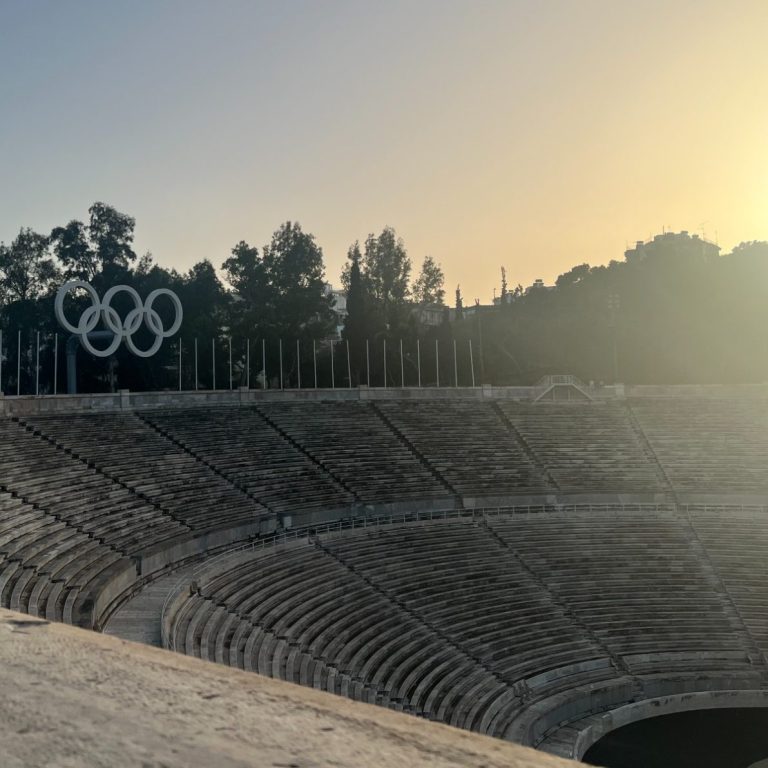
Rocky start outside the Lutedome
Ani D.
This trip started out a little rocky, as our luggage did not arrive on the same flight as us and we did not receive it until four days later. Fortunately, I had packed all of my essentials in my carry on, which made the situation much more manageable and allowed me to settle in without too much stress. Once that initial challenge passed, I was able to fully focus on the experience of being in Greece.
The weather here has been surprisingly familiar, as it is very similar to the Pacific Northwest. There have been occasional light sprinkles throughout the week, but for the most part we’ve been greeted with clear skies, making it a pleasant environment to explore and attend class. Academically, the program has already been busy. We’ve had a few quizzes, a significant amount of reading, and plenty of lecture time, all of which have helped provide context for where we are and why this place is so historically significant.
Outside of class, I’ve felt a strong desire to explore more of the history that lies within the confines of this city. Being surrounded by ancient landmarks and layers of history makes learning feel much more tangible and meaningful. Today, I visited a cafe where a past PLU student once worked. Seeing a PLU flag hanging inside was unexpectedly comforting—it was a small reminder of home and the community I’m a part of, even while being so far away. That moment made the experience feel more connected and personal, reinforcing how study abroad blends the unfamiliar with the familiar in meaningful ways.
Mia R.
Outside the "LuteDome," we are still Lutes
Some things are the same here. We live in apartments, roommate teams against the world. We still have to get up early and face class at 9:30 am, which is frankly the earliest I’ve had class in about a year. Ah the joys of scheduling your own classes. We sit in a classroom altogether sardines in a can, and listen to whatever Dr. Finitsis’s lecture of the day is about. And, believe me they are fascinating lectures. Filled with engaging topics such as myth vs religion vs history and why we can blame Plato for everything wrong now, hearing him speak is like words being put to a truth I’ve always speculated at in my mind. Wonderful class but still that format itself is the same as home. A curious class followed by a brief break of procrastination, followed by a tiny few hours of evening to get the homework done. Rinse up, wash, repeat. Except it’s not the same as at home. It’s different. It’s extraordinary. Because we are in Athens Greece.
The streets we get to walk are filled with lively chatter, almost all in Greece. Occasionally I even catch the odd phrase Dr. Finitsis taught us, which I tried drilling into my head via quizlet. “Parakalo” Welcome. “Yassas” Hello. “Kalispera” Good evening. The bakeries, and oh is Athens filled with cute delicious bakeries, at least one on every street, I enter in the morning and say my best “Yassas” and get either a surprised yet pleased yassas back, or the shopkeeper smiles at me and addresses me in English like the obvious foreigner I am. But everyone is truly very welcome here, Dr. Finitsis was quite correct in emphasizing the hospitality culture here.
This is our third, near fourth day here. And I would say it didn’t really hit me that we’re here, nations away from PLU, studying away for the semester, until today. Recovering our suitcases from Turkish airline definitely helped a lot. But I’d daresay the feeling of oh, this is what it means to be studying away didn’t hit me till I was sitting with my roommates around a cafe table after class eating lunch. Our hostess was very kind, patient with our attempts to practice our extremely beginner Greek, and overall just very gracious and warm. I think she liked that we were students with PLU. She went above and beyond for us, bringing us oregano chips on the house and four mini chocolate tarts. And it was in that relaxing moment with my friends, witnessing this act of kindness and care that you couldn’t ever find in the states, that I was truly hit with the revelation. We made it. We’re studying away. We get to be here for a month.
Looking at the idea of lutes outside the lutedome, means looking at oneself in a new environment, perhaps outside of a comfort zone and certainly outside of the familiar. Our trip has been fun so far but it certainly hasn’t been without its challenges. Near the top are arriving with none of our checked luggage in Turkey, and the subsequent two miles at two am march around the city.
Still, looking out of oneself and the inconvenience of hardships, I recognize I am at the beginning of what will be a truly special trip. I’ve left Tacoma, Washington where I do my usual learning, walk the same usual paths, eat at the same few restaurants. I’m here in Athens Greece,
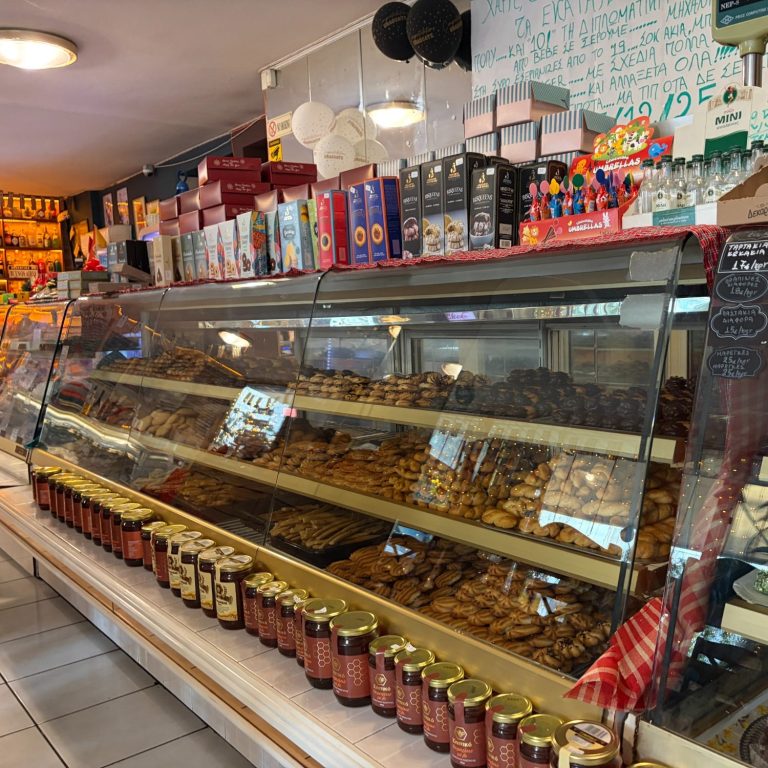
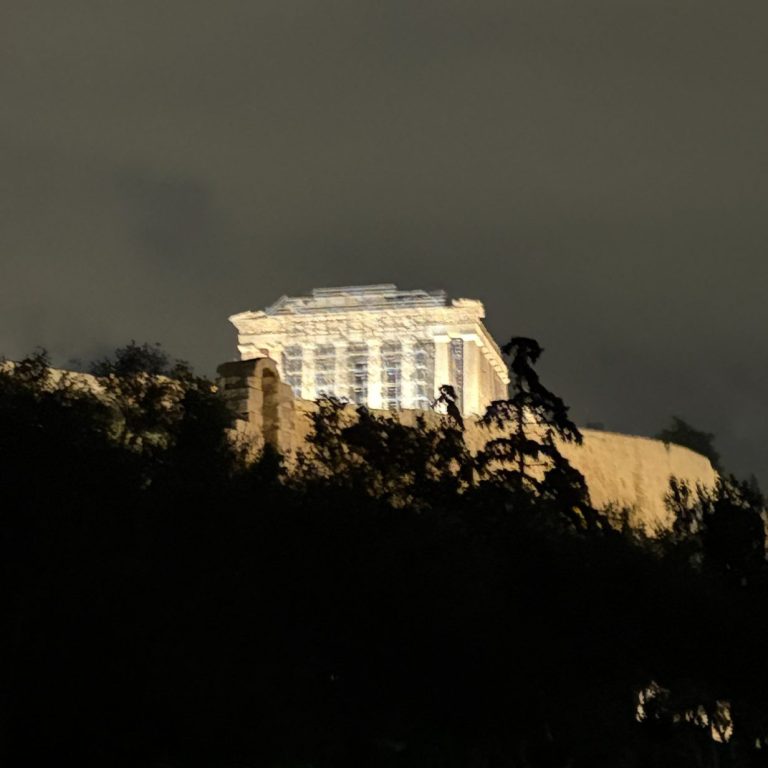
Alby J.
A golden thread connecting the LuteDome and Athens across the map...
The excitement is filtering in the more sleep I get, as my body adjusts to jetlag and I gasp in the fresh, sunlit air. Now that our luggage has arrived, I feel like we’ve crested the most difficult part of the transition to this gorgeous city, and I find myself laughing freely, taking pictures of restaurants I want to try, and stretching my eyes wide to take in every detail I can. I am not only gathering memories for myself, but moments to share with my friends and family– 10 hours and 6000 miles away.
The cafe five minutes down the street has a yellow PLU flag tucked among potted plants and glowing lights, and it makes me think about my classmates back in Tacoma beginning their J-terms as well (or sleeping in on an extended winter break). I feel a golden thread connecting us across the map.
To be fully honest, J-term academics have never been my strong suit. I find the workload overwhelming and getting back into the school mindset difficult after winter break. Although those struggles are still definitely present, and most likely exacerbated by the jetlag, being able to walk past the Olympic Stadium and see the Acropolis looking over me as I walk to class has definitely helped ease the sting. I’ve already fallen in love with the pasta restaurant on the corner of my apartment’s street, and know that I will be frequenting the orange, bow-tie-pasta-decorated place. I want to take a taste from every restaurant I see and walk in every garden.
Although I have loved Greek myths from a young age, my knowledge in the history and formation of those stories is severely lacking. Even with only two class lectures at the time of writing, I have learned so much about the conversation around mythology and religion, and seen how relevant stories from thousands of years ago are to our daily life. The lectures have only made me more excited to go to the museums and other excursions to experience the culture more.
As we explore outside our campus and comfort zone, I try to carry the values of PLU with me, as I know I am not just representing myself but the whole school. I stuffed my hat signed with the yellow letters into my bag and promised myself that I would find a time to wear it, even if I am not typically a hat person. Being away from campus means being extra aware of how I am acting towards people and making sure I am being a good advocate of my school and home. I am so lucky to get to learn these streets and see firsthand the history we’re learning about in class, and I can’t wait to see how much I learn, both academically and socially.
(P.S. Songs I’ve been jamming to this week: The Subway by Chappell Roan, Voulez-Vouz by ABBA, and Solar Power by Lorde)
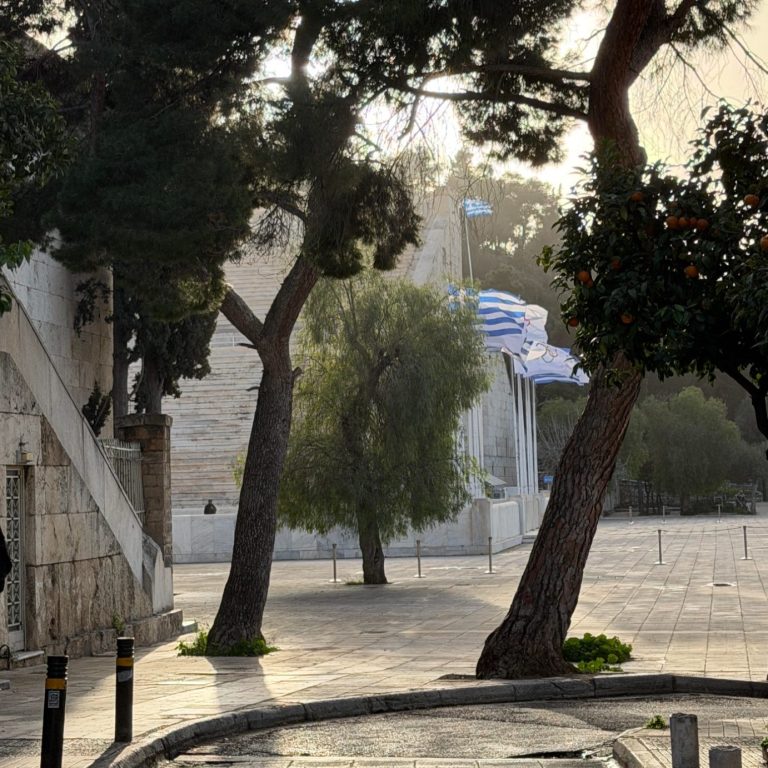
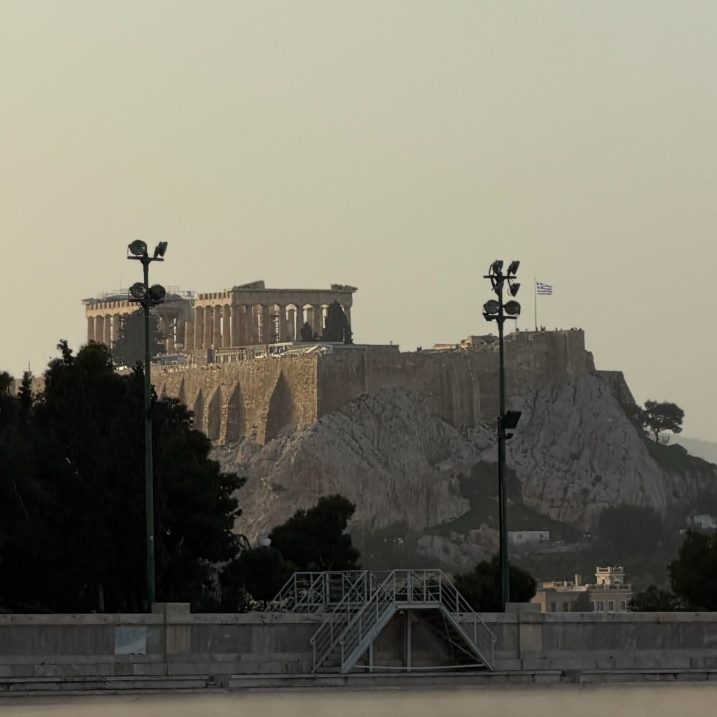
Clay C.
24 Hours; All the Hitches
A trip can start one of two ways: Without a hitch, or that everything that can go wrong, will go wrong. We've been in Athens for over 24 hours, and while it has been a bit of an ordeal, it has also been interesting.
When we went for a walk yesterday morning, we saw quite a few sights. The acropolis was a major one, with the walk around it being long. And although I was tired after two long flights, it was awe-inspiring to see in person. The tall ruins showcased ancient infrastructure that has withstood the test of time. There is a section of the acropolis where concerts are held, but the screening process is rigorous, and a committee has to approve you to perform.
Later on that day we had our first class session. We were all running low on sleep (I got around 4 hours) and convened in our classroom of the day for our first 3 hour long session. We began our class with a bit of a recap before we dove into religion in the ancient world.
An important phrase we have learned is that humans are made for myth. By this I mean that humans use myths as a metaphor for life. Myths are used to explain natural phenomena and to give humans a set of morals. Religion was an important tool in the ancient world to give life meaning. It helped define communities, infrastructure, laws, and much more.
After class concluded, we were free to do whatever we pleased for the day. I decided to utilize this time to go shopping for food along with some of my classmates. Since yesterday was the Epiphany, which is a national holiday in Greece, most stores were closed, so we headed to a small convenience store. It was a tight fit, since we all had our backpacks from class, but we made it work. I picked up some bread, cheese, and mystery meat (I couldn’t read the packaging, but it looked like turkey) and paid with cash. Before going to the store, we decided to go to an ATM to withdraw some of our money as euros. The transaction fee was high (over 30 dollars!) but having physical euros brought some peace of mind.
We were going to try to go to a clothing store, since we still didn’t have our luggage, but the stores were unfortunately closed. We decided to head back to our apartments and I was beat (again, 4 hours of sleep) so I took a long nap. When I woke up, I wanted to take a shower, but I didn’t have any body wash, so I ventured to the store once more. It’s been a bit of a challenge getting used to walking around Athens, as most cities are confusing to walk around when you are new, but there are a lot of pretty sites. Most holiday decorations are still up, and there are these cute star-shaped lights that are on many street lamps. Having extra light really helps when navigating.
Remember when I said that what could go wrong, would go wrong? Well, in Greece, the pipes are not made to handle more than human waste. So, any toilet paper that goes down the pipes will lead to it getting clogged. If that was all that had happened, we would have been lucky. Instead, we got treated to not only a leaky toilet, but any other water we turned on added to the mess. One of us tried to take a shower, and that was when this went from ok to bad. Our apartment flooded (yay) as did the hallway. Thankfully, our neighbors were kind and helped us turn our water off and mopped the hallway while we dealt with the inside of the house. If anyone plans to take a trip to Greece, remember to not flush your toilet paper (unless you want to deal with a flooded apartment).
However, the evening did look up. I ventured out again to get food, and got this amazing pasta. It was tomato and basil with rigatoni pasta and it was delicious! Food thus far has been a highlight, and I can’t wait to try more food! After I finished eating, I decided to head to bed and rest for today. As a small note, we also got our luggage today! That has been another highlight (not having it for four days has been stressful).
Overall, while there were some hiccups, there have also been many positives. Now that we all have our belongings and are getting to know the city, I can really start to enjoy being in this city. I can’t wait to get back out there and see what the city has to offer!
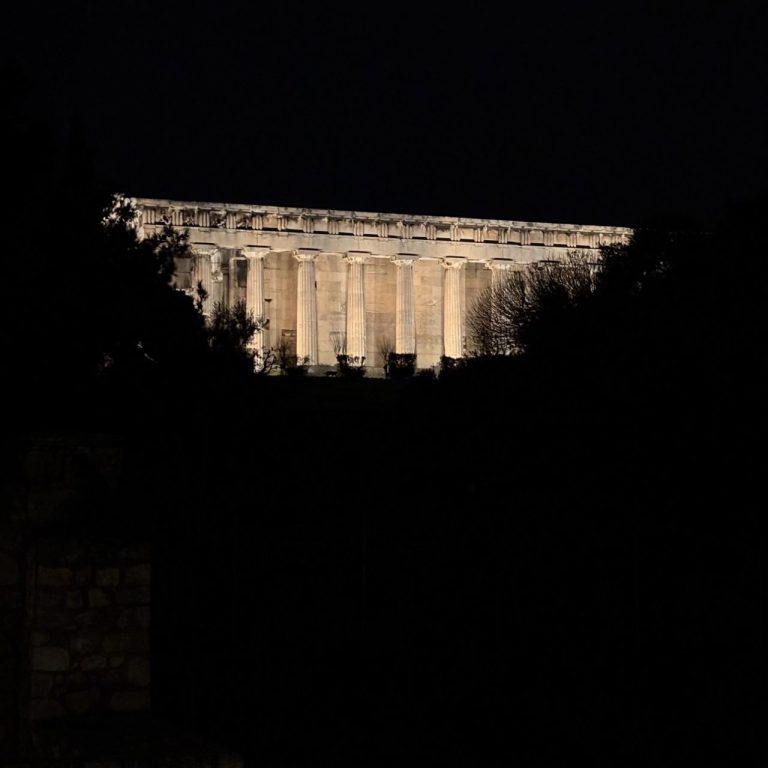
Sam B.
A 24 Hour Blur
The first day after arriving felt like a blur. Jet lag, unfamiliar places, lost luggage, and everything happening at once collided, making it hard to keep up and leaving me disoriented. Traveling for nearly twenty hours with very little sleep only added to the confusion, especially while trying to navigate an entirely new and unfamiliar city.
Twenty-four hours later, however, those feelings had shifted significantly. What started as exhaustion and confusion softened into being simply tired, but with much more understanding. The city felt entirely different in the daylight than it did the night I arrived. With some sleep and time to adjust, Athens appeared less chaotic and more calm, allowing me to understand my surroundings better. And attending class even began to feel normal, similar to being back home, rather than feeling like everything was unfamiliar.
What felt unknown just a day earlier, such as reading street signs or finding the path between where we are staying and where class is held, now feels far more navigable and less stressful than it had before. I could recognize the way back confidently without having to constantly check maps, which was nearly impossible to do the first day or even earlier that very morning.
This shift from the chaos to clarity shows how learning happens over time rather than all at once. Through the experience and repetition of navigating the unfamiliar environments, it has slowly become more understandable. If just twenty-four hours here can give me this amount of clarity, it does make me optimistic about just how much more aware and comfortable I can become as our time here continues for this month.
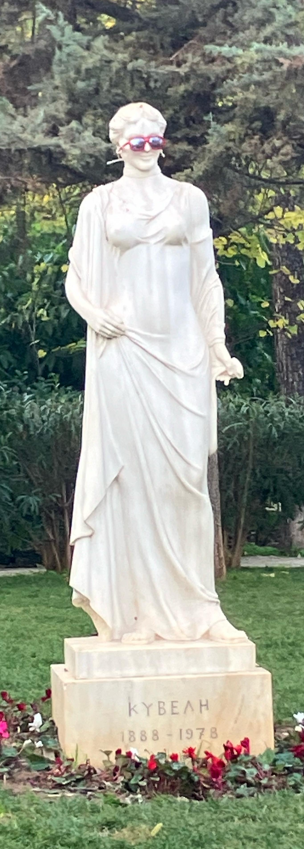
thoroughly discrediting the dreaded p-word (p*lytheism), and dunking on monotheism for thinking it’s special. The energy in the room was high, hopefully it will transfer well to the regular classroom.
After class and a quick shut-eye, I took it upon myself to stroll through Athens, trying to catch a glimpse of some local sights that we were not scheduled to visit. Right next door to where my group is staying is the lovely Pagrati Grove, a beautiful place to watch birds and soak in the atmosphere. The shady trees and plentiful benches make it an excellent spot to unwind, with its convenient placement making it highly recommended for all students to visit.
To the north is another park with several spots we’re not scheduled to visit, including the archeological site of Lykeion, the Athens War Museum, and the Byzantine and Christian Museum. Most of them were closed by the time I arrived, but my curiosity is piqued, so I’ll be sure to double back soon.
The roads between these parks alone made it worth the walk. With how pedestrian-friendly Athens is, it helped immensely when it came to relaxing and enjoying the sights. Soon it was very clear why so many stickers with “CARS KILL CITIES” were stuck all over the alleyways, pedestrianism is fantastic!
The narrow alleyways were filled with all the classic smells and sounds one might expect from an urban center; food grilling, diners chatting, and birds cawing. Beneath it all were unfamiliar sights as well, though; oranges littering the ground beneath the trees lining the roads,
We’ve survived our first full day in Athens, and what a day it’s been
faded blue street signs in both cyrillic script and latin letters, and chapels that make the oldest buildings in Washington look like tryhard prepubescents.
Animal lovers will be delighted to hear about the sheer amount of cats in the streets of Athens. Whether they’re lounging on car hoods or ducking under fences, they seem content to let human passerby get surprisingly close to them. As there are bowls of kibble and tuna lying around parking garages and sidewalks, it’s not surprising that they might be content with their two-legged neighbors.
For dinner, the Pasta Experience restaurant proved excellent. They have a wide variety of sauces and toppings at reasonable prices, with relatively quick service and generous portions. It is also very close to Professor Finitsis’ apartment and easy to find in the dark. The method of service was slightly confusing, so to clarify, the servers will bring you your order outside the restaurant, where you’re expected to wait after making your order. The carbonara with broccoli was immensely delicious!
Before concluding this, however, here’s a strong reminder to NOT FLUSH TOILET PAPER DOWN THE TOILET. And if one does happen to do so, DO NOT TAKE A SHOWER AFTERWARDS. There will be floods. It is through this, however, that my group learned of the generosity of our neighbors. They helped to shut off the water and did not direct any anger at us despite the inconvenience at a late hour. Here’s to hoping that this afternoon, we’ll be able to find a good treat to gift them.
Yesterday we only had one relatively short class. There’s been a lot of improvisation, since a lot of people had their laptops and chargers packed with their luggage, which has yet to arrive. Thankfully, most of us have been able to use our phones to read the textbooks, and Professor Finitsis has only managed to give us a couple of assignments in one day. A lot of us were relieved to hear that the workload will not be like this all semester.
Last night was our first time getting to properly choose a meal to eat from the wealth of Athens cuisine. Most classmates worked through their Survival Pizza for breakfast, and for lunch, Professor Finitsis brought us some fruits and cookies to snack on. An audible cheer went through the classroom when he revealed he’d brought juice boxes. Equally audible laughter went through the classroom when it was revealed that the bathroom was inside our class, making everyone’s business in there loud and clear.
Class topics included the historical significance of red beet stew recipes, dunking on L. P. Hartley, an impromptu physics lecture, dunking on the historicity of Abrahamic religious narratives,
Pedro C.
Mikayla H.
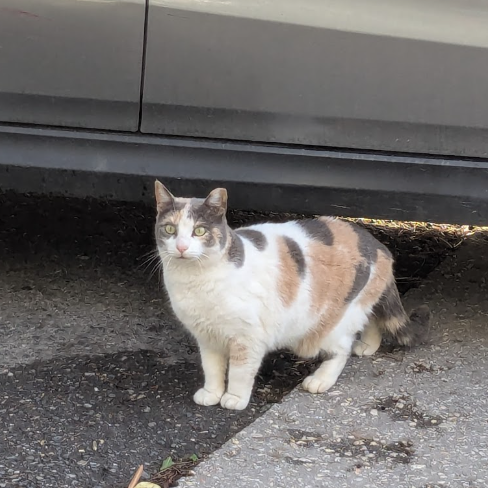
On the other side of 24 hours later
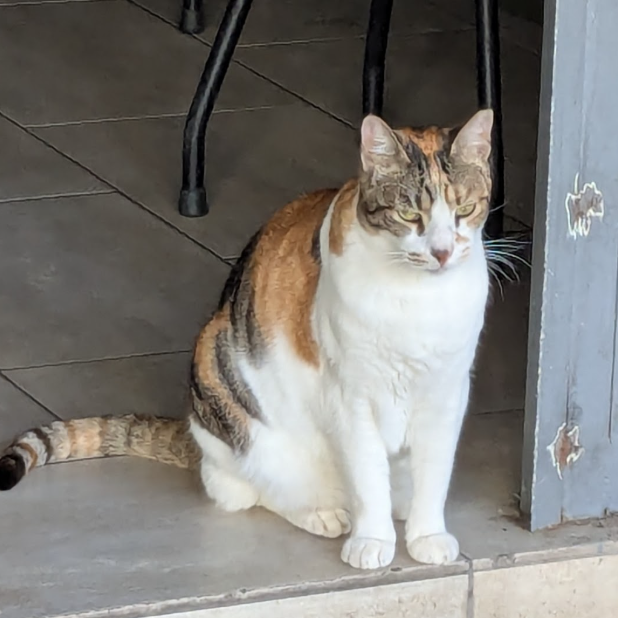
Class today got me excited. I declared a religion minor before coming on this study away and today I was reminded why. It’s that understanding religion is foundational in attempting to understand humans which is something I do spend some time thinking about. We’re pretty fascinating sometimes. This stands to change but I don’t think I’m that different from someone who lived in the Bronze Age. Obviously the world, perceptions, technology, humanity as a collective culture has changed a lot and will continue to, but I think that at the same time, humans on a base level have always been humans. (This is an especially reassuring thought when travelling.) Prof. Finsitis presented a quote in his slides today from a book by L. P. Hartley called the Go-Between. It was: “The past is a foreign country. They do things differently there.” He said that we are separated from the past by an unfathomably deep sea of memories (apologies if I’m misquoting here, I didn’t find the slides on Sakai) and I think that makes a lot of sense, however, I think there are also many things that connect me with ancient humans. Many have had a curiosity and a desire to understand where life came from and why and what we should do with it, and that’s where religion comes from.
I learned a lot in class today, but I’ll just give you my two personal highlights.
We talked for a bit about monotheism and polytheism and why they are bad terms. The word polytheism is imposed on pantheon-based religions often by practitioners of one of the three Abrahamic religions. Having a little bit of historical context for when those religions emerged in relation to pantheon-based systems of belief, which had been around a while before them, helps to characterize the Abrahamic religions and understand a bit better where we are today. (Which connects to the first bullet point on the learning objectives!)
The other quote from class that I really liked was, when discussing the differences between modern and ancient religions, Prof. said, ‘Ancient religions are about what Gods can do for me here and now, who cares about the afterlife?’ And like, yeah! Get that god bag, you know?
07/01/2025
By coincidence, yesterday was a national holiday in Greece called Epiphany. It felt especially relevant since I’m here for a religion class, and the group’s fearless assistant told me about a tradition tied to the day: priests from churches on or near bodies of water bless a cross and throw it into the sea or a river, and whoever retrieves it receives the blessing. Unfortunately, the holiday also explained why our luggage still hadn’t arrived — the people in charge of delivering it weren’t working that day.
But we’re on the other side now. I’m wearing new clothes for the first time in four days and I’ve got euros and groceries to make myself a peanut butter and jelly sandwich and we’re about to go on a walk around the city and I'll bring my camera and the weather is lovely. Sort of like the most ideal Washington spring day.
The first 24 hours were challenging, but I’m very grateful to be here.
06/01/2026
I’m not sure when this will be published, but I think it was about 24 hours ago that I was sitting with my classmates waywardly, exhaustedly, in the fluorescently-lit baggage claim area of the Athens airport wondering if our checked bags would show up. They did not. The amount of time it took to file the missing baggage claims felt insane but my perception of time passing had been altered by not having truly slept for about 25 hours at that point. I don’t know how long it was. Once the claims were claimed (As far as I know. I handed my luggage tag to my brave classmate Alby, who did most of the talking. Thanks Alby) I walked through the area’s exit where I was met by my professor, who handed me an envelope containing my apartment keys. Myself and my roommates were then guided out to meet our taxi driver who helped us find the door to our apartment building upon arrival. I really appreciate that level of hand-holding when my brain is running on fumes, in a place I’ve never been before.
Once inside, we still had survival pizza to wait for, but at least I could wash my face and be horizontal for a little bit. The pizza was good. I don’t eat Domino’s pizza in the US because I think it’s gross but the Domino’s in Greece? Perhaps it’s because I was struggling to keep my eyes open, creating an immersive, sensory-depravatory dining experience, but I freak with it.
I came back up to my apartment after that, opting out of the walk the rest of my classmates went on around the city, but I think I may have started crying had I joined so, I was very grateful to go to sleep.
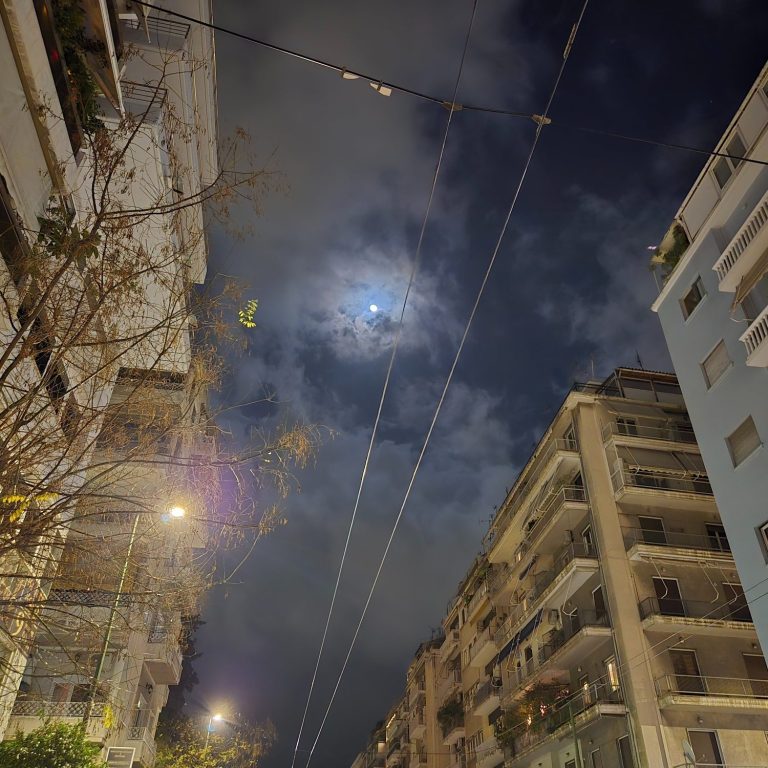
Jaquie L.
Athens, First Impressions
After 12 hours of flights, missing baggage, and nearly falling asleep on my feet, I finally can say I've set foot on Greek soil. Or rather, pavement, and it's every bit as incredible as I could have imagined. Everywhere I look I find old buildings, and modern stores. Athens is alive even at 4am, and not just with people, but also cats that run the shyness scale from running away, to following and asking for pets.
There's something so awe inspiring about standing on the stones that once supported people thousands of years before me. Under the watchful, illuminated gaze of the Parthenon, for a brief moment I felt like I was walking back in time. The modern, 4am night gave way to crowds of ancient people walking past me, back up the hill towards the fresh orange trees we'd just passed. It's overwhelming. It's beautiful. It's a living, breathing return to history under a clouded moon, and purple, rainy skies.
Now, as I sit outside a coffee shop drinking one of the smoothest, richest cups of coffee I've ever had, I can't help but dream about how many more places we will go. How many more steps we may retread, how many more people have walked these same streets before us, and how beautiful Athens is both by light of day, and by night. Truly, this is a city where history meets modern-day, and both live in vibrant harmony.
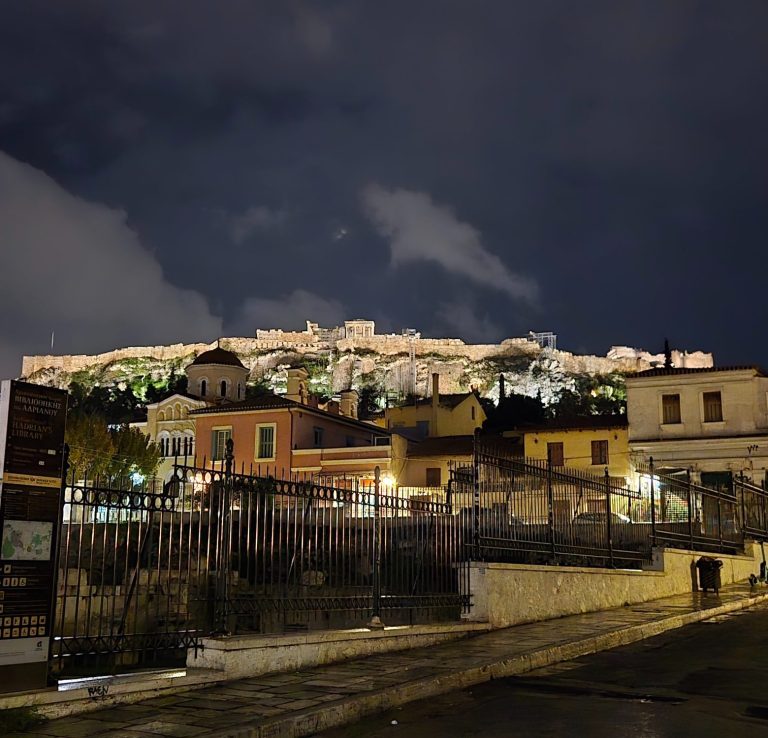
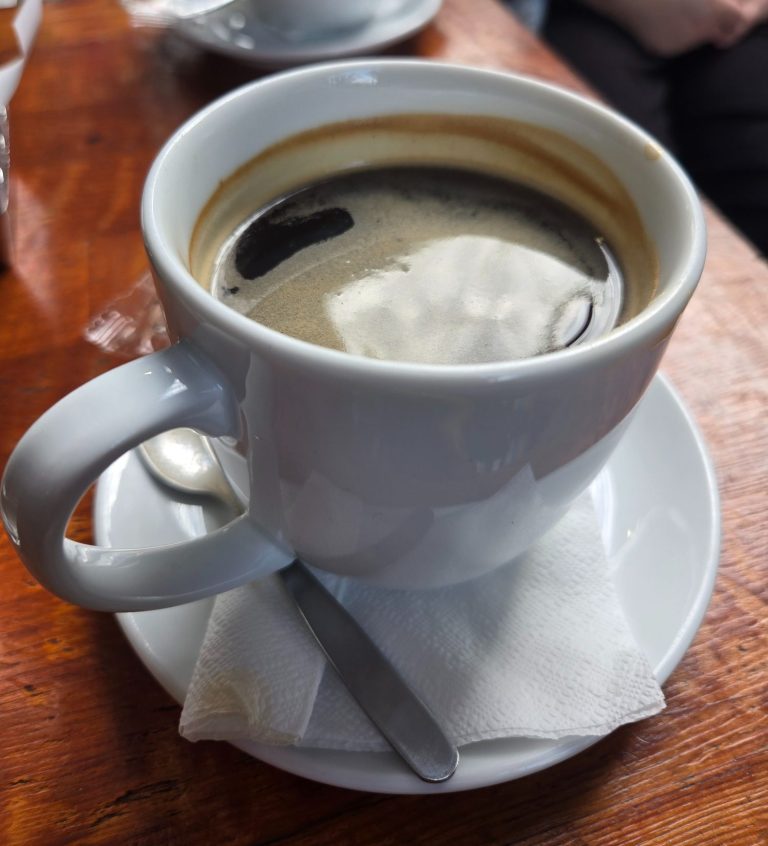
Samael B.
A Story to Live By
After about 13 hours of flying and a flight delay, our plane finally landed in Athens. The first plane was delayed, the connecting plane was overbooked, and our luggage was left behind somewhere along the way, but we were all accounted for and (after much time and frustration at the baggage claim) ready to be released to our apartments. Taxis gave us our keys, loaded us up, and took off. We were of course a little delirious from the hot planes, lack of sleep, etc. When I looked out the window of the taxi all I could see at first was the streetlights. Athens was covered in them - rolling all over the hills like waves, the most visible lights on the dark backdrop - and with it being such a cloudy and starless sky it sent me for a bit of a loop; when I looked out the window I for a second was convinced we were sitting over a sea of night and stars while staring up at the ground.
Even with how late it was and everyone’s grievances over the delay in luggage, we dropped what we had into our apartments and walked to the professor’s for what had originally been dubbed (and by that point felt completely accurate) “survival pizza”. Sitting crowded on or around on every surface Dr. Finitsis had in his apartment, we tried our best to figure out whose unmarked order was whose, and after finally being able to eat a more full sized meal we were taken on our “death march”. Going for a walk so late, I’d assumed the city would feel a bit dead or be difficult to navigate, but in true big city fashion there were still businesses to find open, people strolling or working, animals running around or calling, and tons of lighting everywhere.
Even though I’ve never been a fan of big cities, this city felt remarkably beautiful and inviting (as well as clean). Everyone has been friendly and accommodating, restaurants and such buzz with conversation, it’s all much easier to navigate than some of us had feared, and so many people have spoken English for us that I now fear I will never be given the language-learning experience of being forced to struggle through a Greek conversation without assistance. But overall it’s been very easy to settle in.
We had our first real taste of class and coursework on the second day here. We learned about/discussed the importance of myth and the function of religion – as our professor put it, “we all need a story to live by”. They shape how people view and understand the world, but are also a reflection of what people already value or need. Because of this, myth and religion in some form have been important to humans for seemingly as far back as we can find or understand, and continue being important to people. This is so exemplified in historic big cities like Athens here, walking past Christian churches in session to get a glimpse of ancient temples, seeing the place filled with statues, museums, little plaques dotting parts of walkways or pedestals. We’re all so drawn by stories, of all types, and places like this city you can see how people have continued to value and need them, as well as how where we are today is shaped so heavily by the stories and values of the past even if they’re not directly our own anymore.
Overall, between the course itself and the city there've been plenty of ‘first impressions.’ I still think the most striking thing when we walk around this city is just the way it looks. It’s got its concrete buildings just like any other city, but it’s full of stonework and foliage and lights (extra so from being all dressed up for Christmas). It’s gorgeous, if a little slippery in the rain. I’m so excited to have the chance to study and explore here - almost any direction you could turn in will lead to some historical site or museum or interesting experience. There’s no way to see all that there is in a month, and we’d be overwhelmed to even try, but we’ll see just how much we can experience while we’re here.
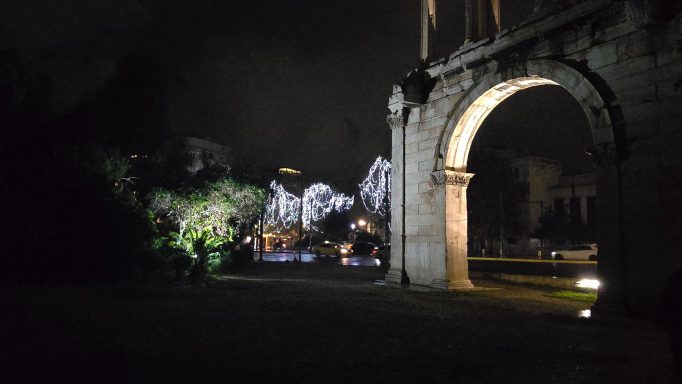
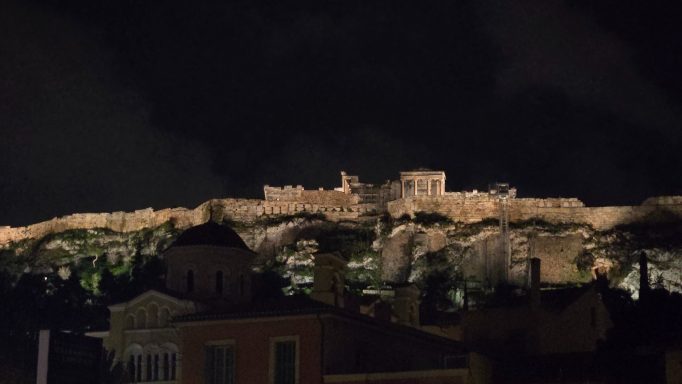
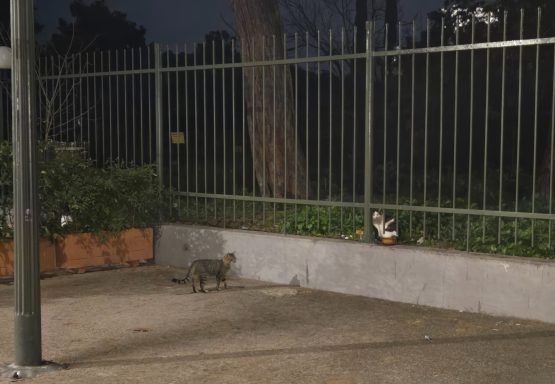
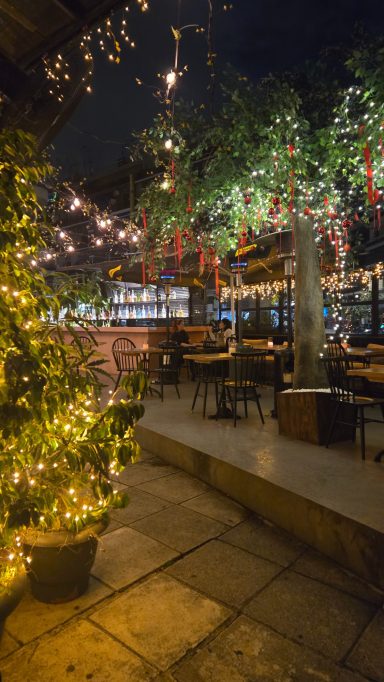
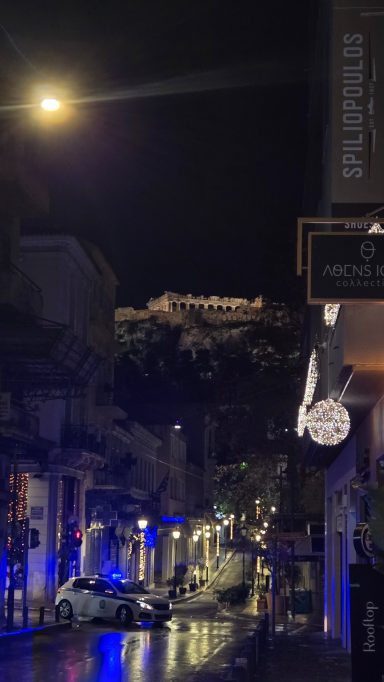
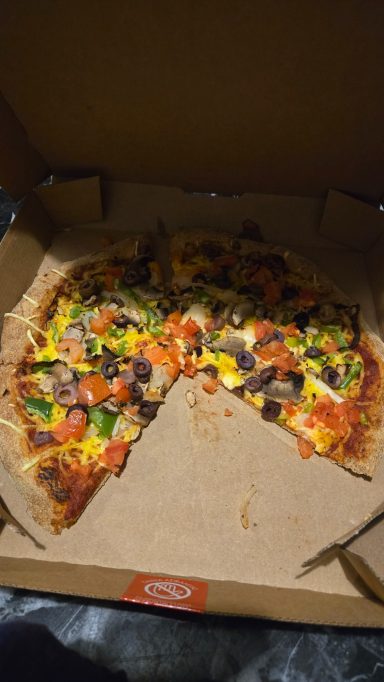
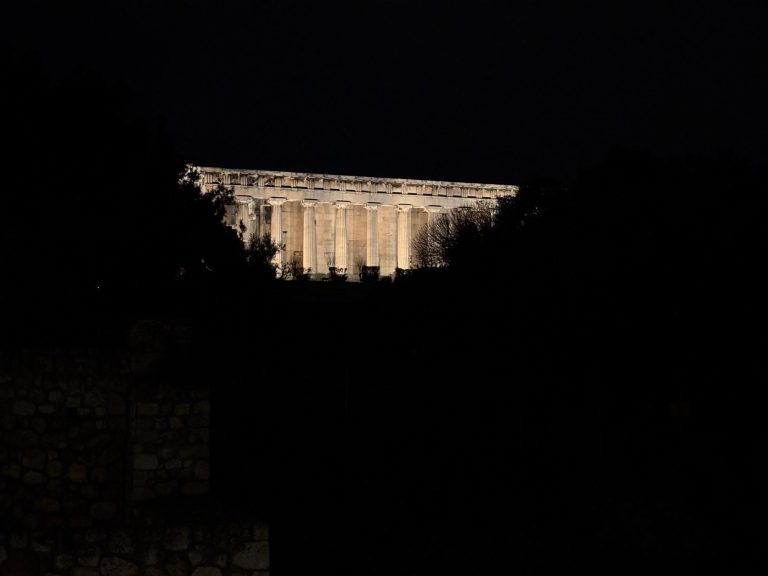
Kate F.
First Impressions
It’s time for first impressions! Our group has been here for less than 24 hours now and there is already so much to say. We landed late last night to find that all our checked bags were still in Istanbul. I’m really proud to say that we survived the 2 hours at the airport while everyone sorted out their baggage claims. Everyone was able to keep it together emotionally and it was smooth sailing even with the long wait times. Hopefully the luggage will be delivered sometime this afternoon so we can all shower and change clothes. I’m sure all Greek noses in the area will be happy about that.
After we arrived at our apartments, we got to take a nice walk around the acropolis area, visiting some of the sites in Athens. I love how walkable Athens is, my feet only hurt a little bit! There are also so many cafes around that I am excited to visit soon. As we walked around, it was amazing to see all the wonderful sites that we will be learning about and visiting. Being able to see and experience the context we are discussing is so invaluable to the learning process this month.
I’m especially excited to go into the olympic stadium, which hosted the first olympic revival games. It was introduced to us as a good landmark while walking around but I wanted to go in it so badly! The same thing with the Acropolis as well. It’s one thing to read about these beforehand and another thing to be so close to them in real life. I’m so excited to finally step on the grounds of these historic places once we get a chance.
I will say that the bed absolutely swallowed me once we got back from our walk, I was so tired. I am very happy to report that the lodgings are very comfortable and my roommate is lovely.
All I have eaten since we got here is dominos pizza and cold dominos pizza. So the report on Greek food will have to wait until next time. Please do be ready for a full breakdown regarding the cafes I am able to go visit.
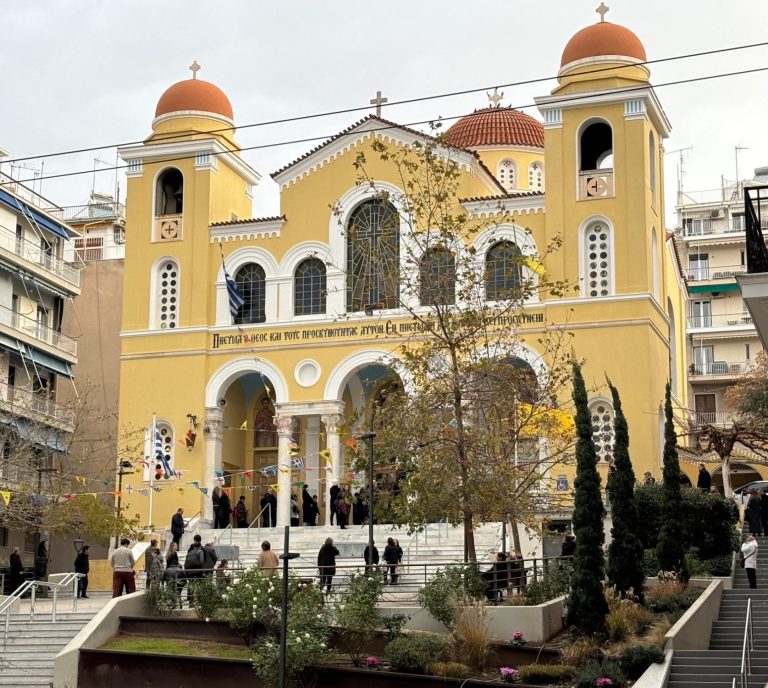
01
Team Athens
Jaquie, Samael, Kate
02
Team Delphi
Sam, Pedro, Clay, Mikayla
03
Team Rhodes
Ani, Mia, Jalen, Alby